
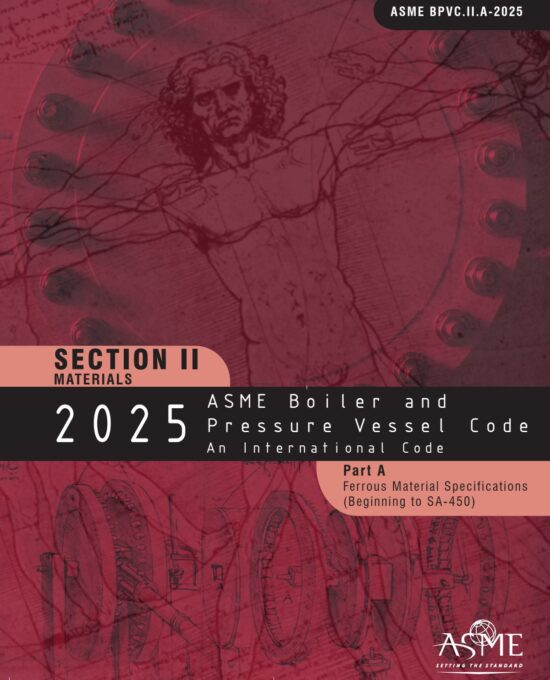
ASME BPVC 2025 Section II, Part A: Ferrous Material Specifications, SA-1 to SA-450
The ASME BPVC 2025 Section II, Part A: SA-1 to SA-450 provides the complete set of ferrous material specifications from SA-1 through SA-450. This volume is essential for engineers, designers, and inspectors working with boilers and pressure vessels, offering up-to-date requirements for material selection and code compliance.
ASME BPVC 2025 Section II, Part A: Ferrous Material Specifications, SA-1 to SA-450
The ASME BPVC 2025 Section II, Part A: SA-1 to SA-450 provides the complete set of ferrous material specifications from SA-1 through SA-450. This volume is essential for engineers, designers, and inspectors working with boilers and pressure vessels, offering up-to-date requirements for material selection and code compliance.
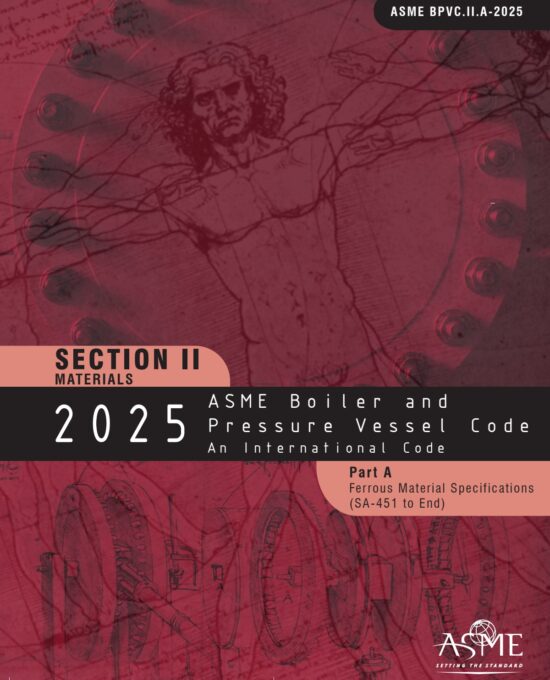
ASME BPVC 2025 Section II, Part A: Ferrous Material Specifications, SA-451 to End
ASME BPVC 2025 Section II, Part A: Ferrous Material Specifications, SA-451 to End provides the official material specifications for ferrous metals used in the construction of boilers and pressure vessels. This volume covers specifications from SA-451 through the end of the ferrous listings, ensuring compliance with ASME standards for safety, performance, and quality.
This section is an essential reference for engineers, manufacturers, inspectors, and other professionals who require accurate and up-to-date standards for ferrous materials in pressure equipment design and fabrication.
ASME BPVC 2025 Section II, Part A: Ferrous Material Specifications, SA-451 to End
ASME BPVC 2025 Section II, Part A: Ferrous Material Specifications, SA-451 to End provides the official material specifications for ferrous metals used in the construction of boilers and pressure vessels. This volume covers specifications from SA-451 through the end of the ferrous listings, ensuring compliance with ASME standards for safety, performance, and quality.
This section is an essential reference for engineers, manufacturers, inspectors, and other professionals who require accurate and up-to-date standards for ferrous materials in pressure equipment design and fabrication.
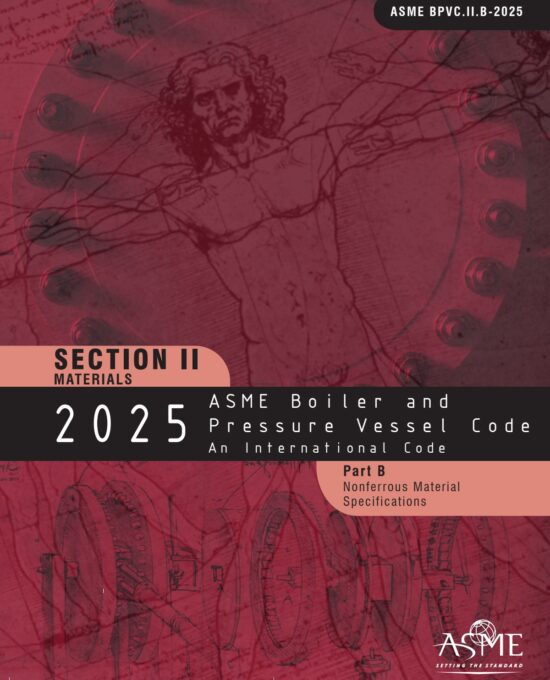
ASME BPVC 2025 Section II, Part B: Nonferrous Material Specifications
ASME BPVC 2025 Section II, Part B: Nonferrous Material Specifications provides a comprehensive collection of standards for nonferrous materials used in pressure equipment construction. This section details requirements for chemical composition, mechanical properties, manufacturing processes, heat treatment, and testing procedures.
Specifications are designated by SB numbers and harmonized with ASTM and other international standards, ensuring global applicability and compliance.
Widely used by engineers, inspectors, and manufacturers, Section II, Part B serves as a critical reference for safe and code-compliant use of nonferrous alloys in boilers, pressure vessels, and associated components.
ASME BPVC 2025 Section II, Part B: Nonferrous Material Specifications
ASME BPVC 2025 Section II, Part B: Nonferrous Material Specifications provides a comprehensive collection of standards for nonferrous materials used in pressure equipment construction. This section details requirements for chemical composition, mechanical properties, manufacturing processes, heat treatment, and testing procedures.
Specifications are designated by SB numbers and harmonized with ASTM and other international standards, ensuring global applicability and compliance.
Widely used by engineers, inspectors, and manufacturers, Section II, Part B serves as a critical reference for safe and code-compliant use of nonferrous alloys in boilers, pressure vessels, and associated components.
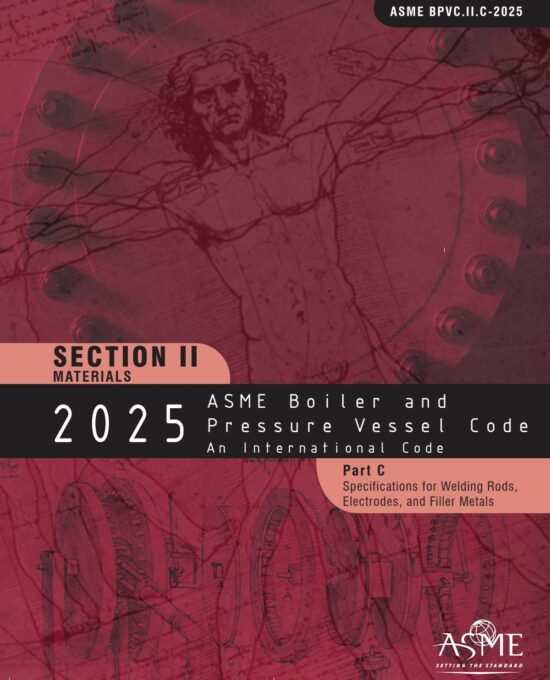
ASME BPVC 2025 Section II, Part C: Specifications for Welding Rods, Electrodes, and Filler Metals
The ASME BPVC 2025 Section II, Part C provides specifications for welding rods, electrodes, and filler metals used in the fabrication and repair of boilers and pressure vessels. These standards ensure materials meet requirements for strength, durability, and performance in high-pressure environments, making it an essential reference for manufacturers, fabricators, and inspectors.
ASME BPVC 2025 Section II, Part C: Specifications for Welding Rods, Electrodes, and Filler Metals
The ASME BPVC 2025 Section II, Part C provides specifications for welding rods, electrodes, and filler metals used in the fabrication and repair of boilers and pressure vessels. These standards ensure materials meet requirements for strength, durability, and performance in high-pressure environments, making it an essential reference for manufacturers, fabricators, and inspectors.
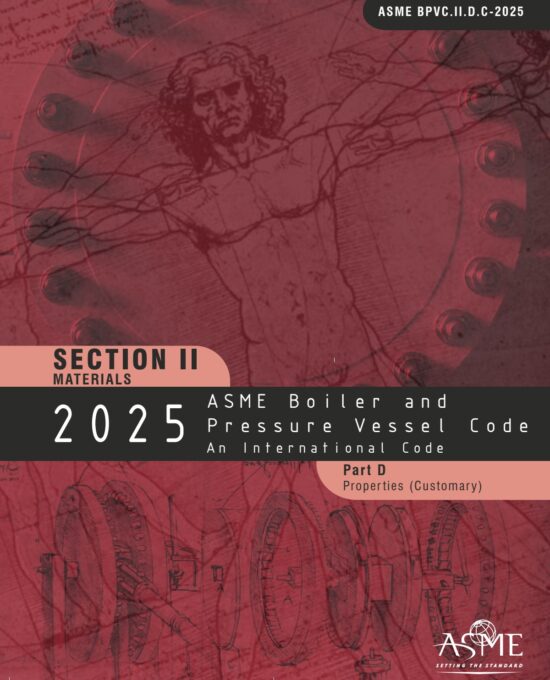
ASME BPVC 2025 Section II, Part D (Customary): Properties of Materials
The ASME BPVC 2025 Section II, Part D (Customary) provides mechanical and physical property data for materials listed in Parts A, B, and C. It includes values such as tensile strength, yield strength, modulus of elasticity, and thermal conductivity, presented in customary (U.S.) units. This section is an essential reference for engineers and designers who work with U.S. customary standards.
ASME BPVC 2025 Section II, Part D (Customary): Properties of Materials
The ASME BPVC 2025 Section II, Part D (Customary) provides mechanical and physical property data for materials listed in Parts A, B, and C. It includes values such as tensile strength, yield strength, modulus of elasticity, and thermal conductivity, presented in customary (U.S.) units. This section is an essential reference for engineers and designers who work with U.S. customary standards.
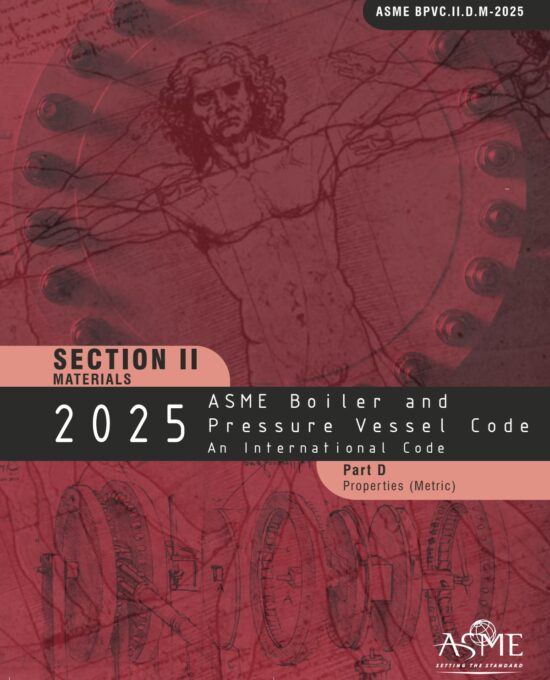
ASME BPVC 2025 Section II, Part D (Metric): Properties of Materials
The ASME BPVC 2025 Section II, Part D (Metric) provides mechanical and physical property data for materials listed in Parts A, B, and C. It includes values such as tensile strength, yield strength, modulus of elasticity, and thermal conductivity, presented in metric units. This section is an essential reference for engineers and designers who work primarily with SI-based standards.
ASME BPVC 2025 Section II, Part D (Metric): Properties of Materials
The ASME BPVC 2025 Section II, Part D (Metric) provides mechanical and physical property data for materials listed in Parts A, B, and C. It includes values such as tensile strength, yield strength, modulus of elasticity, and thermal conductivity, presented in metric units. This section is an essential reference for engineers and designers who work primarily with SI-based standards.
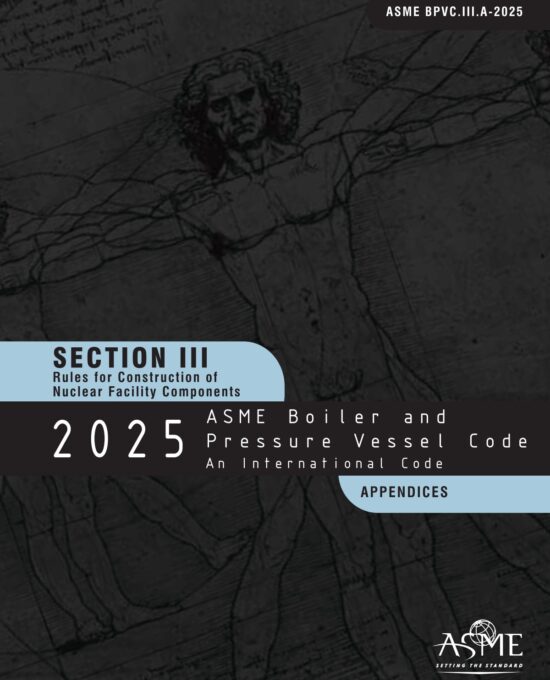
ASME BPVC 2025 Section III, Appendices: Division 1 Mandatory and Nonmandatory Appendices
ASME BPVC 2025 Section III, Appendices contains both mandatory and non-mandatory appendices that supplement the main rules of Section III. These appendices include guidance, clarifications, and alternative calculation methods to support compliance with nuclear construction standards.
ASME BPVC 2025 Section III, Appendices: Division 1 Mandatory and Nonmandatory Appendices
ASME BPVC 2025 Section III, Appendices contains both mandatory and non-mandatory appendices that supplement the main rules of Section III. These appendices include guidance, clarifications, and alternative calculation methods to support compliance with nuclear construction standards.
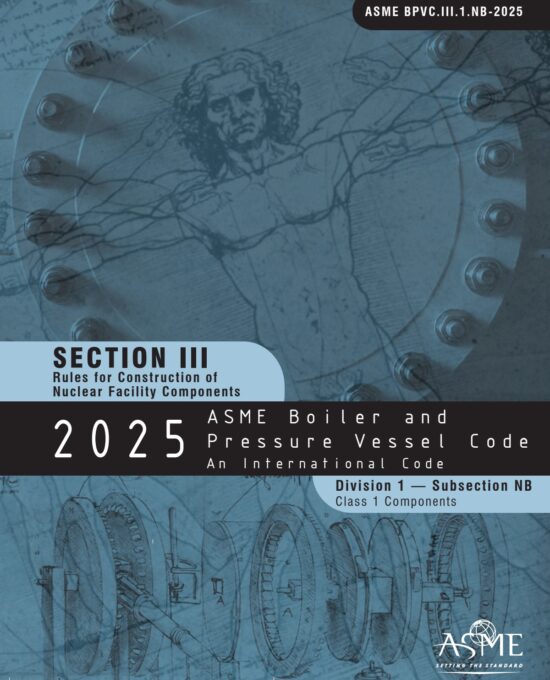
ASME BPVC 2025 Section III, Division 1, Subsection NB: Class 1 Components
ASME BPVC 2025 Section III, Division 1, Subsection NB provides construction requirements for Class 1 nuclear components, including vessels, piping, pumps, and valves. This subsection establishes the highest safety standards for nuclear components, ensuring material integrity and reliability under extreme operating conditions.
ASME BPVC 2025 Section III, Division 1, Subsection NB: Class 1 Components
ASME BPVC 2025 Section III, Division 1, Subsection NB provides construction requirements for Class 1 nuclear components, including vessels, piping, pumps, and valves. This subsection establishes the highest safety standards for nuclear components, ensuring material integrity and reliability under extreme operating conditions.
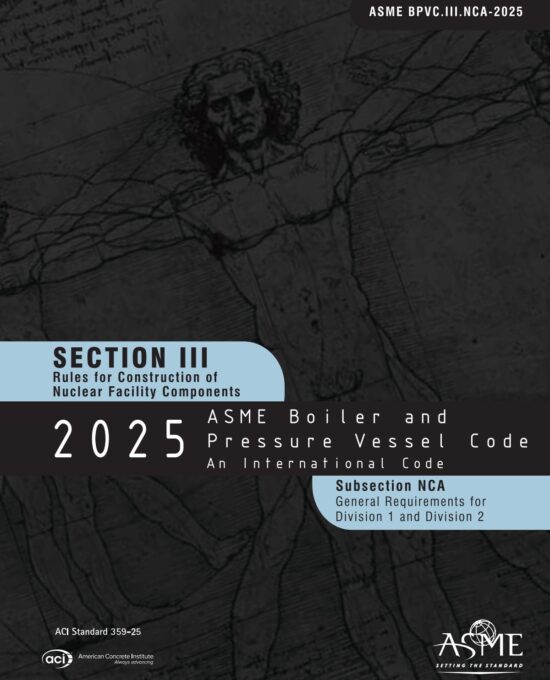
ASME BPVC 2025 Section III, Subsection NCA: General Requirements for Division 1
ASME BPVC 2025 Section III, Subsection NCA covers the general requirements applicable to nuclear facility components in Division 1, including administrative, material, and design rules. This subsection provides the foundational framework governing Subsections NB, NC, and ND, ensuring consistent construction standards for safety-critical nuclear applications.
ASME BPVC 2025 Section III, Subsection NCA: General Requirements for Division 1
ASME BPVC 2025 Section III, Subsection NCA covers the general requirements applicable to nuclear facility components in Division 1, including administrative, material, and design rules. This subsection provides the foundational framework governing Subsections NB, NC, and ND, ensuring consistent construction standards for safety-critical nuclear applications.
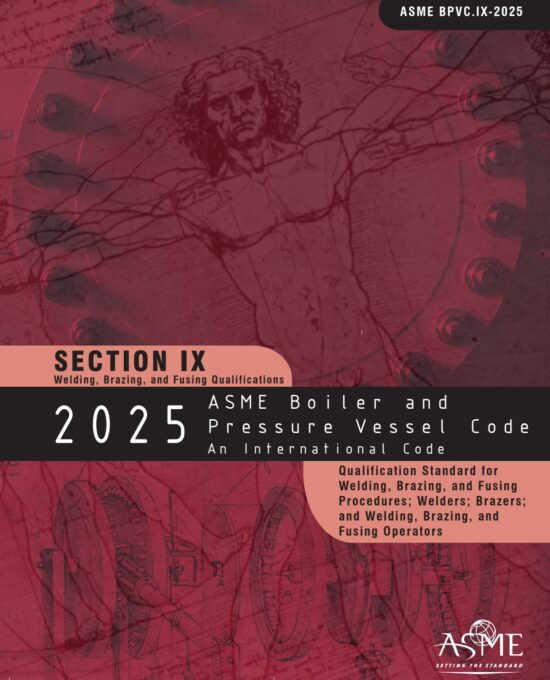
ASME BPVC 2025 Section IX: Welding, Brazing, and Fusing Qualifications
ASME BPVC 2025 Section IX: Welding, Brazing, and Fusing Qualifications provides the qualification standards for welding and brazing procedures, welders, brazers, and welding and brazing operators. It establishes the essential requirements for procedure and performance qualifications, ensuring safety, consistency, and quality in welded and brazed components used in boilers, pressure vessels, and related applications.
ASME BPVC 2025 Section IX: Welding, Brazing, and Fusing Qualifications
ASME BPVC 2025 Section IX: Welding, Brazing, and Fusing Qualifications provides the qualification standards for welding and brazing procedures, welders, brazers, and welding and brazing operators. It establishes the essential requirements for procedure and performance qualifications, ensuring safety, consistency, and quality in welded and brazed components used in boilers, pressure vessels, and related applications.
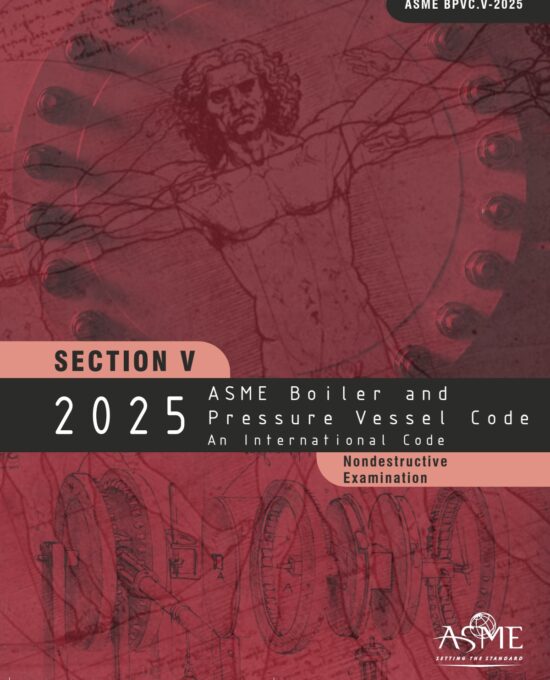
ASME BPVC 2025 Section V: Nondestructive Examination (2025 Edition)
ASME BPVC Section V: Nondestructive Examination (2025 Edition) outlines approved methods and requirements for nondestructive testing, including radiographic, ultrasonic, magnetic particle, liquid penetrant, eddy current, visual, and leak testing. These methods are mandatory when referenced by other BPVC Sections.
Subsection A details nondestructive examination techniques, while Subsection B includes ASTM standards adopted by ASME. This edition ensures compatibility and consistency across sections requiring NDE compliance.
A critical resource for engineers, inspectors, and fabricators, it ensures uniform, code-compliant application of nondestructive examination methods across welded pressure equipment.
ASME BPVC 2025 Section V: Nondestructive Examination (2025 Edition)
ASME BPVC Section V: Nondestructive Examination (2025 Edition) outlines approved methods and requirements for nondestructive testing, including radiographic, ultrasonic, magnetic particle, liquid penetrant, eddy current, visual, and leak testing. These methods are mandatory when referenced by other BPVC Sections.
Subsection A details nondestructive examination techniques, while Subsection B includes ASTM standards adopted by ASME. This edition ensures compatibility and consistency across sections requiring NDE compliance.
A critical resource for engineers, inspectors, and fabricators, it ensures uniform, code-compliant application of nondestructive examination methods across welded pressure equipment.
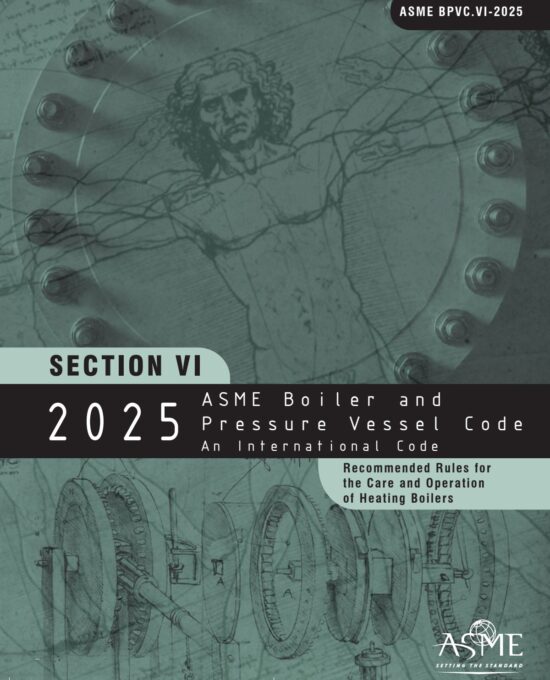
ASME BPVC 2025 Section VI: Rules for the Care and Operation of Heating Boilers
ASME BPVC 2025 Section VI provides guidelines for the safe and efficient operation, maintenance, and inspection of heating boilers, covering start-up, shutdown, routine care, and operator responsibilities.
ASME BPVC 2025 Section VI: Rules for the Care and Operation of Heating Boilers
ASME BPVC 2025 Section VI provides guidelines for the safe and efficient operation, maintenance, and inspection of heating boilers, covering start-up, shutdown, routine care, and operator responsibilities.