
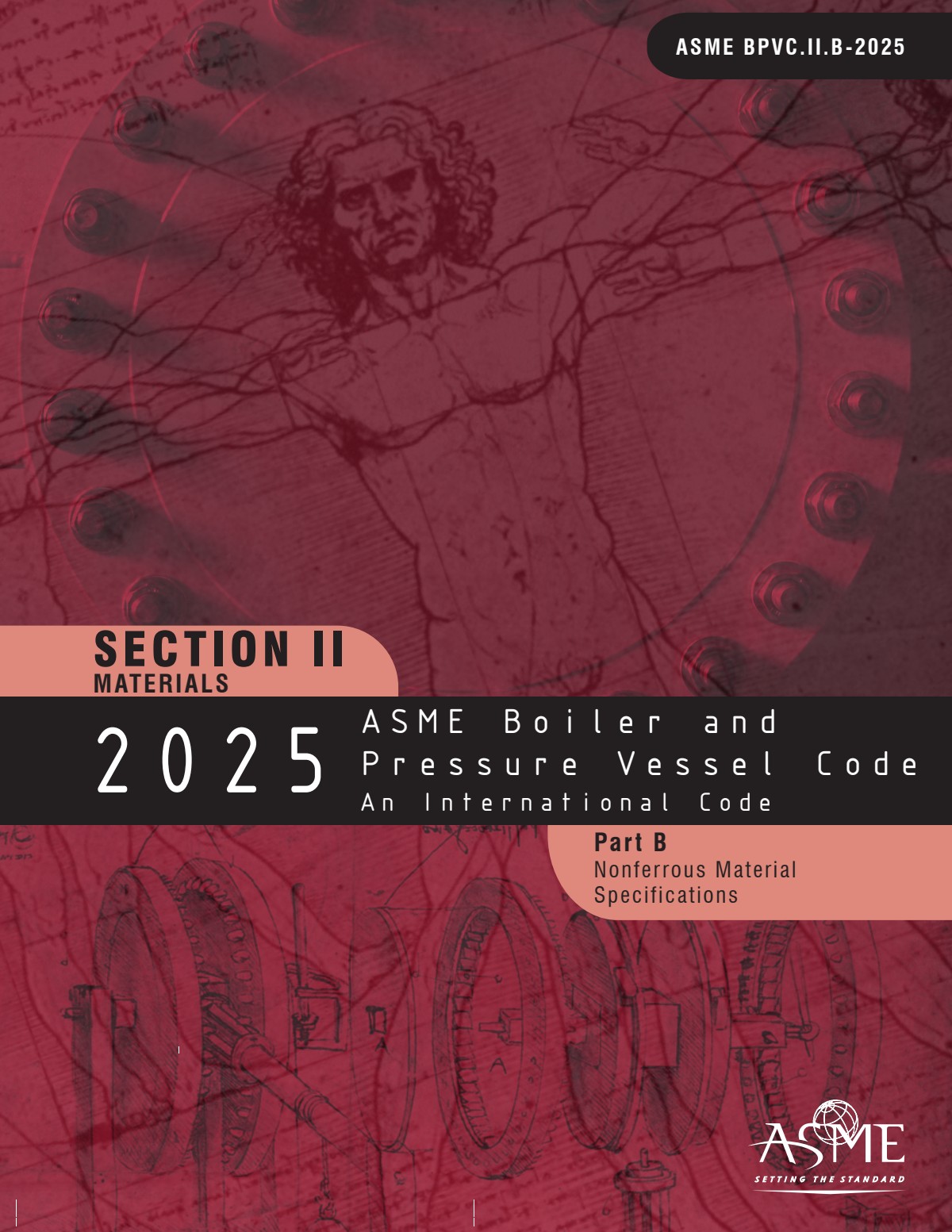
ASME BPVC 2025 Section II, Part B: Nonferrous Material Specifications
Original price was: $930.00.$310.00Current price is: $310.00.
ASME BPVC 2025 Section II, Part B: Nonferrous Material Specifications
provides a comprehensive collection of standards for nonferrous materials used in pressure equipment construction.
This section details requirements for chemical composition, mechanical properties, manufacturing processes,
heat treatment, and testing procedures.
Specifications are designated by SB numbers and harmonized with ASTM and
other international standards, ensuring global applicability and compliance.
Widely used by engineers, inspectors, and manufacturers, Section II, Part B serves as a
critical reference for safe and code-compliant use of nonferrous alloys in boilers, pressure vessels,
and associated components.
ASME BPVC 2025 Section II, Part B: Nonferrous Material Specifications
provides a comprehensive collection of standards for nonferrous materials used in pressure equipment construction.
This section details requirements for chemical composition, mechanical properties, manufacturing processes,
heat treatment, and testing procedures.
Specifications are designated by SB numbers and harmonized with ASTM and
other international standards, ensuring global applicability and compliance.
Widely used by engineers, inspectors, and manufacturers, Section II, Part B serves as a
critical reference for safe and code-compliant use of nonferrous alloys in boilers, pressure vessels,
and associated components.
Book information
Purchase now to read the book instantly.
Add to cartRelated products
2021 International Plumbing Code – IPC-2021
The 2021 International Plumbing Code® (IPC) establishes minimum standards for the design, installation, and inspection of plumbing systems in all building types—except one- and two-family dwellings and townhouses up to three stories, which are covered under the IRC. This code supports both prescriptive and performance-based approaches and promotes innovation in materials and design.
Highlights:
- Permits multiple-user all-gender toilet facilities
- Adds two approved methods for sewer relining and rehabilitation
- Allows rooftop solar panels to be installed over vent terminals
- Recognizes CSA B805/ICC 805 for rainwater harvesting system design
- Integrates accessibility provisions from ICC A117.1-2017
- Covers potable and nonpotable water, sanitary and storm drainage, venting, water heaters, and graywater systems
- Structured into prescriptive chapters with appendices and accessibility references
- Fully aligned with the 2021 I-Codes for unified plumbing regulation and enforcement
Who It’s For:
Plumbing engineers, contractors, inspectors, and code officials working on compliant, modern plumbing systems in commercial and multifamily buildings.
IPC-2021
2021 International Plumbing Code – IPC-2021
The 2021 International Plumbing Code® (IPC) establishes minimum standards for the design, installation, and inspection of plumbing systems in all building types—except one- and two-family dwellings and townhouses up to three stories, which are covered under the IRC. This code supports both prescriptive and performance-based approaches and promotes innovation in materials and design.
Highlights:
- Permits multiple-user all-gender toilet facilities
- Adds two approved methods for sewer relining and rehabilitation
- Allows rooftop solar panels to be installed over vent terminals
- Recognizes CSA B805/ICC 805 for rainwater harvesting system design
- Integrates accessibility provisions from ICC A117.1-2017
- Covers potable and nonpotable water, sanitary and storm drainage, venting, water heaters, and graywater systems
- Structured into prescriptive chapters with appendices and accessibility references
- Fully aligned with the 2021 I-Codes for unified plumbing regulation and enforcement
Who It’s For:
Plumbing engineers, contractors, inspectors, and code officials working on compliant, modern plumbing systems in commercial and multifamily buildings.
IPC-2021
2021 International Existing Building Code – IEBC-2021
The 2021 International Existing Building Code® (IEBC) offers a consistent, performance-based framework for repairing, altering, adding to, or changing the occupancy of existing buildings. It facilitates the reuse of older and historic structures while maintaining safety, accessibility, and code compliance without requiring full adherence to new construction standards.
Highlights:
- Limits storm shelter capacity to specific occupancies; removes travel distance requirement
- Requires IBC Chapter 14/26 compliance for major exterior wall replacements
- Mandates snow load evaluation when structural repairs involve substantial damage
- Applies enhanced classroom acoustics to educational buildings undergoing major alterations
- Permits rooftop equipment additions without full structural review under specific weight/load limits
- Requires seismic evaluation when changing occupancy from S or U to other types
- Exempts furniture like cubicles and shelving from permits and Level 2 classification
- Revises sprinkler installation thresholds for Level 2 and Level 3 alterations in high-risk areas
Who It’s For:
Contractors, architects, and code officials working on renovations, adaptive reuse, and code compliance for existing buildings—especially where full new-construction standards are impractical.
IEBC-2021
2021 International Existing Building Code – IEBC-2021
The 2021 International Existing Building Code® (IEBC) offers a consistent, performance-based framework for repairing, altering, adding to, or changing the occupancy of existing buildings. It facilitates the reuse of older and historic structures while maintaining safety, accessibility, and code compliance without requiring full adherence to new construction standards.
Highlights:
- Limits storm shelter capacity to specific occupancies; removes travel distance requirement
- Requires IBC Chapter 14/26 compliance for major exterior wall replacements
- Mandates snow load evaluation when structural repairs involve substantial damage
- Applies enhanced classroom acoustics to educational buildings undergoing major alterations
- Permits rooftop equipment additions without full structural review under specific weight/load limits
- Requires seismic evaluation when changing occupancy from S or U to other types
- Exempts furniture like cubicles and shelving from permits and Level 2 classification
- Revises sprinkler installation thresholds for Level 2 and Level 3 alterations in high-risk areas
Who It’s For:
Contractors, architects, and code officials working on renovations, adaptive reuse, and code compliance for existing buildings—especially where full new-construction standards are impractical.
IEBC-2021
2021 International Fuel Gas Code – IFGC-2021
The 2021 International Fuel Gas Code® (IFGC) provides comprehensive requirements for the design and installation of fuel gas systems in residential, commercial, and industrial buildings. It governs piping, appliances, combustion air, chimneys, vents, and gaseous hydrogen systems, ensuring safe and efficient fuel gas usage across all occupancies. Fully aligned with the 2021 I-Code suite.
Highlights:
- Regulates natural gas systems up to 125 psig and LP-gas up to 20 psig from point of delivery to appliance shutoff
- Includes complete standards for gaseous hydrogen systems in Chapter 7
- Covers installation, combustion air, and venting for a wide range of fuel gas appliances
- Supports both prescriptive and engineered design methods for air supply, venting, and pipe sizing
- Provides appendices for gas pipe and vent sizing, inspection procedures, and appeals processes
- References updated technical standards from ASME, ANSI, AGA, CSA, and NFPA
- Revised administration chapter clarifies enforcement roles, jurisdictional edits, and appeals
Who It’s For:
Mechanical engineers, gas system designers, inspectors, code officials, and utility providers responsible for safe and compliant gas system installations.
IFGC-2021
2021 International Fuel Gas Code – IFGC-2021
The 2021 International Fuel Gas Code® (IFGC) provides comprehensive requirements for the design and installation of fuel gas systems in residential, commercial, and industrial buildings. It governs piping, appliances, combustion air, chimneys, vents, and gaseous hydrogen systems, ensuring safe and efficient fuel gas usage across all occupancies. Fully aligned with the 2021 I-Code suite.
Highlights:
- Regulates natural gas systems up to 125 psig and LP-gas up to 20 psig from point of delivery to appliance shutoff
- Includes complete standards for gaseous hydrogen systems in Chapter 7
- Covers installation, combustion air, and venting for a wide range of fuel gas appliances
- Supports both prescriptive and engineered design methods for air supply, venting, and pipe sizing
- Provides appendices for gas pipe and vent sizing, inspection procedures, and appeals processes
- References updated technical standards from ASME, ANSI, AGA, CSA, and NFPA
- Revised administration chapter clarifies enforcement roles, jurisdictional edits, and appeals
Who It’s For:
Mechanical engineers, gas system designers, inspectors, code officials, and utility providers responsible for safe and compliant gas system installations.
IFGC-2021
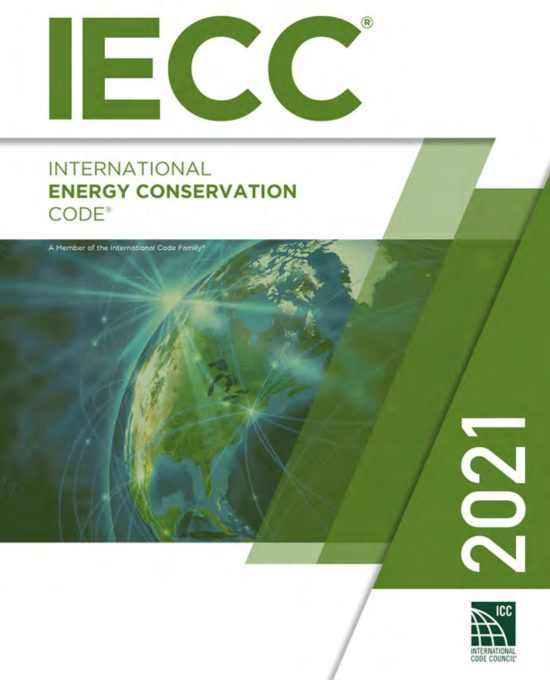
2021 International Energy Conservation Code – IECC-2021
The 2021 International Energy Conservation Code® (IECC) sets the baseline for energy-efficient design and construction of new buildings, as well as additions and alterations to existing residential and commercial structures. It features separate residential and commercial provisions and is fully integrated with the 2021 I-Codes for coordinated compliance.
Highlights:
- Divides content into Residential (≤3 stories) and Commercial sections for targeted regulation
- Includes multiple compliance paths: prescriptive, performance-based, and Energy Rating Index (ERI)
- Updated climate zone data affects insulation and system efficiency by region
- New requirements for air barriers, insulation materials, and fenestration U-factor/SHGC
- Enhanced HVAC efficiency standards and ventilation control requirements
- Revised lighting power limits, daylighting controls, and sensor use for commercial spaces
- Strengthened water heating system insulation and controls for energy savings
- Specific provisions for renovations, historic buildings, and changes in use
- Expanded commissioning requirements and documentation protocols
- Optional appendices for solar-ready design and zero energy building frameworks
Who It’s For:
Architects, energy consultants, engineers, and code officials seeking to meet energy efficiency standards for code-compliant, sustainable buildings.
IECC-2021
2021 International Energy Conservation Code – IECC-2021
The 2021 International Energy Conservation Code® (IECC) sets the baseline for energy-efficient design and construction of new buildings, as well as additions and alterations to existing residential and commercial structures. It features separate residential and commercial provisions and is fully integrated with the 2021 I-Codes for coordinated compliance.
Highlights:
- Divides content into Residential (≤3 stories) and Commercial sections for targeted regulation
- Includes multiple compliance paths: prescriptive, performance-based, and Energy Rating Index (ERI)
- Updated climate zone data affects insulation and system efficiency by region
- New requirements for air barriers, insulation materials, and fenestration U-factor/SHGC
- Enhanced HVAC efficiency standards and ventilation control requirements
- Revised lighting power limits, daylighting controls, and sensor use for commercial spaces
- Strengthened water heating system insulation and controls for energy savings
- Specific provisions for renovations, historic buildings, and changes in use
- Expanded commissioning requirements and documentation protocols
- Optional appendices for solar-ready design and zero energy building frameworks
Who It’s For:
Architects, energy consultants, engineers, and code officials seeking to meet energy efficiency standards for code-compliant, sustainable buildings.
IECC-2021