
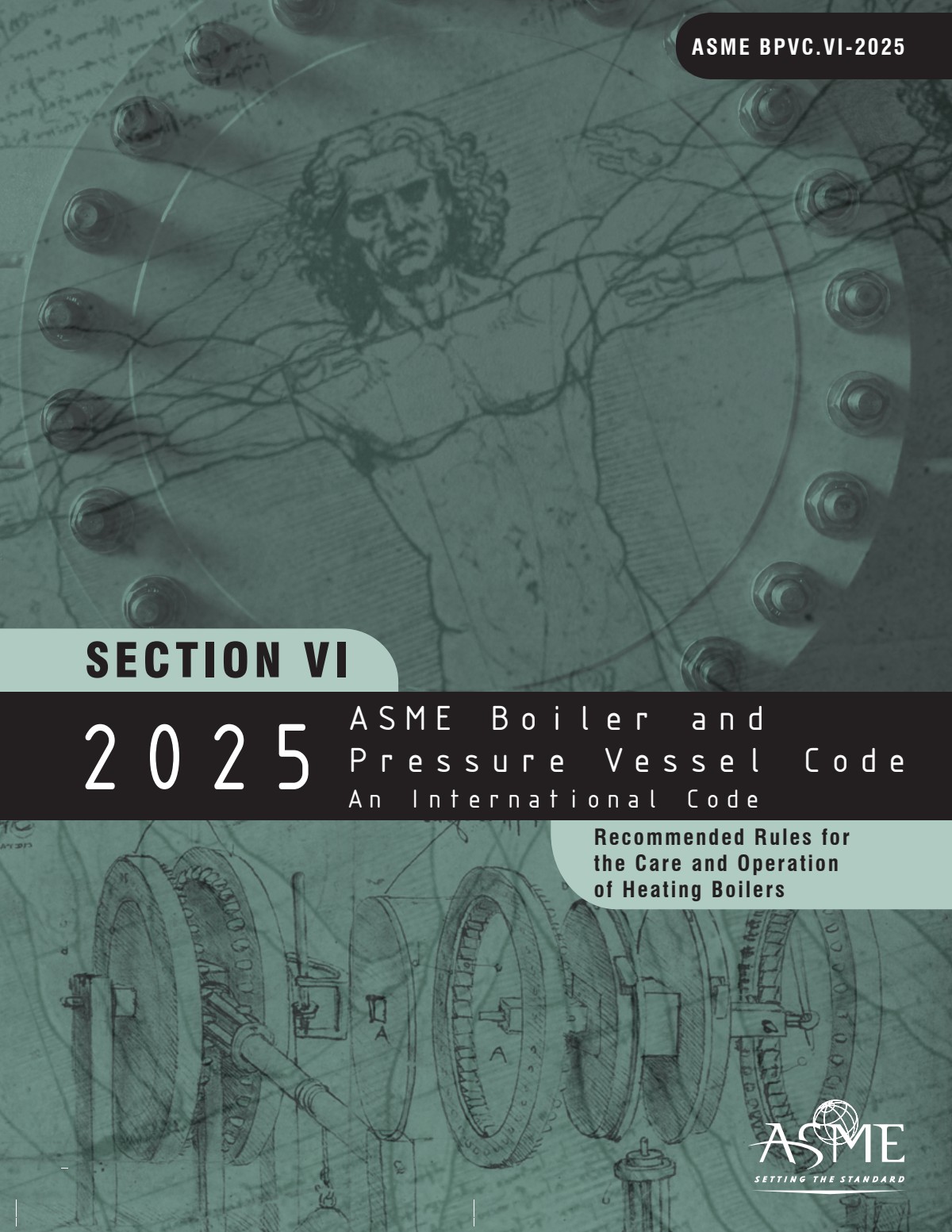
ASME BPVC 2025 Section VI: Rules for the Care and Operation of Heating Boilers
Original price was: $405.00.$135.00Current price is: $135.00.
ASME BPVC 2025 Section VI provides guidelines for the safe and efficient operation, maintenance, and inspection of heating boilers, covering start-up, shutdown, routine care, and operator responsibilities.
ASME BPVC 2025 Section VI provides guidelines for the safe and efficient operation, maintenance, and inspection of heating boilers, covering start-up, shutdown, routine care, and operator responsibilities.
Book information
Purchase now to read the book instantly.
Add to cartRelated products
ANSI Z535.4-2011 (R2017): Product Safety Signs and Labels
ANSI Z535.4-2011 (R2017): Product Safety Signs and Labels provides standardized guidance for the design and application of product safety signs and labels. This reaffirmed edition helps manufacturers effectively communicate hazard information to reduce risk and improve safety across a wide range of industrial and consumer products.
Highlights:
- Defines use of standardized signal words: DANGER, WARNING, CAUTION, and NOTICE
- Establishes hazard classification systems and formatting conventions
- Specifies layout, safety colors, symbols, and typography for clear communication
- Offers guidance on incorporating safety symbols for universal understanding
- Sets durability requirements for labels exposed to harsh environments
- Recommends best practices for label placement and visibility
Who It’s For:
A vital reference for engineers, product designers, compliance managers, and safety professionals responsible for labeling products in accordance with ANSI safety communication standards.
ANSI-Z535.4-2011-R2017
ANSI Z535.4-2011 (R2017): Product Safety Signs and Labels
ANSI Z535.4-2011 (R2017): Product Safety Signs and Labels provides standardized guidance for the design and application of product safety signs and labels. This reaffirmed edition helps manufacturers effectively communicate hazard information to reduce risk and improve safety across a wide range of industrial and consumer products.
Highlights:
- Defines use of standardized signal words: DANGER, WARNING, CAUTION, and NOTICE
- Establishes hazard classification systems and formatting conventions
- Specifies layout, safety colors, symbols, and typography for clear communication
- Offers guidance on incorporating safety symbols for universal understanding
- Sets durability requirements for labels exposed to harsh environments
- Recommends best practices for label placement and visibility
Who It’s For:
A vital reference for engineers, product designers, compliance managers, and safety professionals responsible for labeling products in accordance with ANSI safety communication standards.
ANSI-Z535.4-2011-R2017
ASCE 24-14: Flood Resistant Design and Construction, 2014
ASCE 24-14: Flood Resistant Design and Construction provides minimum requirements for the planning, design, and construction of buildings in flood-prone areas. Referenced by the International Building Code (IBC) and the National Flood Insurance Program (NFIP), this standard supports floodplain management regulations and promotes resilience through engineering best practices.
Highlights:
- Defines Flood Design Class (1–4) to guide risk-based design criteria
- Specifies elevation requirements based on flood hazard zones, building type, and occupancy
- Includes wet and dry floodproofing methods for commercial and residential applications
- Updates flood opening requirements including engineered vent systems and louvers
- Provides structural design standards for Coastal A Zones and coastal high hazard areas
- Identifies acceptable flood damage-resistant materials and construction techniques
- Covers tanks, utilities, egress, garages, and parking structures in flood-prone zones
- Offers guidance for substantial improvements and retrofitting of existing buildings
- Coordinates with ASCE 7 and NFIP regulations to ensure code consistency and compliance
Who It’s For:
Essential for civil engineers, architects, code officials, and builders involved in flood zone development, permitting, and compliance with FEMA, IBC, and local floodplain standards.
ASCE 24-2014
ASCE 24-14: Flood Resistant Design and Construction, 2014
ASCE 24-14: Flood Resistant Design and Construction provides minimum requirements for the planning, design, and construction of buildings in flood-prone areas. Referenced by the International Building Code (IBC) and the National Flood Insurance Program (NFIP), this standard supports floodplain management regulations and promotes resilience through engineering best practices.
Highlights:
- Defines Flood Design Class (1–4) to guide risk-based design criteria
- Specifies elevation requirements based on flood hazard zones, building type, and occupancy
- Includes wet and dry floodproofing methods for commercial and residential applications
- Updates flood opening requirements including engineered vent systems and louvers
- Provides structural design standards for Coastal A Zones and coastal high hazard areas
- Identifies acceptable flood damage-resistant materials and construction techniques
- Covers tanks, utilities, egress, garages, and parking structures in flood-prone zones
- Offers guidance for substantial improvements and retrofitting of existing buildings
- Coordinates with ASCE 7 and NFIP regulations to ensure code consistency and compliance
Who It’s For:
Essential for civil engineers, architects, code officials, and builders involved in flood zone development, permitting, and compliance with FEMA, IBC, and local floodplain standards.
ASCE 24-2014
2024 International Building Code – IBC-2024
The 2024 International Building Code® (IBC) provides coordinated regulations for the construction, alteration, addition, repair, and maintenance of commercial and multifamily buildings. Published by the International Code Council (ICC), this model code is used across jurisdictions to ensure safe, accessible, and sustainable construction through enforceable design and inspection standards. The 2024 edition introduces substantial updates reflecting emerging building technologies, revised load criteria, and digital integration tools.
Highlights:
- Structural load criteria updated per ASCE 7-22 for wind, seismic, snow, rain, and flood
- Revised risk categories, construction types, and fire-resistance ratings
- Enhancements to accessibility provisions aligned with ICC A117.1-2017
- Mass timber rules expanded for taller and larger buildings under new Type IV classifications
- New requirements for storm shelters in specific educational and emergency facilities
- Improved fire protection systems and egress strategies for large occupant loads
- QR-coded references for change tracking and digital plan review integration
- Updated mechanical, electrical, plumbing, and energy provisions through I-Code coordination
- Appendices revised for tsunami design, grading, rodentproofing, and replicable buildings
- Expanded support for modular and off-site construction methodologies
Who It’s For:
Architects, engineers, contractors, building officials, and developers needing full compliance with 2024 code updates for plan review, permitting, and construction documentation.
IBC-2024
2024 International Building Code – IBC-2024
The 2024 International Building Code® (IBC) provides coordinated regulations for the construction, alteration, addition, repair, and maintenance of commercial and multifamily buildings. Published by the International Code Council (ICC), this model code is used across jurisdictions to ensure safe, accessible, and sustainable construction through enforceable design and inspection standards. The 2024 edition introduces substantial updates reflecting emerging building technologies, revised load criteria, and digital integration tools.
Highlights:
- Structural load criteria updated per ASCE 7-22 for wind, seismic, snow, rain, and flood
- Revised risk categories, construction types, and fire-resistance ratings
- Enhancements to accessibility provisions aligned with ICC A117.1-2017
- Mass timber rules expanded for taller and larger buildings under new Type IV classifications
- New requirements for storm shelters in specific educational and emergency facilities
- Improved fire protection systems and egress strategies for large occupant loads
- QR-coded references for change tracking and digital plan review integration
- Updated mechanical, electrical, plumbing, and energy provisions through I-Code coordination
- Appendices revised for tsunami design, grading, rodentproofing, and replicable buildings
- Expanded support for modular and off-site construction methodologies
Who It’s For:
Architects, engineers, contractors, building officials, and developers needing full compliance with 2024 code updates for plan review, permitting, and construction documentation.
IBC-2024
2021 International Fire Code – IFC-2021
The 2021 International Fire Code® (IFC) establishes minimum fire safety standards for new and existing buildings, facilities, and operations. It covers fire prevention, life safety, hazardous materials, and responder protection, making it essential for jurisdictions managing building and fire code enforcement. Fully coordinated with the 2021 I-Codes, it supports a comprehensive regulatory framework.
Highlights:
- Adds fire safety provisions for industrial and non-industrial 3D printing (additive manufacturing)
- Regulates artificial combustible vegetation on rooftops and near buildings
- Expands emergency responder communication system requirements to newer technologies
- Clarifies sprinkler mandates for storage and sale of upholstered furniture and mattresses
- Requires sprinklers in open parking garages that exceed defined fire area thresholds
- Updates standards for installation and removal of energy storage systems (ESS)
- Introduces dedicated chapter for safe storage of distilled spirits and wines in barrels or casks
- Reinforces construction site fire safety with clear roles and planning protocols
Who It’s For:
Fire marshals, building officials, safety consultants, and facility managers responsible for fire code compliance and enforcement.
IFC-2021
2021 International Fire Code – IFC-2021
The 2021 International Fire Code® (IFC) establishes minimum fire safety standards for new and existing buildings, facilities, and operations. It covers fire prevention, life safety, hazardous materials, and responder protection, making it essential for jurisdictions managing building and fire code enforcement. Fully coordinated with the 2021 I-Codes, it supports a comprehensive regulatory framework.
Highlights:
- Adds fire safety provisions for industrial and non-industrial 3D printing (additive manufacturing)
- Regulates artificial combustible vegetation on rooftops and near buildings
- Expands emergency responder communication system requirements to newer technologies
- Clarifies sprinkler mandates for storage and sale of upholstered furniture and mattresses
- Requires sprinklers in open parking garages that exceed defined fire area thresholds
- Updates standards for installation and removal of energy storage systems (ESS)
- Introduces dedicated chapter for safe storage of distilled spirits and wines in barrels or casks
- Reinforces construction site fire safety with clear roles and planning protocols
Who It’s For:
Fire marshals, building officials, safety consultants, and facility managers responsible for fire code compliance and enforcement.
IFC-2021