
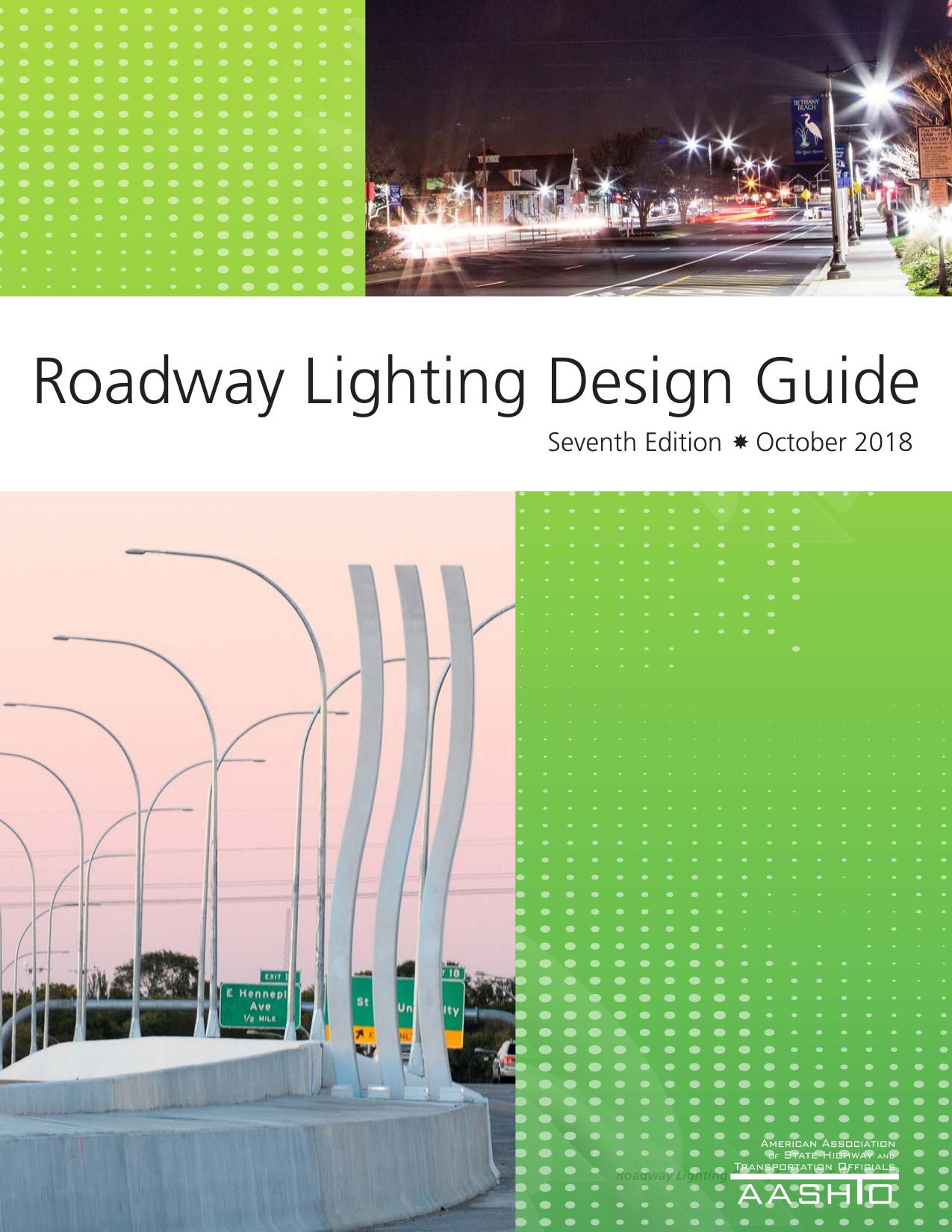
AASHTO GL-7: Roadway Lighting Design Guide, 7th Edition (2018)
Original price was: $84.00.$51.00Current price is: $51.00.
AASHTO GL-7: Roadway Lighting Design Guide, Seventh Edition (2018) provides comprehensive guidance on the planning, design, and implementation of roadway lighting systems. This edition reflects current engineering practices, safety standards, and lighting technologies to enhance visibility, energy efficiency, and operational reliability across modern transportation networks.
Highlights:
- Design principles covering illuminance, luminance, uniformity, and glare control
- Guidance on developing master roadway lighting plans and policies
- Recommended lighting levels for highways, streets, intersections, and pedestrian zones
- Design criteria for tunnels, underpasses, and bridges
- Considerations for temporary lighting in work zones and construction areas
- Evaluation of emerging technologies such as adaptive lighting and smart controls
- Discussion on lighting management systems and energy-efficient solutions
- Environmental impact assessments and aesthetic integration strategies
- Standards for pole placement, maintenance access, and safety
- Support for decision-making with traffic data and community planning considerations
Who It’s For:
An essential reference for transportation agencies, civil engineers, and planners responsible for roadway lighting design and policy development.
GL-7-2018
AASHTO GL-7: Roadway Lighting Design Guide, Seventh Edition (2018) provides comprehensive guidance on the planning, design, and implementation of roadway lighting systems. This edition reflects current engineering practices, safety standards, and lighting technologies to enhance visibility, energy efficiency, and operational reliability across modern transportation networks.
Highlights:
- Design principles covering illuminance, luminance, uniformity, and glare control
- Guidance on developing master roadway lighting plans and policies
- Recommended lighting levels for highways, streets, intersections, and pedestrian zones
- Design criteria for tunnels, underpasses, and bridges
- Considerations for temporary lighting in work zones and construction areas
- Evaluation of emerging technologies such as adaptive lighting and smart controls
- Discussion on lighting management systems and energy-efficient solutions
- Environmental impact assessments and aesthetic integration strategies
- Standards for pole placement, maintenance access, and safety
- Support for decision-making with traffic data and community planning considerations
Who It’s For:
An essential reference for transportation agencies, civil engineers, and planners responsible for roadway lighting design and policy development.
GL-7-2018
Book information
Purchase now to read the book instantly.
Add to cartRelated products
2021 International Private Sewage Disposal Code – IPSDC-2021
The 2021 International Private Sewage Disposal Code® (IPSDC) establishes standards for the design, installation, and maintenance of on-site sewage systems for properties not connected to public sewer systems. It covers new systems and alterations to existing wastewater treatment infrastructure, ensuring health and environmental safety in decentralized applications.
Highlights:
- Offers a prescriptive design approach based on soil conditions, system size, and site evaluation
- Covers soil absorption systems, holding tanks, cesspools, and residential/light commercial treatment units
- Requires structured site evaluations based on percolation rates and environmental conditions
- Specifies construction and material standards for piping, tanks, system layout, and backfill
- Includes enforcement and administrative guidance for permitting, inspections, and jurisdictional customization
- Fully coordinated with the 2021 I-Codes, including IPC, IRC, and IEBC
Who It’s For:
Environmental health professionals, contractors, designers, and code officials regulating private sewage systems in non-sewered areas.
IPSDC-2021
2021 International Private Sewage Disposal Code – IPSDC-2021
The 2021 International Private Sewage Disposal Code® (IPSDC) establishes standards for the design, installation, and maintenance of on-site sewage systems for properties not connected to public sewer systems. It covers new systems and alterations to existing wastewater treatment infrastructure, ensuring health and environmental safety in decentralized applications.
Highlights:
- Offers a prescriptive design approach based on soil conditions, system size, and site evaluation
- Covers soil absorption systems, holding tanks, cesspools, and residential/light commercial treatment units
- Requires structured site evaluations based on percolation rates and environmental conditions
- Specifies construction and material standards for piping, tanks, system layout, and backfill
- Includes enforcement and administrative guidance for permitting, inspections, and jurisdictional customization
- Fully coordinated with the 2021 I-Codes, including IPC, IRC, and IEBC
Who It’s For:
Environmental health professionals, contractors, designers, and code officials regulating private sewage systems in non-sewered areas.
IPSDC-2021
CSA C22.1:21 – Canadian Electrical Code, Part I (25th Edition), 2021
CSA C22.1:21 – Canadian Electrical Code, Part I (25th Edition), 2021 defines the national standard for the safe installation and maintenance of electrical equipment throughout Canada. This edition incorporates updated safety practices, supports emerging technologies, and aligns with evolving environmental and regulatory needs.
Highlights:
- Applies to all voltages and occupancies: residential, commercial, and industrial
- Expanded coverage of renewable energy, storage systems, EV charging, and hazardous locations
- Revised grounding, bonding, wiring methods, and overcurrent protection rules
- New climate resilience rules and guidance for livestock/agricultural buildings
- Refined equipment classifications, voltage references, and conductor ampacity updates
- Enhanced provisions for raceways, environmental protection, and installation practices
- Includes 80+ specialized sections (hospitals, cranes, marinas, airports, amusement parks)
- Appendices cover engineering interpretations, intrinsically safe circuits, and fire protection
Who It's For:
Electricians, engineers, code officials, and contractors operating under Canadian electrical safety regulations. Supersedes CSA C22.1-18.
CSA C22.1:21
CSA C22.1:21 – Canadian Electrical Code, Part I (25th Edition), 2021
CSA C22.1:21 – Canadian Electrical Code, Part I (25th Edition), 2021 defines the national standard for the safe installation and maintenance of electrical equipment throughout Canada. This edition incorporates updated safety practices, supports emerging technologies, and aligns with evolving environmental and regulatory needs.
Highlights:
- Applies to all voltages and occupancies: residential, commercial, and industrial
- Expanded coverage of renewable energy, storage systems, EV charging, and hazardous locations
- Revised grounding, bonding, wiring methods, and overcurrent protection rules
- New climate resilience rules and guidance for livestock/agricultural buildings
- Refined equipment classifications, voltage references, and conductor ampacity updates
- Enhanced provisions for raceways, environmental protection, and installation practices
- Includes 80+ specialized sections (hospitals, cranes, marinas, airports, amusement parks)
- Appendices cover engineering interpretations, intrinsically safe circuits, and fire protection
Who It's For:
Electricians, engineers, code officials, and contractors operating under Canadian electrical safety regulations. Supersedes CSA C22.1-18.
CSA C22.1:21
ASME B31.3-2022: Process Piping
ASME B31.3-2022: Process Piping provides comprehensive engineering requirements for the design, materials, fabrication, examination, testing, and safety of process piping systems used in petroleum refineries, chemical plants, pharmaceutical facilities, textile plants, paper mills, and related processing plants and terminals. It is a vital code for ensuring piping integrity in high-pressure, high-temperature, and corrosive service environments.
Highlights:
- Applies to metallic and nonmetallic piping for chemicals, petroleum, natural gas, and related fluids
- Covers piping components: pipe, flanges, valves, gaskets, bolts, expansion joints, and supports
- Design criteria for internal pressure, sustained loads, displacement strains, and occasional loads
- Construction requirements including welding, brazing, bending, assembly, and material specifications
- Mandatory rules for examination, testing, inspection, and leak testing procedures
- Stress range reduction factors, flexibility analysis, and allowable stress values by material and temperature
- Qualification requirements for personnel, procedures, and fabrication documentation
- Integration with ASME Section IX for welding and ASME B31.1 for power piping interfaces
- Updated stress tables and revisions to weld design rules in para. 328.5.2
- Errata incorporated for clarity on strength tables and weld joint tolerances
Who It’s For:
Mechanical engineers, piping designers, fabricators, inspectors, and maintenance teams working on the safe and code-compliant construction and modification of process piping systems across industries.
B31.3-2022
ASME B31.3-2022: Process Piping
ASME B31.3-2022: Process Piping provides comprehensive engineering requirements for the design, materials, fabrication, examination, testing, and safety of process piping systems used in petroleum refineries, chemical plants, pharmaceutical facilities, textile plants, paper mills, and related processing plants and terminals. It is a vital code for ensuring piping integrity in high-pressure, high-temperature, and corrosive service environments.
Highlights:
- Applies to metallic and nonmetallic piping for chemicals, petroleum, natural gas, and related fluids
- Covers piping components: pipe, flanges, valves, gaskets, bolts, expansion joints, and supports
- Design criteria for internal pressure, sustained loads, displacement strains, and occasional loads
- Construction requirements including welding, brazing, bending, assembly, and material specifications
- Mandatory rules for examination, testing, inspection, and leak testing procedures
- Stress range reduction factors, flexibility analysis, and allowable stress values by material and temperature
- Qualification requirements for personnel, procedures, and fabrication documentation
- Integration with ASME Section IX for welding and ASME B31.1 for power piping interfaces
- Updated stress tables and revisions to weld design rules in para. 328.5.2
- Errata incorporated for clarity on strength tables and weld joint tolerances
Who It’s For:
Mechanical engineers, piping designers, fabricators, inspectors, and maintenance teams working on the safe and code-compliant construction and modification of process piping systems across industries.
B31.3-2022
API 650: Welded Tanks for Oil Storage, 13th Edition (2020)
API 650: Welded Tanks for Oil Storage, 13th Edition (2020) sets the standard for the design, construction, and inspection of vertical, cylindrical, aboveground welded storage tanks operating near atmospheric pressure. Intended for non-refrigerated service up to 93°C (200°F), this specification is essential for tanks used in the storage of petroleum, chemicals, and other liquid products.
Highlights:
- Covers open-top and closed-top tank design for a wide range of capacities
- Allows construction using carbon steel, stainless steel, and duplex steel materials
- Specifies requirements for shell, bottom, roof, nozzle components, and structural supports
- Provides detailed material selection guidance and limits for plates, flanges, and welding consumables
- Defines procedures for welding, welder qualification, and weld inspection
- Includes standards for erection, hydrostatic testing, tolerances, and repair methods
- Annexes address specialized applications:
- Seismic design (Annex E)
- Floating roofs (Annexes C and H)
- Aluminum and stainless steel tanks (Annexes AL and S)
- Elevated temperature service (Annex M)
- Leak detection, under-bottom connections (Annexes I and O)
- API Monogram licensing (Annex Y)
Who It’s For:
A critical reference for storage tank engineers, fabricators, inspectors, and facility operators involved in tank design, procurement, fabrication, and field erection in the oil, gas, chemical, and industrial sectors.
API 650-2020
API 650: Welded Tanks for Oil Storage, 13th Edition (2020)
API 650: Welded Tanks for Oil Storage, 13th Edition (2020) sets the standard for the design, construction, and inspection of vertical, cylindrical, aboveground welded storage tanks operating near atmospheric pressure. Intended for non-refrigerated service up to 93°C (200°F), this specification is essential for tanks used in the storage of petroleum, chemicals, and other liquid products.
Highlights:
- Covers open-top and closed-top tank design for a wide range of capacities
- Allows construction using carbon steel, stainless steel, and duplex steel materials
- Specifies requirements for shell, bottom, roof, nozzle components, and structural supports
- Provides detailed material selection guidance and limits for plates, flanges, and welding consumables
- Defines procedures for welding, welder qualification, and weld inspection
- Includes standards for erection, hydrostatic testing, tolerances, and repair methods
- Annexes address specialized applications:
- Seismic design (Annex E)
- Floating roofs (Annexes C and H)
- Aluminum and stainless steel tanks (Annexes AL and S)
- Elevated temperature service (Annex M)
- Leak detection, under-bottom connections (Annexes I and O)
- API Monogram licensing (Annex Y)
Who It’s For:
A critical reference for storage tank engineers, fabricators, inspectors, and facility operators involved in tank design, procurement, fabrication, and field erection in the oil, gas, chemical, and industrial sectors.
API 650-2020