
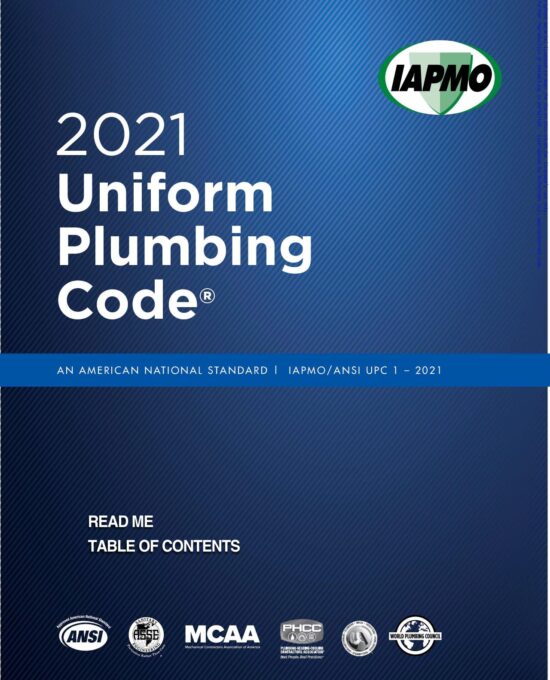
2021 Uniform Plumbing Code – UPC 1-2021 (IAPMO)
The 2021 Uniform Plumbing Code® (UPC), developed by IAPMO and approved through the ANSI consensus process, establishes minimum requirements for plumbing system design, installation, and inspection. It incorporates the latest safety, efficiency, and performance provisions used across residential, commercial, and industrial projects.
Highlights:
- Adds Appendix N for defining scald risk and Legionella prevention through temperature control
- Updates backflow prevention device standards and installation methods
- Expands temperature-limiting protections for hot water outlets
- Establishes safety requirements for rooftop appliances and raised platforms
- Revises T&P valve discharge piping provisions for clarity and safety
- Introduces requirements for leak detection and monitoring technologies
- Enhances potable water pump installation and performance standards
- Adds DWV system updates for materials, cleanout access, and venting configurations
- Reorganizes medical and fuel gas system chapters for improved usability
Who It’s For:
Plumbing engineers, contractors, inspectors, and code officials enforcing compliant plumbing installations under the 2021 UPC framework.
UPC 1-2021 (IAPMO)
2021 Uniform Plumbing Code – UPC 1-2021 (IAPMO)
The 2021 Uniform Plumbing Code® (UPC), developed by IAPMO and approved through the ANSI consensus process, establishes minimum requirements for plumbing system design, installation, and inspection. It incorporates the latest safety, efficiency, and performance provisions used across residential, commercial, and industrial projects.
Highlights:
- Adds Appendix N for defining scald risk and Legionella prevention through temperature control
- Updates backflow prevention device standards and installation methods
- Expands temperature-limiting protections for hot water outlets
- Establishes safety requirements for rooftop appliances and raised platforms
- Revises T&P valve discharge piping provisions for clarity and safety
- Introduces requirements for leak detection and monitoring technologies
- Enhances potable water pump installation and performance standards
- Adds DWV system updates for materials, cleanout access, and venting configurations
- Reorganizes medical and fuel gas system chapters for improved usability
Who It’s For:
Plumbing engineers, contractors, inspectors, and code officials enforcing compliant plumbing installations under the 2021 UPC framework.
UPC 1-2021 (IAPMO)
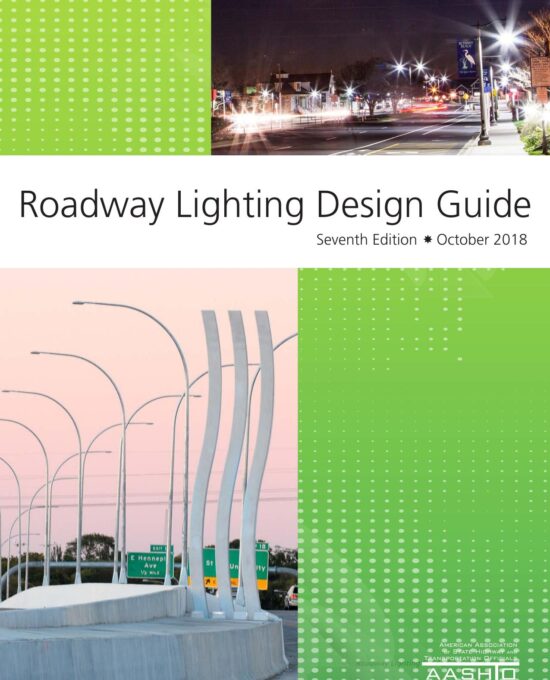
AASHTO GL-7: Roadway Lighting Design Guide, 7th Edition (2018)
AASHTO GL-7: Roadway Lighting Design Guide, Seventh Edition (2018) provides comprehensive guidance on the planning, design, and implementation of roadway lighting systems. This edition reflects current engineering practices, safety standards, and lighting technologies to enhance visibility, energy efficiency, and operational reliability across modern transportation networks.
Highlights:
- Design principles covering illuminance, luminance, uniformity, and glare control
- Guidance on developing master roadway lighting plans and policies
- Recommended lighting levels for highways, streets, intersections, and pedestrian zones
- Design criteria for tunnels, underpasses, and bridges
- Considerations for temporary lighting in work zones and construction areas
- Evaluation of emerging technologies such as adaptive lighting and smart controls
- Discussion on lighting management systems and energy-efficient solutions
- Environmental impact assessments and aesthetic integration strategies
- Standards for pole placement, maintenance access, and safety
- Support for decision-making with traffic data and community planning considerations
Who It’s For:
An essential reference for transportation agencies, civil engineers, and planners responsible for roadway lighting design and policy development.
GL-7-2018
AASHTO GL-7: Roadway Lighting Design Guide, 7th Edition (2018)
AASHTO GL-7: Roadway Lighting Design Guide, Seventh Edition (2018) provides comprehensive guidance on the planning, design, and implementation of roadway lighting systems. This edition reflects current engineering practices, safety standards, and lighting technologies to enhance visibility, energy efficiency, and operational reliability across modern transportation networks.
Highlights:
- Design principles covering illuminance, luminance, uniformity, and glare control
- Guidance on developing master roadway lighting plans and policies
- Recommended lighting levels for highways, streets, intersections, and pedestrian zones
- Design criteria for tunnels, underpasses, and bridges
- Considerations for temporary lighting in work zones and construction areas
- Evaluation of emerging technologies such as adaptive lighting and smart controls
- Discussion on lighting management systems and energy-efficient solutions
- Environmental impact assessments and aesthetic integration strategies
- Standards for pole placement, maintenance access, and safety
- Support for decision-making with traffic data and community planning considerations
Who It’s For:
An essential reference for transportation agencies, civil engineers, and planners responsible for roadway lighting design and policy development.
GL-7-2018
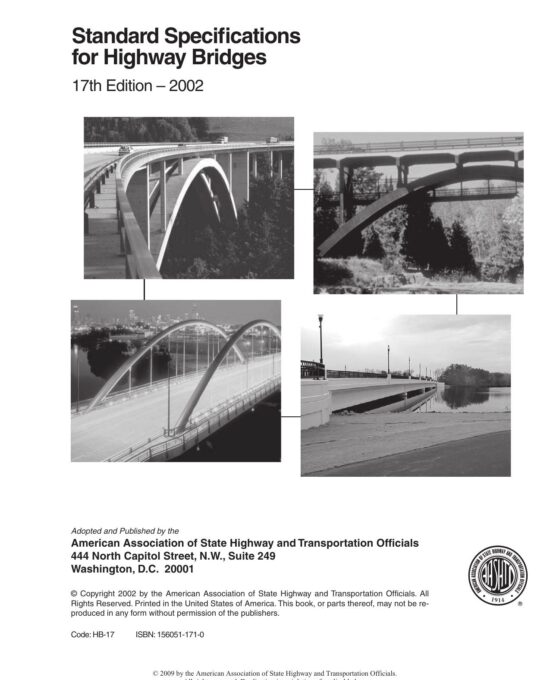
AASHTO HB-17: Standard Specifications for Highway Bridges, 17th Edition (2002)
AASHTO HB-17: Standard Specifications for Highway Bridges, 17th Edition (2002) provides comprehensive criteria for the design, construction, and maintenance of highway bridges throughout the United States. This edition is the final update prior to the nationwide adoption of Load and Resistance Factor Design (LRFD) standards.
Highlights:
- General provisions for bridge design, structural analysis, and performance
- Criteria for superstructures, substructures, abutments, culverts, and piers
- Service load and load factor design methods for concrete, steel, timber, and prestressed components
- Requirements for foundations, retaining structures, and soil-structure interaction
- Specifications addressing load distribution, fatigue, seismic considerations, and strength evaluation
- Commentary and notes incorporating interim revisions through 2003
- References to supporting standards from AASHTO, ASTM, AWS, and others
- Applicable to rehabilitation, legacy design validation, and maintenance planning for non-LRFD bridges
Who It’s For:
A critical reference for bridge engineers, transportation officials, and contractors working with legacy structures or evaluating designs developed before the transition to LRFD.
HB-17-2002
AASHTO HB-17: Standard Specifications for Highway Bridges, 17th Edition (2002)
AASHTO HB-17: Standard Specifications for Highway Bridges, 17th Edition (2002) provides comprehensive criteria for the design, construction, and maintenance of highway bridges throughout the United States. This edition is the final update prior to the nationwide adoption of Load and Resistance Factor Design (LRFD) standards.
Highlights:
- General provisions for bridge design, structural analysis, and performance
- Criteria for superstructures, substructures, abutments, culverts, and piers
- Service load and load factor design methods for concrete, steel, timber, and prestressed components
- Requirements for foundations, retaining structures, and soil-structure interaction
- Specifications addressing load distribution, fatigue, seismic considerations, and strength evaluation
- Commentary and notes incorporating interim revisions through 2003
- References to supporting standards from AASHTO, ASTM, AWS, and others
- Applicable to rehabilitation, legacy design validation, and maintenance planning for non-LRFD bridges
Who It’s For:
A critical reference for bridge engineers, transportation officials, and contractors working with legacy structures or evaluating designs developed before the transition to LRFD.
HB-17-2002
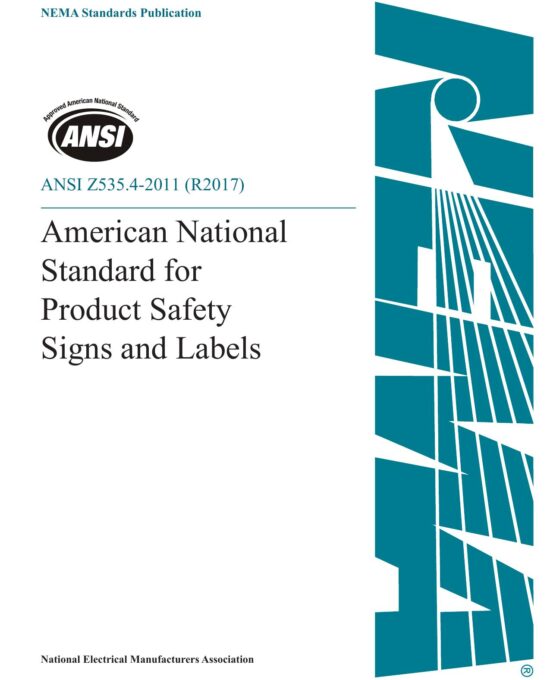
ANSI Z535.4-2011 (R2017): Product Safety Signs and Labels
ANSI Z535.4-2011 (R2017): Product Safety Signs and Labels provides standardized guidance for the design and application of product safety signs and labels. This reaffirmed edition helps manufacturers effectively communicate hazard information to reduce risk and improve safety across a wide range of industrial and consumer products.
Highlights:
- Defines use of standardized signal words: DANGER, WARNING, CAUTION, and NOTICE
- Establishes hazard classification systems and formatting conventions
- Specifies layout, safety colors, symbols, and typography for clear communication
- Offers guidance on incorporating safety symbols for universal understanding
- Sets durability requirements for labels exposed to harsh environments
- Recommends best practices for label placement and visibility
Who It’s For:
A vital reference for engineers, product designers, compliance managers, and safety professionals responsible for labeling products in accordance with ANSI safety communication standards.
ANSI-Z535.4-2011-R2017
ANSI Z535.4-2011 (R2017): Product Safety Signs and Labels
ANSI Z535.4-2011 (R2017): Product Safety Signs and Labels provides standardized guidance for the design and application of product safety signs and labels. This reaffirmed edition helps manufacturers effectively communicate hazard information to reduce risk and improve safety across a wide range of industrial and consumer products.
Highlights:
- Defines use of standardized signal words: DANGER, WARNING, CAUTION, and NOTICE
- Establishes hazard classification systems and formatting conventions
- Specifies layout, safety colors, symbols, and typography for clear communication
- Offers guidance on incorporating safety symbols for universal understanding
- Sets durability requirements for labels exposed to harsh environments
- Recommends best practices for label placement and visibility
Who It’s For:
A vital reference for engineers, product designers, compliance managers, and safety professionals responsible for labeling products in accordance with ANSI safety communication standards.
ANSI-Z535.4-2011-R2017
ANSI/ASHRAE 62.1-2019: Ventilation for Acceptable Indoor Air Quality
ANSI/ASHRAE Standard 62.1-2019: Ventilation for Acceptable Indoor Air Quality establishes minimum requirements for ventilation system design, installation, and maintenance in commercial and institutional buildings. This standard is a foundational reference for achieving acceptable indoor air quality (IAQ) and reducing health risks associated with poor ventilation.
Highlights:
- Updated Ventilation Rate Procedure with enhanced zone-level calculation methods
- Revised Natural Ventilation Procedure, including outdoor air quality and mechanical integration
- Prohibits use of ozone-generating air-cleaning devices
- Requires humidity control using dew point rather than relative humidity
- Separates patient care areas now governed under ASHRAE/ASHE Standard 170
- Clarifies definitions for spaces, ventilation zones, and contaminant sources
- Outlines requirements for design documentation, commissioning, and IAQ performance testing
- Includes appendices with ventilation rate rationale, IAQ procedures, and engineering tools
Who It’s For:
A critical reference for mechanical engineers, HVAC designers, facility managers, and code officials involved in ensuring compliant ventilation design and indoor air quality performance.
ASHRAE-62.1-2019
ANSI/ASHRAE 62.1-2019: Ventilation for Acceptable Indoor Air Quality
ANSI/ASHRAE Standard 62.1-2019: Ventilation for Acceptable Indoor Air Quality establishes minimum requirements for ventilation system design, installation, and maintenance in commercial and institutional buildings. This standard is a foundational reference for achieving acceptable indoor air quality (IAQ) and reducing health risks associated with poor ventilation.
Highlights:
- Updated Ventilation Rate Procedure with enhanced zone-level calculation methods
- Revised Natural Ventilation Procedure, including outdoor air quality and mechanical integration
- Prohibits use of ozone-generating air-cleaning devices
- Requires humidity control using dew point rather than relative humidity
- Separates patient care areas now governed under ASHRAE/ASHE Standard 170
- Clarifies definitions for spaces, ventilation zones, and contaminant sources
- Outlines requirements for design documentation, commissioning, and IAQ performance testing
- Includes appendices with ventilation rate rationale, IAQ procedures, and engineering tools
Who It’s For:
A critical reference for mechanical engineers, HVAC designers, facility managers, and code officials involved in ensuring compliant ventilation design and indoor air quality performance.
ASHRAE-62.1-2019
ANSI/ASHRAE 62.1-2022: Ventilation for Acceptable Indoor Air Quality
ANSI/ASHRAE Standard 62.1-2022: Ventilation for Acceptable Indoor Air Quality defines minimum requirements for mechanical and natural ventilation systems in commercial, institutional, and industrial buildings. Widely referenced by model codes such as the International Building Code, this standard is critical for achieving acceptable indoor air quality (IAQ) in non-residential environments.
Highlights:
- Defines procedures for assessing outdoor air quality and ventilation by occupancy type
- Revised Section 5 reorganizes systems/equipment content by airflow path
- Updates IAQ Procedure with design compound guidance and mass-balance modeling
- Establishes separation distances for exhaust air and dew point limits for cooled spaces
- Classifies ventilation zones and defines airflow effectiveness and breathing zone metrics
- Covers design, installation, commissioning, and maintenance of ventilation systems
- Includes appendices for healthcare settings, air quality evaluation, compliance paths, and simplified rate calculations
- Incorporates addenda through Appendix Q as part of its continuous maintenance model
Who It’s For:
Designed for mechanical engineers, HVAC professionals, code officials, and facility managers responsible for designing and maintaining compliant ventilation systems that promote occupant health and comfort.
ASHRAE 62.1-2022
ANSI/ASHRAE 62.1-2022: Ventilation for Acceptable Indoor Air Quality
ANSI/ASHRAE Standard 62.1-2022: Ventilation for Acceptable Indoor Air Quality defines minimum requirements for mechanical and natural ventilation systems in commercial, institutional, and industrial buildings. Widely referenced by model codes such as the International Building Code, this standard is critical for achieving acceptable indoor air quality (IAQ) in non-residential environments.
Highlights:
- Defines procedures for assessing outdoor air quality and ventilation by occupancy type
- Revised Section 5 reorganizes systems/equipment content by airflow path
- Updates IAQ Procedure with design compound guidance and mass-balance modeling
- Establishes separation distances for exhaust air and dew point limits for cooled spaces
- Classifies ventilation zones and defines airflow effectiveness and breathing zone metrics
- Covers design, installation, commissioning, and maintenance of ventilation systems
- Includes appendices for healthcare settings, air quality evaluation, compliance paths, and simplified rate calculations
- Incorporates addenda through Appendix Q as part of its continuous maintenance model
Who It’s For:
Designed for mechanical engineers, HVAC professionals, code officials, and facility managers responsible for designing and maintaining compliant ventilation systems that promote occupant health and comfort.
ASHRAE 62.1-2022
API 650: Welded Tanks for Oil Storage, 13th Edition (2020)
API 650: Welded Tanks for Oil Storage, 13th Edition (2020) sets the standard for the design, construction, and inspection of vertical, cylindrical, aboveground welded storage tanks operating near atmospheric pressure. Intended for non-refrigerated service up to 93°C (200°F), this specification is essential for tanks used in the storage of petroleum, chemicals, and other liquid products.
Highlights:
- Covers open-top and closed-top tank design for a wide range of capacities
- Allows construction using carbon steel, stainless steel, and duplex steel materials
- Specifies requirements for shell, bottom, roof, nozzle components, and structural supports
- Provides detailed material selection guidance and limits for plates, flanges, and welding consumables
- Defines procedures for welding, welder qualification, and weld inspection
- Includes standards for erection, hydrostatic testing, tolerances, and repair methods
- Annexes address specialized applications:
- Seismic design (Annex E)
- Floating roofs (Annexes C and H)
- Aluminum and stainless steel tanks (Annexes AL and S)
- Elevated temperature service (Annex M)
- Leak detection, under-bottom connections (Annexes I and O)
- API Monogram licensing (Annex Y)
Who It’s For:
A critical reference for storage tank engineers, fabricators, inspectors, and facility operators involved in tank design, procurement, fabrication, and field erection in the oil, gas, chemical, and industrial sectors.
API 650-2020
API 650: Welded Tanks for Oil Storage, 13th Edition (2020)
API 650: Welded Tanks for Oil Storage, 13th Edition (2020) sets the standard for the design, construction, and inspection of vertical, cylindrical, aboveground welded storage tanks operating near atmospheric pressure. Intended for non-refrigerated service up to 93°C (200°F), this specification is essential for tanks used in the storage of petroleum, chemicals, and other liquid products.
Highlights:
- Covers open-top and closed-top tank design for a wide range of capacities
- Allows construction using carbon steel, stainless steel, and duplex steel materials
- Specifies requirements for shell, bottom, roof, nozzle components, and structural supports
- Provides detailed material selection guidance and limits for plates, flanges, and welding consumables
- Defines procedures for welding, welder qualification, and weld inspection
- Includes standards for erection, hydrostatic testing, tolerances, and repair methods
- Annexes address specialized applications:
- Seismic design (Annex E)
- Floating roofs (Annexes C and H)
- Aluminum and stainless steel tanks (Annexes AL and S)
- Elevated temperature service (Annex M)
- Leak detection, under-bottom connections (Annexes I and O)
- API Monogram licensing (Annex Y)
Who It’s For:
A critical reference for storage tank engineers, fabricators, inspectors, and facility operators involved in tank design, procurement, fabrication, and field erection in the oil, gas, chemical, and industrial sectors.
API 650-2020
ASCE 24-14: Flood Resistant Design and Construction, 2014
ASCE 24-14: Flood Resistant Design and Construction provides minimum requirements for the planning, design, and construction of buildings in flood-prone areas. Referenced by the International Building Code (IBC) and the National Flood Insurance Program (NFIP), this standard supports floodplain management regulations and promotes resilience through engineering best practices.
Highlights:
- Defines Flood Design Class (1–4) to guide risk-based design criteria
- Specifies elevation requirements based on flood hazard zones, building type, and occupancy
- Includes wet and dry floodproofing methods for commercial and residential applications
- Updates flood opening requirements including engineered vent systems and louvers
- Provides structural design standards for Coastal A Zones and coastal high hazard areas
- Identifies acceptable flood damage-resistant materials and construction techniques
- Covers tanks, utilities, egress, garages, and parking structures in flood-prone zones
- Offers guidance for substantial improvements and retrofitting of existing buildings
- Coordinates with ASCE 7 and NFIP regulations to ensure code consistency and compliance
Who It’s For:
Essential for civil engineers, architects, code officials, and builders involved in flood zone development, permitting, and compliance with FEMA, IBC, and local floodplain standards.
ASCE 24-2014
ASCE 24-14: Flood Resistant Design and Construction, 2014
ASCE 24-14: Flood Resistant Design and Construction provides minimum requirements for the planning, design, and construction of buildings in flood-prone areas. Referenced by the International Building Code (IBC) and the National Flood Insurance Program (NFIP), this standard supports floodplain management regulations and promotes resilience through engineering best practices.
Highlights:
- Defines Flood Design Class (1–4) to guide risk-based design criteria
- Specifies elevation requirements based on flood hazard zones, building type, and occupancy
- Includes wet and dry floodproofing methods for commercial and residential applications
- Updates flood opening requirements including engineered vent systems and louvers
- Provides structural design standards for Coastal A Zones and coastal high hazard areas
- Identifies acceptable flood damage-resistant materials and construction techniques
- Covers tanks, utilities, egress, garages, and parking structures in flood-prone zones
- Offers guidance for substantial improvements and retrofitting of existing buildings
- Coordinates with ASCE 7 and NFIP regulations to ensure code consistency and compliance
Who It’s For:
Essential for civil engineers, architects, code officials, and builders involved in flood zone development, permitting, and compliance with FEMA, IBC, and local floodplain standards.
ASCE 24-2014
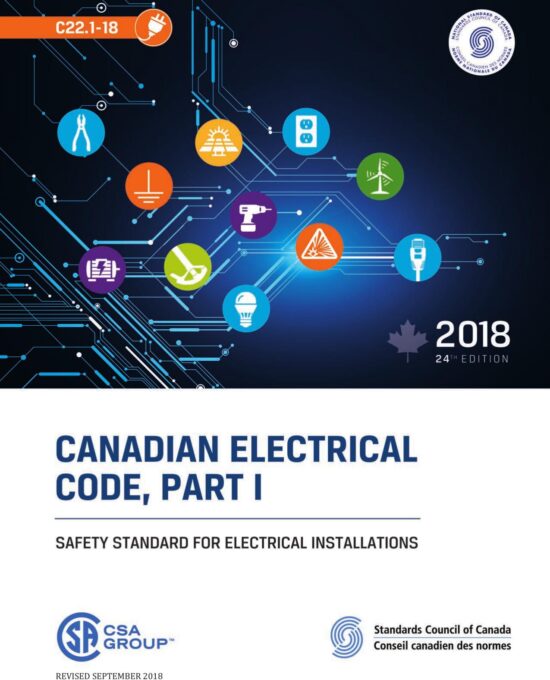
CSA C22.1-18 – Canadian Electrical Code, Part I (24th Edition), 2018
CSA C22.1-18 – Canadian Electrical Code, Part I (24th Edition), 2018 sets the national standard for the safe installation and maintenance of electrical equipment in Canada. This edition introduces significant changes affecting residential, commercial, and industrial systems, including expanded support for EV infrastructure and renewable energy integration.
Highlights:
- Rules for safe wiring and equipment installation across all building types
- Streamlined Section 10 on grounding and bonding
- Expanded energy management requirements supporting EV infrastructure
- Updated tamper-resistant receptacle requirements for dwellings and child-accessible spaces
- GFCI protection for heating controls in wet locations (Section 62)
- Revised ampacity tables, conductor ID, and overcurrent protection criteria
- Covers renewables, patient care, cranes, welding, temporary wiring, and EV charging
- New Appendix M with bilingual markings and updated hazardous area guidance
Who It's For:
Electricians, engineers, inspectors, and contractors in Canadian jurisdictions relying on national or provincial electrical installation regulations.
CSA C22.1-18
CSA C22.1-18 – Canadian Electrical Code, Part I (24th Edition), 2018
CSA C22.1-18 – Canadian Electrical Code, Part I (24th Edition), 2018 sets the national standard for the safe installation and maintenance of electrical equipment in Canada. This edition introduces significant changes affecting residential, commercial, and industrial systems, including expanded support for EV infrastructure and renewable energy integration.
Highlights:
- Rules for safe wiring and equipment installation across all building types
- Streamlined Section 10 on grounding and bonding
- Expanded energy management requirements supporting EV infrastructure
- Updated tamper-resistant receptacle requirements for dwellings and child-accessible spaces
- GFCI protection for heating controls in wet locations (Section 62)
- Revised ampacity tables, conductor ID, and overcurrent protection criteria
- Covers renewables, patient care, cranes, welding, temporary wiring, and EV charging
- New Appendix M with bilingual markings and updated hazardous area guidance
Who It's For:
Electricians, engineers, inspectors, and contractors in Canadian jurisdictions relying on national or provincial electrical installation regulations.
CSA C22.1-18
CSA C22.1:21 – Canadian Electrical Code, Part I (25th Edition), 2021
CSA C22.1:21 – Canadian Electrical Code, Part I (25th Edition), 2021 defines the national standard for the safe installation and maintenance of electrical equipment throughout Canada. This edition incorporates updated safety practices, supports emerging technologies, and aligns with evolving environmental and regulatory needs.
Highlights:
- Applies to all voltages and occupancies: residential, commercial, and industrial
- Expanded coverage of renewable energy, storage systems, EV charging, and hazardous locations
- Revised grounding, bonding, wiring methods, and overcurrent protection rules
- New climate resilience rules and guidance for livestock/agricultural buildings
- Refined equipment classifications, voltage references, and conductor ampacity updates
- Enhanced provisions for raceways, environmental protection, and installation practices
- Includes 80+ specialized sections (hospitals, cranes, marinas, airports, amusement parks)
- Appendices cover engineering interpretations, intrinsically safe circuits, and fire protection
Who It's For:
Electricians, engineers, code officials, and contractors operating under Canadian electrical safety regulations. Supersedes CSA C22.1-18.
CSA C22.1:21
CSA C22.1:21 – Canadian Electrical Code, Part I (25th Edition), 2021
CSA C22.1:21 – Canadian Electrical Code, Part I (25th Edition), 2021 defines the national standard for the safe installation and maintenance of electrical equipment throughout Canada. This edition incorporates updated safety practices, supports emerging technologies, and aligns with evolving environmental and regulatory needs.
Highlights:
- Applies to all voltages and occupancies: residential, commercial, and industrial
- Expanded coverage of renewable energy, storage systems, EV charging, and hazardous locations
- Revised grounding, bonding, wiring methods, and overcurrent protection rules
- New climate resilience rules and guidance for livestock/agricultural buildings
- Refined equipment classifications, voltage references, and conductor ampacity updates
- Enhanced provisions for raceways, environmental protection, and installation practices
- Includes 80+ specialized sections (hospitals, cranes, marinas, airports, amusement parks)
- Appendices cover engineering interpretations, intrinsically safe circuits, and fire protection
Who It's For:
Electricians, engineers, code officials, and contractors operating under Canadian electrical safety regulations. Supersedes CSA C22.1-18.
CSA C22.1:21
IEC 60601-1:2020 – Medical Electrical Equipment – General Requirements for Basic Safety and Essential Performance, 2020
- Applies to the basic safety and essential performance of electrical medical equipment and systems
- Addresses hazards related to electrical shock, mechanical failure, thermal effects, and radiation
- Integrates risk management aligned with ISO 14971 for hazard control and usability
- Specifies labeling, documentation, and marking requirements for product traceability and safe use
- Supports conformity assessment and global regulatory submissions
- Clarified terminology and pass/fail testing criteria
- Updated guidance for software safety, usability engineering, and wireless technologies
- Enhanced alignment with IEC 60601-1 collateral standards (e.g., -1-2 for EMC, -1-6 for usability)
IEC 60601-1:2020
IEC 60601-1:2020 – Medical Electrical Equipment – General Requirements for Basic Safety and Essential Performance, 2020
- Applies to the basic safety and essential performance of electrical medical equipment and systems
- Addresses hazards related to electrical shock, mechanical failure, thermal effects, and radiation
- Integrates risk management aligned with ISO 14971 for hazard control and usability
- Specifies labeling, documentation, and marking requirements for product traceability and safe use
- Supports conformity assessment and global regulatory submissions
- Clarified terminology and pass/fail testing criteria
- Updated guidance for software safety, usability engineering, and wireless technologies
- Enhanced alignment with IEC 60601-1 collateral standards (e.g., -1-2 for EMC, -1-6 for usability)
IEC 60601-1:2020
IEEE C2-2023 – National Electrical Safety Code (NESC), 2023 Edition
IEEE C2-2023 – National Electrical Safety Code (NESC) provides the latest safety requirements for the installation, operation, and maintenance of electric supply and communication systems. Developed through ANSI-accredited consensus, the 2023 edition incorporates updates for new technologies, environmental resilience, and evolving industry practices.
Highlights:
- New rules for photovoltaic (PV) generation and advanced energy storage systems
- Expanded arc hazard clothing tables for medium-voltage systems up to 36 kV
- Updated grounding rules for mountainous terrain, coastal zones, and submerged systems
- Revised clearance criteria for conductors, antennas, and structural obstructions
- Clarified definitions and loading guidelines for extreme wind, ice, and weather events
- Standardized inch–foot–pound units for U.S.-centric engineering and safety compliance
Covered Parts:
- Part 1: Electric Supply Stations
- Part 2: Overhead Lines
- Part 3: Underground Lines
- Part 4: Work Rules for Supply and Communication Employees
Who It’s For:
Engineers, utility operators, telecom providers, safety professionals, and contractors responsible for the safe design, construction, and operation of electrical and communications infrastructure.
IEEE C2-2023
IEEE C2-2023 – National Electrical Safety Code (NESC), 2023 Edition
IEEE C2-2023 – National Electrical Safety Code (NESC) provides the latest safety requirements for the installation, operation, and maintenance of electric supply and communication systems. Developed through ANSI-accredited consensus, the 2023 edition incorporates updates for new technologies, environmental resilience, and evolving industry practices.
Highlights:
- New rules for photovoltaic (PV) generation and advanced energy storage systems
- Expanded arc hazard clothing tables for medium-voltage systems up to 36 kV
- Updated grounding rules for mountainous terrain, coastal zones, and submerged systems
- Revised clearance criteria for conductors, antennas, and structural obstructions
- Clarified definitions and loading guidelines for extreme wind, ice, and weather events
- Standardized inch–foot–pound units for U.S.-centric engineering and safety compliance
Covered Parts:
- Part 1: Electric Supply Stations
- Part 2: Overhead Lines
- Part 3: Underground Lines
- Part 4: Work Rules for Supply and Communication Employees
Who It’s For:
Engineers, utility operators, telecom providers, safety professionals, and contractors responsible for the safe design, construction, and operation of electrical and communications infrastructure.
IEEE C2-2023