
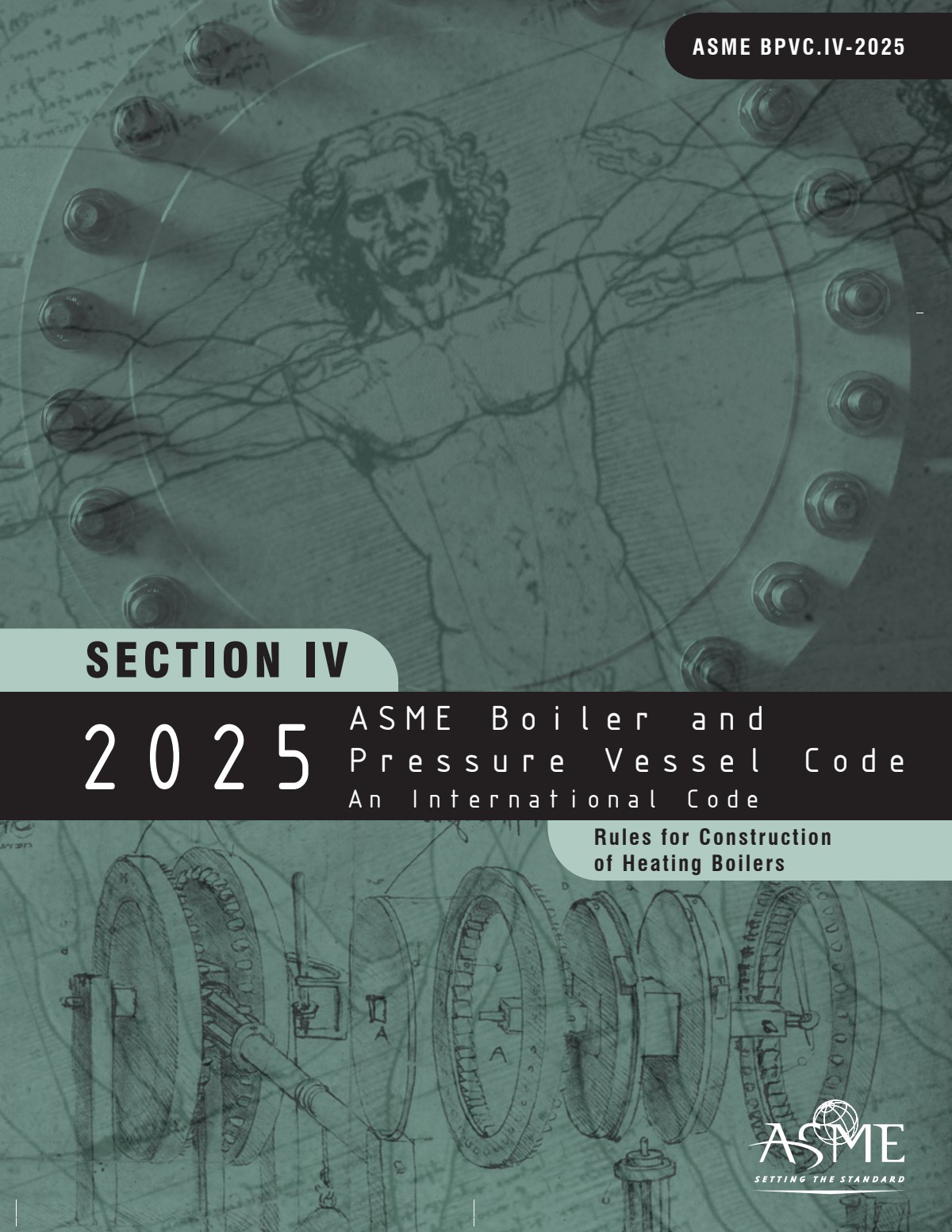
ASME BPVC Section IV: Rules for Construction of Heating Boilers (2025 Edition)
Original price was: $690.00.$230.00Current price is: $230.00.
ASME BPVC Section IV: Rules for Construction of Heating Boilers (2025 Edition) specifies design, fabrication, installation, and inspection requirements for steam heating, hot water heating, and water supply boilers operating at low pressure.
This edition reflects the latest industry standards for safety valve testing, quality control, certification markings (H, HV, HLW), and new material approvals. It supports use across various fuel types including oil, gas, electricity, coal, and more.
A critical resource for engineers, manufacturers, and inspectors, this ANSI/ASME standard ensures safe, code-compliant heating boiler construction and inspection practices.
ASME BPVC Section IV: Rules for Construction of Heating Boilers (2025 Edition) specifies design, fabrication, installation, and inspection requirements for steam heating, hot water heating, and water supply boilers operating at low pressure.
This edition reflects the latest industry standards for safety valve testing, quality control, certification markings (H, HV, HLW), and new material approvals. It supports use across various fuel types including oil, gas, electricity, coal, and more.
A critical resource for engineers, manufacturers, and inspectors, this ANSI/ASME standard ensures safe, code-compliant heating boiler construction and inspection practices.
Book information
Purchase now to read the book instantly.
Add to cartRelated products
CSA C22.1:21 – Canadian Electrical Code, Part I (25th Edition), 2021
CSA C22.1:21 – Canadian Electrical Code, Part I (25th Edition), 2021 defines the national standard for the safe installation and maintenance of electrical equipment throughout Canada. This edition incorporates updated safety practices, supports emerging technologies, and aligns with evolving environmental and regulatory needs.
Highlights:
- Applies to all voltages and occupancies: residential, commercial, and industrial
- Expanded coverage of renewable energy, storage systems, EV charging, and hazardous locations
- Revised grounding, bonding, wiring methods, and overcurrent protection rules
- New climate resilience rules and guidance for livestock/agricultural buildings
- Refined equipment classifications, voltage references, and conductor ampacity updates
- Enhanced provisions for raceways, environmental protection, and installation practices
- Includes 80+ specialized sections (hospitals, cranes, marinas, airports, amusement parks)
- Appendices cover engineering interpretations, intrinsically safe circuits, and fire protection
Who It's For:
Electricians, engineers, code officials, and contractors operating under Canadian electrical safety regulations. Supersedes CSA C22.1-18.
CSA C22.1:21
CSA C22.1:21 – Canadian Electrical Code, Part I (25th Edition), 2021
CSA C22.1:21 – Canadian Electrical Code, Part I (25th Edition), 2021 defines the national standard for the safe installation and maintenance of electrical equipment throughout Canada. This edition incorporates updated safety practices, supports emerging technologies, and aligns with evolving environmental and regulatory needs.
Highlights:
- Applies to all voltages and occupancies: residential, commercial, and industrial
- Expanded coverage of renewable energy, storage systems, EV charging, and hazardous locations
- Revised grounding, bonding, wiring methods, and overcurrent protection rules
- New climate resilience rules and guidance for livestock/agricultural buildings
- Refined equipment classifications, voltage references, and conductor ampacity updates
- Enhanced provisions for raceways, environmental protection, and installation practices
- Includes 80+ specialized sections (hospitals, cranes, marinas, airports, amusement parks)
- Appendices cover engineering interpretations, intrinsically safe circuits, and fire protection
Who It's For:
Electricians, engineers, code officials, and contractors operating under Canadian electrical safety regulations. Supersedes CSA C22.1-18.
CSA C22.1:21
2021 International Fuel Gas Code – IFGC-2021
The 2021 International Fuel Gas Code® (IFGC) provides comprehensive requirements for the design and installation of fuel gas systems in residential, commercial, and industrial buildings. It governs piping, appliances, combustion air, chimneys, vents, and gaseous hydrogen systems, ensuring safe and efficient fuel gas usage across all occupancies. Fully aligned with the 2021 I-Code suite.
Highlights:
- Regulates natural gas systems up to 125 psig and LP-gas up to 20 psig from point of delivery to appliance shutoff
- Includes complete standards for gaseous hydrogen systems in Chapter 7
- Covers installation, combustion air, and venting for a wide range of fuel gas appliances
- Supports both prescriptive and engineered design methods for air supply, venting, and pipe sizing
- Provides appendices for gas pipe and vent sizing, inspection procedures, and appeals processes
- References updated technical standards from ASME, ANSI, AGA, CSA, and NFPA
- Revised administration chapter clarifies enforcement roles, jurisdictional edits, and appeals
Who It’s For:
Mechanical engineers, gas system designers, inspectors, code officials, and utility providers responsible for safe and compliant gas system installations.
IFGC-2021
2021 International Fuel Gas Code – IFGC-2021
The 2021 International Fuel Gas Code® (IFGC) provides comprehensive requirements for the design and installation of fuel gas systems in residential, commercial, and industrial buildings. It governs piping, appliances, combustion air, chimneys, vents, and gaseous hydrogen systems, ensuring safe and efficient fuel gas usage across all occupancies. Fully aligned with the 2021 I-Code suite.
Highlights:
- Regulates natural gas systems up to 125 psig and LP-gas up to 20 psig from point of delivery to appliance shutoff
- Includes complete standards for gaseous hydrogen systems in Chapter 7
- Covers installation, combustion air, and venting for a wide range of fuel gas appliances
- Supports both prescriptive and engineered design methods for air supply, venting, and pipe sizing
- Provides appendices for gas pipe and vent sizing, inspection procedures, and appeals processes
- References updated technical standards from ASME, ANSI, AGA, CSA, and NFPA
- Revised administration chapter clarifies enforcement roles, jurisdictional edits, and appeals
Who It’s For:
Mechanical engineers, gas system designers, inspectors, code officials, and utility providers responsible for safe and compliant gas system installations.
IFGC-2021
ASME B16.5-2020: Pipe Flanges and Flanged Fittings
Product Summary:
ASME B16.5-2020 defines the requirements for pipe flanges and flanged fittings in sizes NPS ½ through NPS 24, covering pressure–temperature ratings, dimensions, tolerances, materials, and testing. It applies to components used in bolted flange joints made from cast, forged, or plate materials in industrial piping systems.
Key Features:
- Pressure–temperature ratings for Classes 150 through 2500
- Dimensional standards for weld neck, blind, reducing, and other flange types
- Specifications for bolting materials, gaskets, and flange assembly practices
- Manufacturing tolerances and permanent marking requirements
- Material listings with corresponding ASTM designations for forgings, castings, and plates
- Guidance on gasket selection, bolted joint design, and system hydrotesting
- Appendices covering bolt length calculations, pressure rating derivation, and quality system standards
- Metric and U.S. Customary units presented side-by-side for reference
Who It’s For:
Essential for piping designers, mechanical engineers, fabricators, and QA/QC personnel involved in pressure piping systems across oil, gas, chemical, and industrial sectors.
ASME B16.5-2020
ASME B16.5-2020: Pipe Flanges and Flanged Fittings
Product Summary:
ASME B16.5-2020 defines the requirements for pipe flanges and flanged fittings in sizes NPS ½ through NPS 24, covering pressure–temperature ratings, dimensions, tolerances, materials, and testing. It applies to components used in bolted flange joints made from cast, forged, or plate materials in industrial piping systems.
Key Features:
- Pressure–temperature ratings for Classes 150 through 2500
- Dimensional standards for weld neck, blind, reducing, and other flange types
- Specifications for bolting materials, gaskets, and flange assembly practices
- Manufacturing tolerances and permanent marking requirements
- Material listings with corresponding ASTM designations for forgings, castings, and plates
- Guidance on gasket selection, bolted joint design, and system hydrotesting
- Appendices covering bolt length calculations, pressure rating derivation, and quality system standards
- Metric and U.S. Customary units presented side-by-side for reference
Who It’s For:
Essential for piping designers, mechanical engineers, fabricators, and QA/QC personnel involved in pressure piping systems across oil, gas, chemical, and industrial sectors.
ASME B16.5-2020
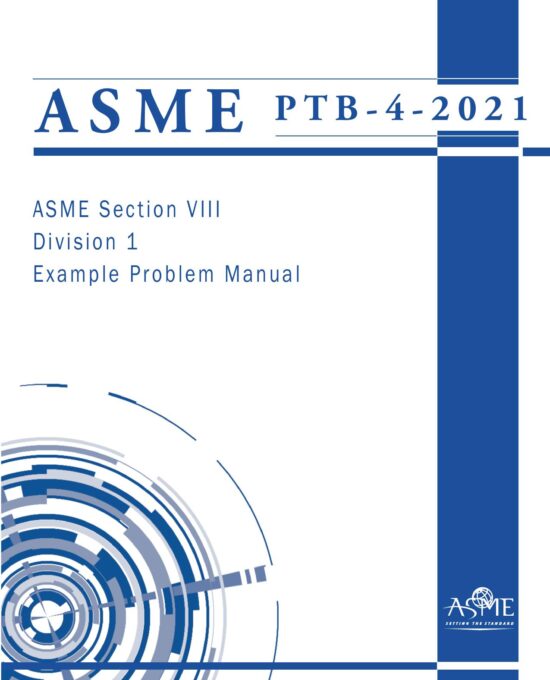
ASME PTB-4-2021: ASME Section VIII – Division 1 Example Problem Manual
ASME PTB-4-2021: ASME Section VIII – Division 1 Example Problem Manual presents a comprehensive set of solved example problems demonstrating the correct application of design-by-rule methods from ASME Boiler and Pressure Vessel Code, Section VIII, Division 1. It serves as a valuable learning and reference tool for engineers, designers, and inspectors working in pressure vessel design and analysis.
Highlights:
- Step-by-step examples covering material selection, MDMT, welded joints, and reinforcement
- Calculations for internal/external pressure, flange design, tubesheets, and expansion joints
- Integration of Mandatory Appendix 46 for using Division 2 methods within Division 1 design
- Comparison of Division 1 and Division 2 approaches to selected design problems
- Commentary offering insight into code interpretation and design rationale
- Dual-unit presentation: U.S. Customary and SI
- Examples include postweld heat treatment, hydrotesting, out-of-roundness, and NDE procedures
- Supports design-by-rule and design-by-analysis education and application
Who It’s For:
Mechanical engineers, vessel designers, educators, and code compliance professionals seeking hands-on understanding and accurate application of ASME Section VIII, Division 1 requirements.
PTB-4-2021
ASME PTB-4-2021: ASME Section VIII – Division 1 Example Problem Manual
ASME PTB-4-2021: ASME Section VIII – Division 1 Example Problem Manual presents a comprehensive set of solved example problems demonstrating the correct application of design-by-rule methods from ASME Boiler and Pressure Vessel Code, Section VIII, Division 1. It serves as a valuable learning and reference tool for engineers, designers, and inspectors working in pressure vessel design and analysis.
Highlights:
- Step-by-step examples covering material selection, MDMT, welded joints, and reinforcement
- Calculations for internal/external pressure, flange design, tubesheets, and expansion joints
- Integration of Mandatory Appendix 46 for using Division 2 methods within Division 1 design
- Comparison of Division 1 and Division 2 approaches to selected design problems
- Commentary offering insight into code interpretation and design rationale
- Dual-unit presentation: U.S. Customary and SI
- Examples include postweld heat treatment, hydrotesting, out-of-roundness, and NDE procedures
- Supports design-by-rule and design-by-analysis education and application
Who It’s For:
Mechanical engineers, vessel designers, educators, and code compliance professionals seeking hands-on understanding and accurate application of ASME Section VIII, Division 1 requirements.
PTB-4-2021