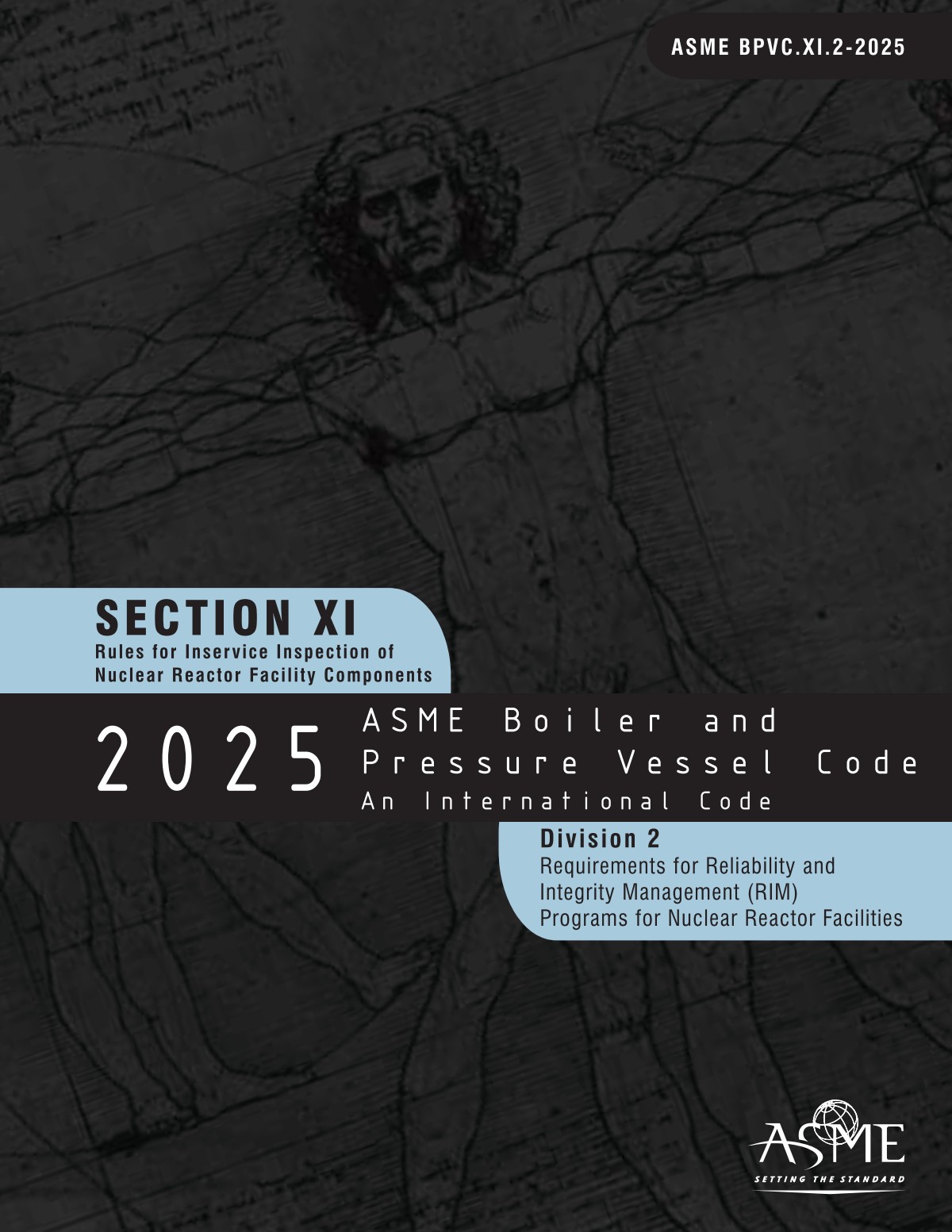
ASME BPVC 2025 Section XI, Division 2: Requirements for Reliability and Integrity Management (RIM) Programs
Original price was: $906.00.$302.00Current price is: $302.00.
ASME BPVC 2025 Section XI, Division 2 specifies Reliability and Integrity Management (RIM) program criteria for nuclear reactor facilities, including assessment methods, inspection planning, and performance monitoring to manage component reliability and integrity through service life.
ASME BPVC 2025 Section XI, Division 2 specifies Reliability and Integrity Management (RIM) program criteria for nuclear reactor facilities, including assessment methods, inspection planning, and performance monitoring to manage component reliability and integrity through service life.
Book information
Purchase now to read the book instantly.
Add to cartRelated products
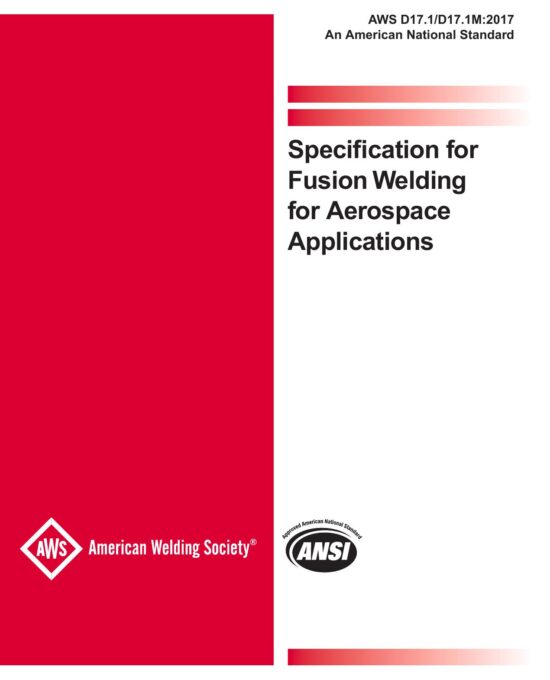
AWS D17.1/D17.1M:2017 – Specification for Fusion Welding for Aerospace Applications
AWS D17.1/D17.1M:2017 establishes the welding requirements for aircraft, aerospace, and space hardware using electric arc and high-energy beam fusion welding processes. It covers aluminum, nickel, iron, cobalt, titanium, and magnesium alloys and supports both flight-critical and support structure applications.
Highlights:
- Design criteria for aerospace weld joints
- Qualification requirements for procedures and personnel
- Fabrication, inspection, and acceptance standards
- Repair guidance for aerospace components
- Preweld/postweld processes including traceability and cleaning
- Visual and nondestructive exam methods with acceptance criteria
- Normative/informative annexes on bend tests, positions, acronyms, and forms
- Commentary with technical interpretation and best practices
New in the 2017 Edition:
- Annexes for UNS material designations
- Expanded welding position coverage and standardized forms
- Editorial updates for clarity and usability
Who’s It For:
Aerospace engineers, welding supervisors, inspectors, and quality professionals involved in the fabrication or evaluation of welded aerospace structures.
AWS D17.1/D17.1M-2017
AWS D17.1/D17.1M:2017 – Specification for Fusion Welding for Aerospace Applications
AWS D17.1/D17.1M:2017 establishes the welding requirements for aircraft, aerospace, and space hardware using electric arc and high-energy beam fusion welding processes. It covers aluminum, nickel, iron, cobalt, titanium, and magnesium alloys and supports both flight-critical and support structure applications.
Highlights:
- Design criteria for aerospace weld joints
- Qualification requirements for procedures and personnel
- Fabrication, inspection, and acceptance standards
- Repair guidance for aerospace components
- Preweld/postweld processes including traceability and cleaning
- Visual and nondestructive exam methods with acceptance criteria
- Normative/informative annexes on bend tests, positions, acronyms, and forms
- Commentary with technical interpretation and best practices
New in the 2017 Edition:
- Annexes for UNS material designations
- Expanded welding position coverage and standardized forms
- Editorial updates for clarity and usability
Who’s It For:
Aerospace engineers, welding supervisors, inspectors, and quality professionals involved in the fabrication or evaluation of welded aerospace structures.
AWS D17.1/D17.1M-2017
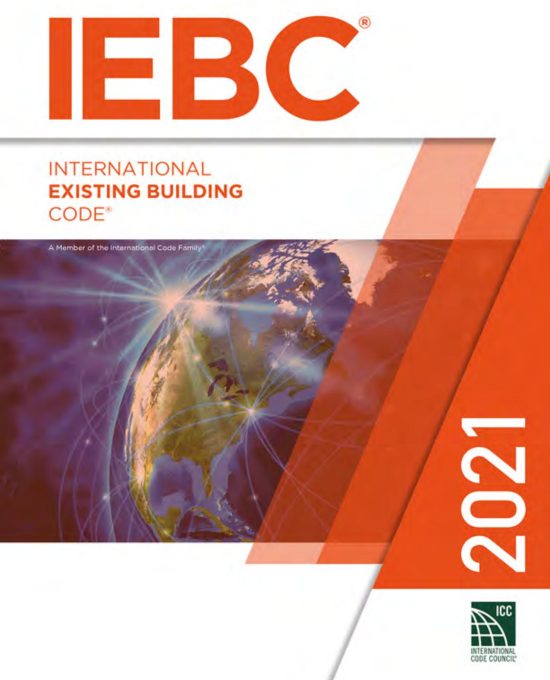
2021 International Existing Building Code – IEBC-2021
The 2021 International Existing Building Code® (IEBC) offers a consistent, performance-based framework for repairing, altering, adding to, or changing the occupancy of existing buildings. It facilitates the reuse of older and historic structures while maintaining safety, accessibility, and code compliance without requiring full adherence to new construction standards.
Highlights:
- Limits storm shelter capacity to specific occupancies; removes travel distance requirement
- Requires IBC Chapter 14/26 compliance for major exterior wall replacements
- Mandates snow load evaluation when structural repairs involve substantial damage
- Applies enhanced classroom acoustics to educational buildings undergoing major alterations
- Permits rooftop equipment additions without full structural review under specific weight/load limits
- Requires seismic evaluation when changing occupancy from S or U to other types
- Exempts furniture like cubicles and shelving from permits and Level 2 classification
- Revises sprinkler installation thresholds for Level 2 and Level 3 alterations in high-risk areas
Who It’s For:
Contractors, architects, and code officials working on renovations, adaptive reuse, and code compliance for existing buildings—especially where full new-construction standards are impractical.
IEBC-2021
2021 International Existing Building Code – IEBC-2021
The 2021 International Existing Building Code® (IEBC) offers a consistent, performance-based framework for repairing, altering, adding to, or changing the occupancy of existing buildings. It facilitates the reuse of older and historic structures while maintaining safety, accessibility, and code compliance without requiring full adherence to new construction standards.
Highlights:
- Limits storm shelter capacity to specific occupancies; removes travel distance requirement
- Requires IBC Chapter 14/26 compliance for major exterior wall replacements
- Mandates snow load evaluation when structural repairs involve substantial damage
- Applies enhanced classroom acoustics to educational buildings undergoing major alterations
- Permits rooftop equipment additions without full structural review under specific weight/load limits
- Requires seismic evaluation when changing occupancy from S or U to other types
- Exempts furniture like cubicles and shelving from permits and Level 2 classification
- Revises sprinkler installation thresholds for Level 2 and Level 3 alterations in high-risk areas
Who It’s For:
Contractors, architects, and code officials working on renovations, adaptive reuse, and code compliance for existing buildings—especially where full new-construction standards are impractical.
IEBC-2021
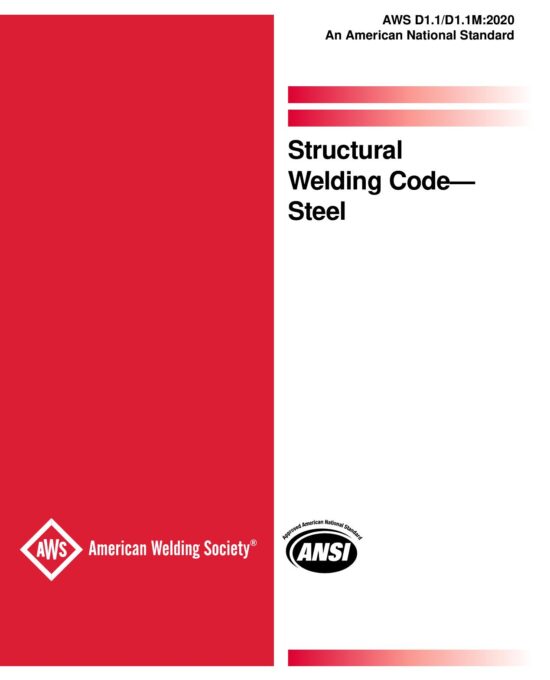
AWS D1.1/D1.1M:2020 – Structural Welding Code – Steel
AWS D1.1/D1.1M:2020 – Structural Welding Code – Steel is the 24th edition of the code and serves as the definitive standard for welding carbon and low-alloy steel structures. Approved by ANSI and published by the American Welding Society, it reflects the latest best practices in structural welding design, fabrication, and inspection.
Highlights:
- Welding requirements for carbon and low-alloy steels
- Design criteria for welded joints in tubular and nontubular members
- Prequalification standards for Welding Procedure Specifications (WPS)
- Qualification tests for welding procedures and personnel
- Rules for fabrication, inspection, repair, and stud welding
- Guidance for strengthening and retrofitting existing structures
- Covers steel 1/8 in [3 mm] or thicker, up to 100 ksi [690 MPa] yield strength
- Includes mandatory clauses, normative and informative annexes, and detailed commentary
Who It’s For:
Structural engineers, welders, inspectors, and contractors engaged in the design, construction, and quality control of welded steel structures in buildings, bridges, towers, and industrial facilities.
AWS D1.1/D1.1M:2020
AWS D1.1/D1.1M:2020 – Structural Welding Code – Steel
AWS D1.1/D1.1M:2020 – Structural Welding Code – Steel is the 24th edition of the code and serves as the definitive standard for welding carbon and low-alloy steel structures. Approved by ANSI and published by the American Welding Society, it reflects the latest best practices in structural welding design, fabrication, and inspection.
Highlights:
- Welding requirements for carbon and low-alloy steels
- Design criteria for welded joints in tubular and nontubular members
- Prequalification standards for Welding Procedure Specifications (WPS)
- Qualification tests for welding procedures and personnel
- Rules for fabrication, inspection, repair, and stud welding
- Guidance for strengthening and retrofitting existing structures
- Covers steel 1/8 in [3 mm] or thicker, up to 100 ksi [690 MPa] yield strength
- Includes mandatory clauses, normative and informative annexes, and detailed commentary
Who It’s For:
Structural engineers, welders, inspectors, and contractors engaged in the design, construction, and quality control of welded steel structures in buildings, bridges, towers, and industrial facilities.
AWS D1.1/D1.1M:2020
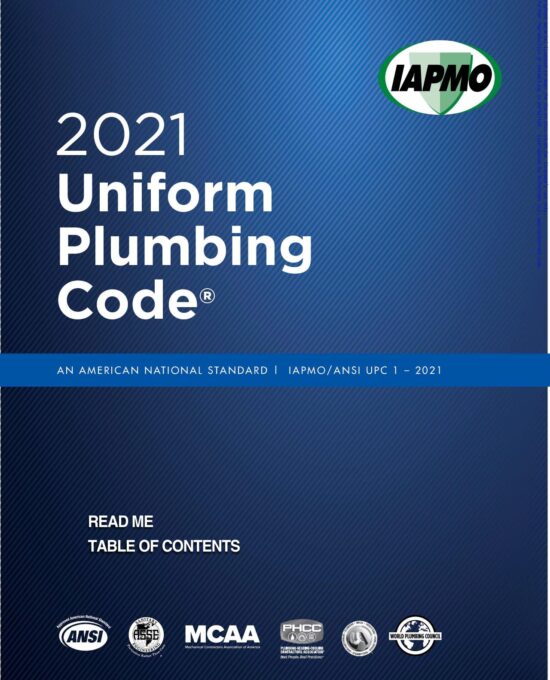
2021 Uniform Plumbing Code – UPC 1-2021 (IAPMO)
The 2021 Uniform Plumbing Code® (UPC), developed by IAPMO and approved through the ANSI consensus process, establishes minimum requirements for plumbing system design, installation, and inspection. It incorporates the latest safety, efficiency, and performance provisions used across residential, commercial, and industrial projects.
Highlights:
- Adds Appendix N for defining scald risk and Legionella prevention through temperature control
- Updates backflow prevention device standards and installation methods
- Expands temperature-limiting protections for hot water outlets
- Establishes safety requirements for rooftop appliances and raised platforms
- Revises T&P valve discharge piping provisions for clarity and safety
- Introduces requirements for leak detection and monitoring technologies
- Enhances potable water pump installation and performance standards
- Adds DWV system updates for materials, cleanout access, and venting configurations
- Reorganizes medical and fuel gas system chapters for improved usability
Who It’s For:
Plumbing engineers, contractors, inspectors, and code officials enforcing compliant plumbing installations under the 2021 UPC framework.
UPC 1-2021 (IAPMO)
2021 Uniform Plumbing Code – UPC 1-2021 (IAPMO)
The 2021 Uniform Plumbing Code® (UPC), developed by IAPMO and approved through the ANSI consensus process, establishes minimum requirements for plumbing system design, installation, and inspection. It incorporates the latest safety, efficiency, and performance provisions used across residential, commercial, and industrial projects.
Highlights:
- Adds Appendix N for defining scald risk and Legionella prevention through temperature control
- Updates backflow prevention device standards and installation methods
- Expands temperature-limiting protections for hot water outlets
- Establishes safety requirements for rooftop appliances and raised platforms
- Revises T&P valve discharge piping provisions for clarity and safety
- Introduces requirements for leak detection and monitoring technologies
- Enhances potable water pump installation and performance standards
- Adds DWV system updates for materials, cleanout access, and venting configurations
- Reorganizes medical and fuel gas system chapters for improved usability
Who It’s For:
Plumbing engineers, contractors, inspectors, and code officials enforcing compliant plumbing installations under the 2021 UPC framework.
UPC 1-2021 (IAPMO)