
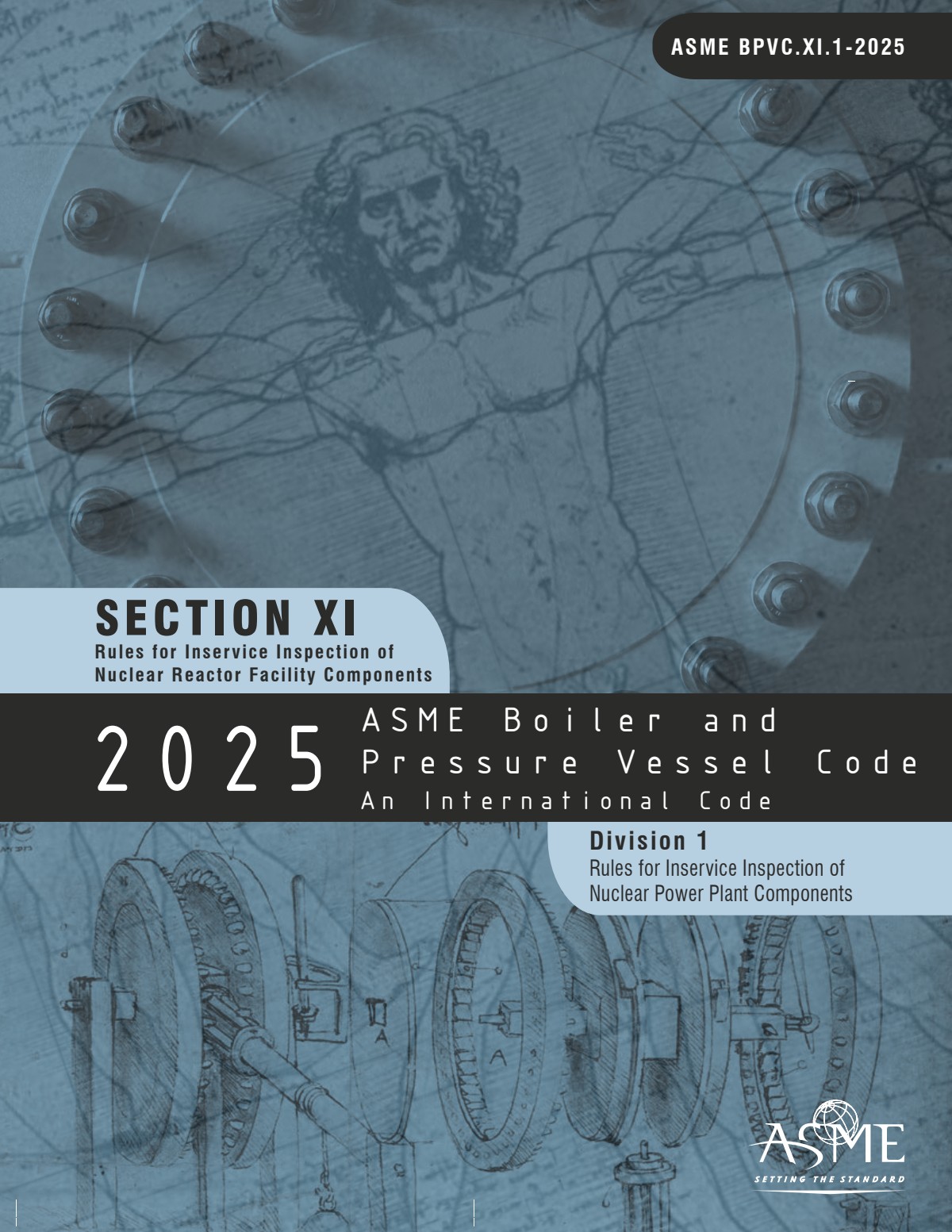
ASME BPVC 2025 Section XI, Division 1: Rules for Inservice Inspection of Nuclear Reactor Facility Components
Original price was: $945.00.$315.00Current price is: $315.00.
ASME BPVC 2025 Section XI, Division 1 defines requirements for inservice inspection, testing, repairs, and replacements of Class 1, 2, and 3 components in light-water-cooled nuclear plants to ensure continued structural integrity and safety.
ASME BPVC 2025 Section XI, Division 1 defines requirements for inservice inspection, testing, repairs, and replacements of Class 1, 2, and 3 components in light-water-cooled nuclear plants to ensure continued structural integrity and safety.
Book information
Purchase now to read the book instantly.
Add to cartRelated products
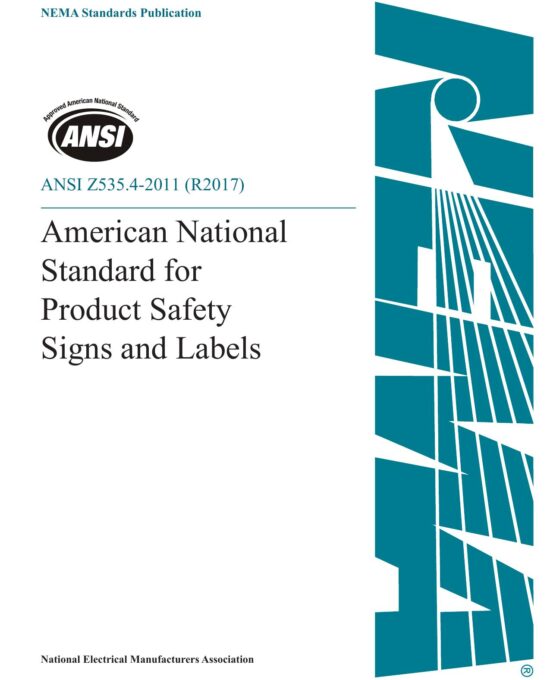
ANSI Z535.4-2011 (R2017): Product Safety Signs and Labels
ANSI Z535.4-2011 (R2017): Product Safety Signs and Labels provides standardized guidance for the design and application of product safety signs and labels. This reaffirmed edition helps manufacturers effectively communicate hazard information to reduce risk and improve safety across a wide range of industrial and consumer products.
Highlights:
- Defines use of standardized signal words: DANGER, WARNING, CAUTION, and NOTICE
- Establishes hazard classification systems and formatting conventions
- Specifies layout, safety colors, symbols, and typography for clear communication
- Offers guidance on incorporating safety symbols for universal understanding
- Sets durability requirements for labels exposed to harsh environments
- Recommends best practices for label placement and visibility
Who It’s For:
A vital reference for engineers, product designers, compliance managers, and safety professionals responsible for labeling products in accordance with ANSI safety communication standards.
ANSI-Z535.4-2011-R2017
ANSI Z535.4-2011 (R2017): Product Safety Signs and Labels
ANSI Z535.4-2011 (R2017): Product Safety Signs and Labels provides standardized guidance for the design and application of product safety signs and labels. This reaffirmed edition helps manufacturers effectively communicate hazard information to reduce risk and improve safety across a wide range of industrial and consumer products.
Highlights:
- Defines use of standardized signal words: DANGER, WARNING, CAUTION, and NOTICE
- Establishes hazard classification systems and formatting conventions
- Specifies layout, safety colors, symbols, and typography for clear communication
- Offers guidance on incorporating safety symbols for universal understanding
- Sets durability requirements for labels exposed to harsh environments
- Recommends best practices for label placement and visibility
Who It’s For:
A vital reference for engineers, product designers, compliance managers, and safety professionals responsible for labeling products in accordance with ANSI safety communication standards.
ANSI-Z535.4-2011-R2017
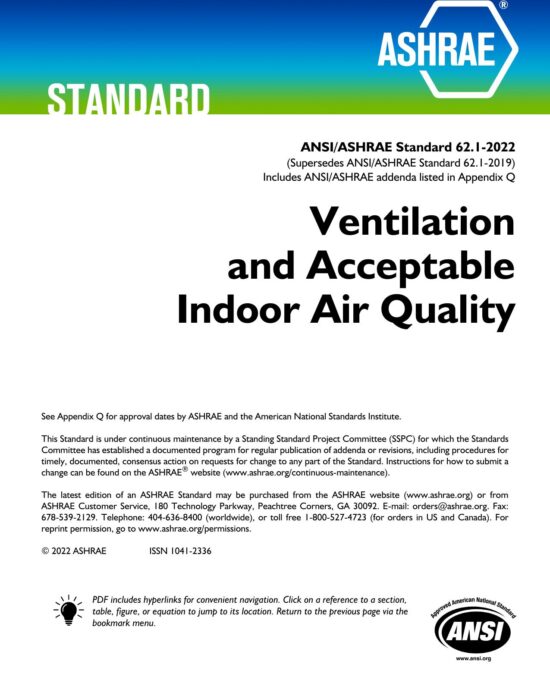
ANSI/ASHRAE 62.1-2022: Ventilation for Acceptable Indoor Air Quality
ANSI/ASHRAE Standard 62.1-2022: Ventilation for Acceptable Indoor Air Quality defines minimum requirements for mechanical and natural ventilation systems in commercial, institutional, and industrial buildings. Widely referenced by model codes such as the International Building Code, this standard is critical for achieving acceptable indoor air quality (IAQ) in non-residential environments.
Highlights:
- Defines procedures for assessing outdoor air quality and ventilation by occupancy type
- Revised Section 5 reorganizes systems/equipment content by airflow path
- Updates IAQ Procedure with design compound guidance and mass-balance modeling
- Establishes separation distances for exhaust air and dew point limits for cooled spaces
- Classifies ventilation zones and defines airflow effectiveness and breathing zone metrics
- Covers design, installation, commissioning, and maintenance of ventilation systems
- Includes appendices for healthcare settings, air quality evaluation, compliance paths, and simplified rate calculations
- Incorporates addenda through Appendix Q as part of its continuous maintenance model
Who It’s For:
Designed for mechanical engineers, HVAC professionals, code officials, and facility managers responsible for designing and maintaining compliant ventilation systems that promote occupant health and comfort.
ASHRAE 62.1-2022
ANSI/ASHRAE 62.1-2022: Ventilation for Acceptable Indoor Air Quality
ANSI/ASHRAE Standard 62.1-2022: Ventilation for Acceptable Indoor Air Quality defines minimum requirements for mechanical and natural ventilation systems in commercial, institutional, and industrial buildings. Widely referenced by model codes such as the International Building Code, this standard is critical for achieving acceptable indoor air quality (IAQ) in non-residential environments.
Highlights:
- Defines procedures for assessing outdoor air quality and ventilation by occupancy type
- Revised Section 5 reorganizes systems/equipment content by airflow path
- Updates IAQ Procedure with design compound guidance and mass-balance modeling
- Establishes separation distances for exhaust air and dew point limits for cooled spaces
- Classifies ventilation zones and defines airflow effectiveness and breathing zone metrics
- Covers design, installation, commissioning, and maintenance of ventilation systems
- Includes appendices for healthcare settings, air quality evaluation, compliance paths, and simplified rate calculations
- Incorporates addenda through Appendix Q as part of its continuous maintenance model
Who It’s For:
Designed for mechanical engineers, HVAC professionals, code officials, and facility managers responsible for designing and maintaining compliant ventilation systems that promote occupant health and comfort.
ASHRAE 62.1-2022
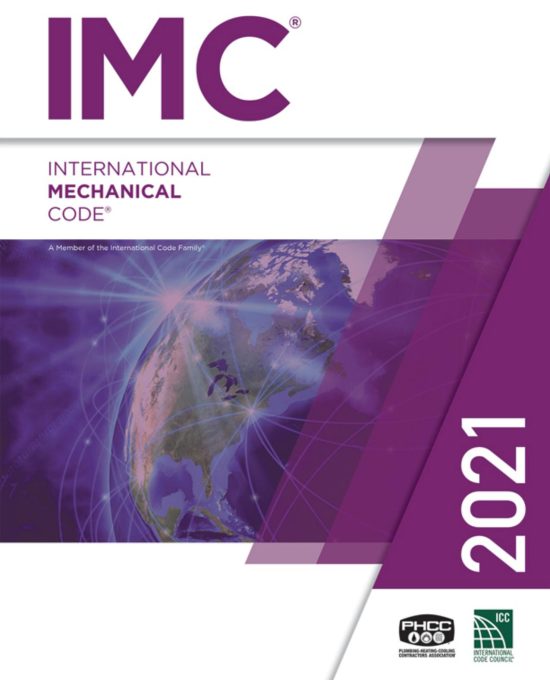
2021 International Mechanical Code – IMC-2021
The 2021 International Mechanical Code® (IMC) establishes minimum standards for the design, installation, and maintenance of mechanical systems in residential, commercial, and industrial buildings. Covering everything from HVAC and ventilation to boilers and refrigeration, the IMC ensures safe, efficient, and code-compliant system operation. Fully coordinated with the 2021 I-Codes.
Highlights:
- Updated rules for appliance access, clearances, condensate drainage, and temperature control
- Comprehensive ventilation standards for occupied and unoccupied spaces, including hospitals and hazardous locations
- Detailed exhaust system requirements for kitchens, dryers, labs, garages, and smoke/grease control
- Regulates duct construction, dampers, insulation, filters, and fire/smoke control systems
- Refers to NFPA and IFGC standards for combustion air; includes chimney and flue guidance
- Covers installation standards for fireplaces, cooking appliances, sauna heaters, and fuel cells
- Includes safety and design rules for boilers, pressure vessels, relief valves, and tanks
- Establishes refrigeration system classification, design, piping, and testing procedures
- Provides hydronic system guidance for hot/chilled water piping, antifreeze, and insulation
- Sets safety standards for fuel oil piping, storage, and solar thermal systems
- Appendices include permit fee schedules, chimney diagrams, and appeal procedures
Who It’s For:
Mechanical contractors, engineers, inspectors, and HVAC professionals working on code-compliant building system design, installation, and maintenance.
IMC-2021
2021 International Mechanical Code – IMC-2021
The 2021 International Mechanical Code® (IMC) establishes minimum standards for the design, installation, and maintenance of mechanical systems in residential, commercial, and industrial buildings. Covering everything from HVAC and ventilation to boilers and refrigeration, the IMC ensures safe, efficient, and code-compliant system operation. Fully coordinated with the 2021 I-Codes.
Highlights:
- Updated rules for appliance access, clearances, condensate drainage, and temperature control
- Comprehensive ventilation standards for occupied and unoccupied spaces, including hospitals and hazardous locations
- Detailed exhaust system requirements for kitchens, dryers, labs, garages, and smoke/grease control
- Regulates duct construction, dampers, insulation, filters, and fire/smoke control systems
- Refers to NFPA and IFGC standards for combustion air; includes chimney and flue guidance
- Covers installation standards for fireplaces, cooking appliances, sauna heaters, and fuel cells
- Includes safety and design rules for boilers, pressure vessels, relief valves, and tanks
- Establishes refrigeration system classification, design, piping, and testing procedures
- Provides hydronic system guidance for hot/chilled water piping, antifreeze, and insulation
- Sets safety standards for fuel oil piping, storage, and solar thermal systems
- Appendices include permit fee schedules, chimney diagrams, and appeal procedures
Who It’s For:
Mechanical contractors, engineers, inspectors, and HVAC professionals working on code-compliant building system design, installation, and maintenance.
IMC-2021
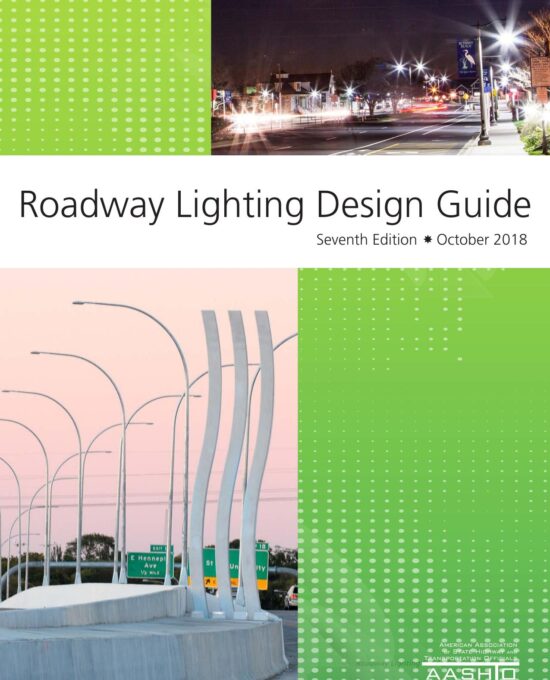
AASHTO GL-7: Roadway Lighting Design Guide, 7th Edition (2018)
AASHTO GL-7: Roadway Lighting Design Guide, Seventh Edition (2018) provides comprehensive guidance on the planning, design, and implementation of roadway lighting systems. This edition reflects current engineering practices, safety standards, and lighting technologies to enhance visibility, energy efficiency, and operational reliability across modern transportation networks.
Highlights:
- Design principles covering illuminance, luminance, uniformity, and glare control
- Guidance on developing master roadway lighting plans and policies
- Recommended lighting levels for highways, streets, intersections, and pedestrian zones
- Design criteria for tunnels, underpasses, and bridges
- Considerations for temporary lighting in work zones and construction areas
- Evaluation of emerging technologies such as adaptive lighting and smart controls
- Discussion on lighting management systems and energy-efficient solutions
- Environmental impact assessments and aesthetic integration strategies
- Standards for pole placement, maintenance access, and safety
- Support for decision-making with traffic data and community planning considerations
Who It’s For:
An essential reference for transportation agencies, civil engineers, and planners responsible for roadway lighting design and policy development.
GL-7-2018
AASHTO GL-7: Roadway Lighting Design Guide, 7th Edition (2018)
AASHTO GL-7: Roadway Lighting Design Guide, Seventh Edition (2018) provides comprehensive guidance on the planning, design, and implementation of roadway lighting systems. This edition reflects current engineering practices, safety standards, and lighting technologies to enhance visibility, energy efficiency, and operational reliability across modern transportation networks.
Highlights:
- Design principles covering illuminance, luminance, uniformity, and glare control
- Guidance on developing master roadway lighting plans and policies
- Recommended lighting levels for highways, streets, intersections, and pedestrian zones
- Design criteria for tunnels, underpasses, and bridges
- Considerations for temporary lighting in work zones and construction areas
- Evaluation of emerging technologies such as adaptive lighting and smart controls
- Discussion on lighting management systems and energy-efficient solutions
- Environmental impact assessments and aesthetic integration strategies
- Standards for pole placement, maintenance access, and safety
- Support for decision-making with traffic data and community planning considerations
Who It’s For:
An essential reference for transportation agencies, civil engineers, and planners responsible for roadway lighting design and policy development.
GL-7-2018