
ASME BPVC 2025 Section X: Fiber-Reinforced Plastic Pressure Vessels
Original price was: $609.00.$203.00Current price is: $203.00.
ASME BPVC 2025 Section X covers construction requirements for fiber-reinforced plastic (FRP) pressure vessels, including design bases, materials, fabrication, inspection, testing, and qualification by prototype testing (Classes I & III) or by mandatory design rules with nondestructive examination (Class II).
ASME BPVC 2025 Section X covers construction requirements for fiber-reinforced plastic (FRP) pressure vessels, including design bases, materials, fabrication, inspection, testing, and qualification by prototype testing (Classes I & III) or by mandatory design rules with nondestructive examination (Class II).
Book information
Purchase now to read the book instantly.
Add to cartRelated products
AASHTO HB-17: Standard Specifications for Highway Bridges, 17th Edition (2002)
AASHTO HB-17: Standard Specifications for Highway Bridges, 17th Edition (2002) provides comprehensive criteria for the design, construction, and maintenance of highway bridges throughout the United States. This edition is the final update prior to the nationwide adoption of Load and Resistance Factor Design (LRFD) standards.
Highlights:
- General provisions for bridge design, structural analysis, and performance
- Criteria for superstructures, substructures, abutments, culverts, and piers
- Service load and load factor design methods for concrete, steel, timber, and prestressed components
- Requirements for foundations, retaining structures, and soil-structure interaction
- Specifications addressing load distribution, fatigue, seismic considerations, and strength evaluation
- Commentary and notes incorporating interim revisions through 2003
- References to supporting standards from AASHTO, ASTM, AWS, and others
- Applicable to rehabilitation, legacy design validation, and maintenance planning for non-LRFD bridges
Who It’s For:
A critical reference for bridge engineers, transportation officials, and contractors working with legacy structures or evaluating designs developed before the transition to LRFD.
HB-17-2002
AASHTO HB-17: Standard Specifications for Highway Bridges, 17th Edition (2002)
AASHTO HB-17: Standard Specifications for Highway Bridges, 17th Edition (2002) provides comprehensive criteria for the design, construction, and maintenance of highway bridges throughout the United States. This edition is the final update prior to the nationwide adoption of Load and Resistance Factor Design (LRFD) standards.
Highlights:
- General provisions for bridge design, structural analysis, and performance
- Criteria for superstructures, substructures, abutments, culverts, and piers
- Service load and load factor design methods for concrete, steel, timber, and prestressed components
- Requirements for foundations, retaining structures, and soil-structure interaction
- Specifications addressing load distribution, fatigue, seismic considerations, and strength evaluation
- Commentary and notes incorporating interim revisions through 2003
- References to supporting standards from AASHTO, ASTM, AWS, and others
- Applicable to rehabilitation, legacy design validation, and maintenance planning for non-LRFD bridges
Who It’s For:
A critical reference for bridge engineers, transportation officials, and contractors working with legacy structures or evaluating designs developed before the transition to LRFD.
HB-17-2002
ANSI Z535.4-2011 (R2017): Product Safety Signs and Labels
ANSI Z535.4-2011 (R2017): Product Safety Signs and Labels provides standardized guidance for the design and application of product safety signs and labels. This reaffirmed edition helps manufacturers effectively communicate hazard information to reduce risk and improve safety across a wide range of industrial and consumer products.
Highlights:
- Defines use of standardized signal words: DANGER, WARNING, CAUTION, and NOTICE
- Establishes hazard classification systems and formatting conventions
- Specifies layout, safety colors, symbols, and typography for clear communication
- Offers guidance on incorporating safety symbols for universal understanding
- Sets durability requirements for labels exposed to harsh environments
- Recommends best practices for label placement and visibility
Who It’s For:
A vital reference for engineers, product designers, compliance managers, and safety professionals responsible for labeling products in accordance with ANSI safety communication standards.
ANSI-Z535.4-2011-R2017
ANSI Z535.4-2011 (R2017): Product Safety Signs and Labels
ANSI Z535.4-2011 (R2017): Product Safety Signs and Labels provides standardized guidance for the design and application of product safety signs and labels. This reaffirmed edition helps manufacturers effectively communicate hazard information to reduce risk and improve safety across a wide range of industrial and consumer products.
Highlights:
- Defines use of standardized signal words: DANGER, WARNING, CAUTION, and NOTICE
- Establishes hazard classification systems and formatting conventions
- Specifies layout, safety colors, symbols, and typography for clear communication
- Offers guidance on incorporating safety symbols for universal understanding
- Sets durability requirements for labels exposed to harsh environments
- Recommends best practices for label placement and visibility
Who It’s For:
A vital reference for engineers, product designers, compliance managers, and safety professionals responsible for labeling products in accordance with ANSI safety communication standards.
ANSI-Z535.4-2011-R2017
2021 International Mechanical Code – IMC-2021
The 2021 International Mechanical Code® (IMC) establishes minimum standards for the design, installation, and maintenance of mechanical systems in residential, commercial, and industrial buildings. Covering everything from HVAC and ventilation to boilers and refrigeration, the IMC ensures safe, efficient, and code-compliant system operation. Fully coordinated with the 2021 I-Codes.
Highlights:
- Updated rules for appliance access, clearances, condensate drainage, and temperature control
- Comprehensive ventilation standards for occupied and unoccupied spaces, including hospitals and hazardous locations
- Detailed exhaust system requirements for kitchens, dryers, labs, garages, and smoke/grease control
- Regulates duct construction, dampers, insulation, filters, and fire/smoke control systems
- Refers to NFPA and IFGC standards for combustion air; includes chimney and flue guidance
- Covers installation standards for fireplaces, cooking appliances, sauna heaters, and fuel cells
- Includes safety and design rules for boilers, pressure vessels, relief valves, and tanks
- Establishes refrigeration system classification, design, piping, and testing procedures
- Provides hydronic system guidance for hot/chilled water piping, antifreeze, and insulation
- Sets safety standards for fuel oil piping, storage, and solar thermal systems
- Appendices include permit fee schedules, chimney diagrams, and appeal procedures
Who It’s For:
Mechanical contractors, engineers, inspectors, and HVAC professionals working on code-compliant building system design, installation, and maintenance.
IMC-2021
2021 International Mechanical Code – IMC-2021
The 2021 International Mechanical Code® (IMC) establishes minimum standards for the design, installation, and maintenance of mechanical systems in residential, commercial, and industrial buildings. Covering everything from HVAC and ventilation to boilers and refrigeration, the IMC ensures safe, efficient, and code-compliant system operation. Fully coordinated with the 2021 I-Codes.
Highlights:
- Updated rules for appliance access, clearances, condensate drainage, and temperature control
- Comprehensive ventilation standards for occupied and unoccupied spaces, including hospitals and hazardous locations
- Detailed exhaust system requirements for kitchens, dryers, labs, garages, and smoke/grease control
- Regulates duct construction, dampers, insulation, filters, and fire/smoke control systems
- Refers to NFPA and IFGC standards for combustion air; includes chimney and flue guidance
- Covers installation standards for fireplaces, cooking appliances, sauna heaters, and fuel cells
- Includes safety and design rules for boilers, pressure vessels, relief valves, and tanks
- Establishes refrigeration system classification, design, piping, and testing procedures
- Provides hydronic system guidance for hot/chilled water piping, antifreeze, and insulation
- Sets safety standards for fuel oil piping, storage, and solar thermal systems
- Appendices include permit fee schedules, chimney diagrams, and appeal procedures
Who It’s For:
Mechanical contractors, engineers, inspectors, and HVAC professionals working on code-compliant building system design, installation, and maintenance.
IMC-2021
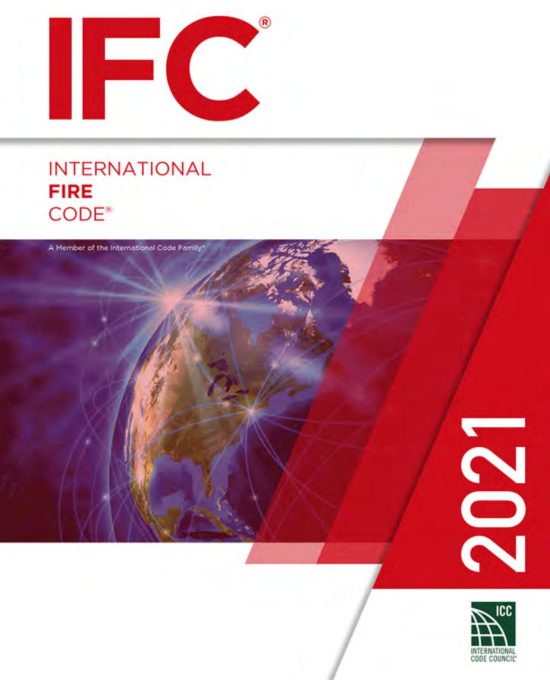
2021 International Fire Code – IFC-2021
The 2021 International Fire Code® (IFC) establishes minimum fire safety standards for new and existing buildings, facilities, and operations. It covers fire prevention, life safety, hazardous materials, and responder protection, making it essential for jurisdictions managing building and fire code enforcement. Fully coordinated with the 2021 I-Codes, it supports a comprehensive regulatory framework.
Highlights:
- Adds fire safety provisions for industrial and non-industrial 3D printing (additive manufacturing)
- Regulates artificial combustible vegetation on rooftops and near buildings
- Expands emergency responder communication system requirements to newer technologies
- Clarifies sprinkler mandates for storage and sale of upholstered furniture and mattresses
- Requires sprinklers in open parking garages that exceed defined fire area thresholds
- Updates standards for installation and removal of energy storage systems (ESS)
- Introduces dedicated chapter for safe storage of distilled spirits and wines in barrels or casks
- Reinforces construction site fire safety with clear roles and planning protocols
Who It’s For:
Fire marshals, building officials, safety consultants, and facility managers responsible for fire code compliance and enforcement.
IFC-2021
2021 International Fire Code – IFC-2021
The 2021 International Fire Code® (IFC) establishes minimum fire safety standards for new and existing buildings, facilities, and operations. It covers fire prevention, life safety, hazardous materials, and responder protection, making it essential for jurisdictions managing building and fire code enforcement. Fully coordinated with the 2021 I-Codes, it supports a comprehensive regulatory framework.
Highlights:
- Adds fire safety provisions for industrial and non-industrial 3D printing (additive manufacturing)
- Regulates artificial combustible vegetation on rooftops and near buildings
- Expands emergency responder communication system requirements to newer technologies
- Clarifies sprinkler mandates for storage and sale of upholstered furniture and mattresses
- Requires sprinklers in open parking garages that exceed defined fire area thresholds
- Updates standards for installation and removal of energy storage systems (ESS)
- Introduces dedicated chapter for safe storage of distilled spirits and wines in barrels or casks
- Reinforces construction site fire safety with clear roles and planning protocols
Who It’s For:
Fire marshals, building officials, safety consultants, and facility managers responsible for fire code compliance and enforcement.
IFC-2021