
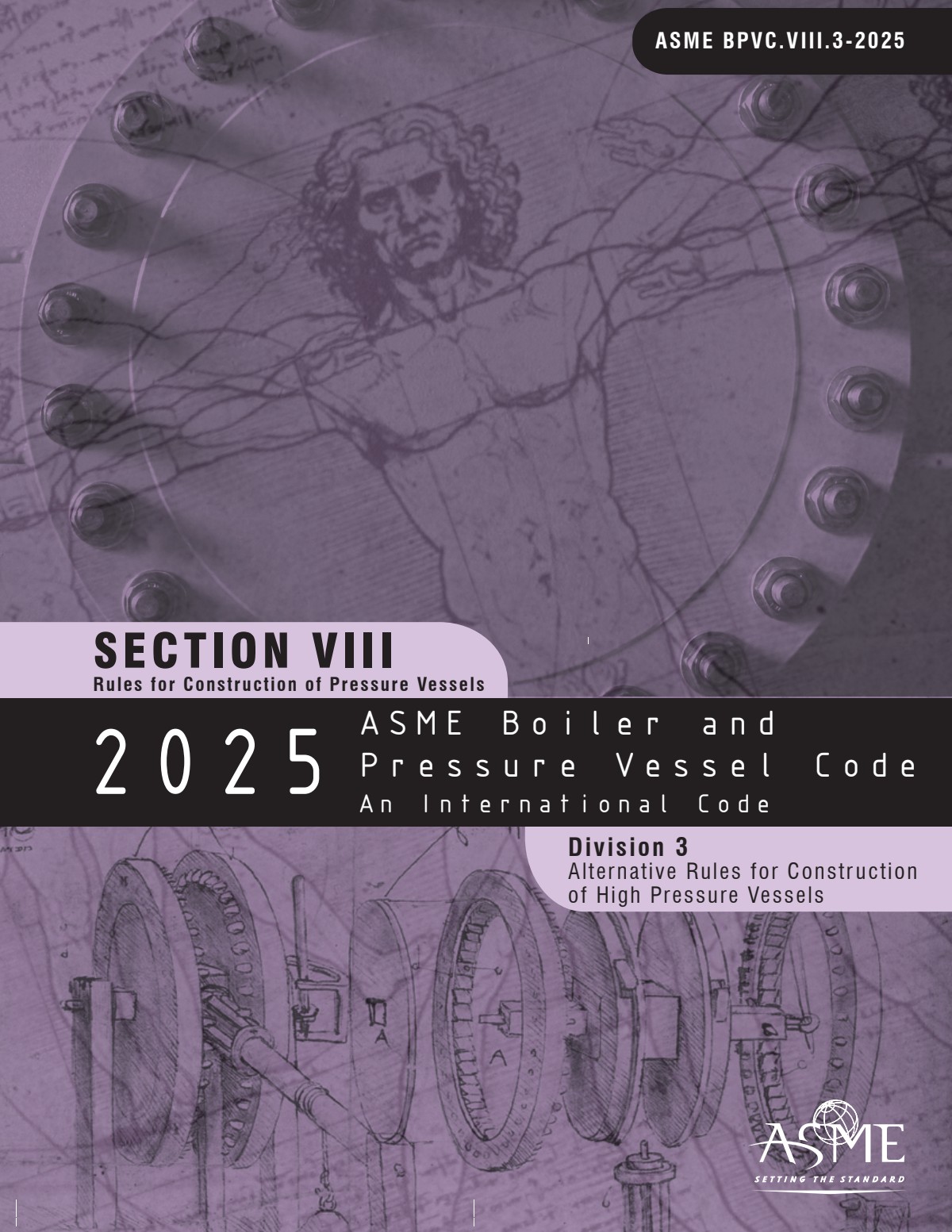
ASME BPVC 2025 Section VIII, Division 3: Alternative Rules for Construction of High Pressure Vessels
Original price was: $927.00.$309.00Current price is: $309.00.
ASME BPVC 2025 Section VIII, Division 3 specifies requirements for the design, fabrication, and testing of pressure vessels operating at pressures generally above 10,000 psi, ensuring structural integrity and safety.
ASME BPVC 2025 Section VIII, Division 3 specifies requirements for the design, fabrication, and testing of pressure vessels operating at pressures generally above 10,000 psi, ensuring structural integrity and safety.
Book information
Purchase now to read the book instantly.
Add to cartRelated products
2021 International Fire Code – IFC-2021
The 2021 International Fire Code® (IFC) establishes minimum fire safety standards for new and existing buildings, facilities, and operations. It covers fire prevention, life safety, hazardous materials, and responder protection, making it essential for jurisdictions managing building and fire code enforcement. Fully coordinated with the 2021 I-Codes, it supports a comprehensive regulatory framework.
Highlights:
- Adds fire safety provisions for industrial and non-industrial 3D printing (additive manufacturing)
- Regulates artificial combustible vegetation on rooftops and near buildings
- Expands emergency responder communication system requirements to newer technologies
- Clarifies sprinkler mandates for storage and sale of upholstered furniture and mattresses
- Requires sprinklers in open parking garages that exceed defined fire area thresholds
- Updates standards for installation and removal of energy storage systems (ESS)
- Introduces dedicated chapter for safe storage of distilled spirits and wines in barrels or casks
- Reinforces construction site fire safety with clear roles and planning protocols
Who It’s For:
Fire marshals, building officials, safety consultants, and facility managers responsible for fire code compliance and enforcement.
IFC-2021
2021 International Fire Code – IFC-2021
The 2021 International Fire Code® (IFC) establishes minimum fire safety standards for new and existing buildings, facilities, and operations. It covers fire prevention, life safety, hazardous materials, and responder protection, making it essential for jurisdictions managing building and fire code enforcement. Fully coordinated with the 2021 I-Codes, it supports a comprehensive regulatory framework.
Highlights:
- Adds fire safety provisions for industrial and non-industrial 3D printing (additive manufacturing)
- Regulates artificial combustible vegetation on rooftops and near buildings
- Expands emergency responder communication system requirements to newer technologies
- Clarifies sprinkler mandates for storage and sale of upholstered furniture and mattresses
- Requires sprinklers in open parking garages that exceed defined fire area thresholds
- Updates standards for installation and removal of energy storage systems (ESS)
- Introduces dedicated chapter for safe storage of distilled spirits and wines in barrels or casks
- Reinforces construction site fire safety with clear roles and planning protocols
Who It’s For:
Fire marshals, building officials, safety consultants, and facility managers responsible for fire code compliance and enforcement.
IFC-2021
2021 International Existing Building Code – IEBC-2021
The 2021 International Existing Building Code® (IEBC) offers a consistent, performance-based framework for repairing, altering, adding to, or changing the occupancy of existing buildings. It facilitates the reuse of older and historic structures while maintaining safety, accessibility, and code compliance without requiring full adherence to new construction standards.
Highlights:
- Limits storm shelter capacity to specific occupancies; removes travel distance requirement
- Requires IBC Chapter 14/26 compliance for major exterior wall replacements
- Mandates snow load evaluation when structural repairs involve substantial damage
- Applies enhanced classroom acoustics to educational buildings undergoing major alterations
- Permits rooftop equipment additions without full structural review under specific weight/load limits
- Requires seismic evaluation when changing occupancy from S or U to other types
- Exempts furniture like cubicles and shelving from permits and Level 2 classification
- Revises sprinkler installation thresholds for Level 2 and Level 3 alterations in high-risk areas
Who It’s For:
Contractors, architects, and code officials working on renovations, adaptive reuse, and code compliance for existing buildings—especially where full new-construction standards are impractical.
IEBC-2021
2021 International Existing Building Code – IEBC-2021
The 2021 International Existing Building Code® (IEBC) offers a consistent, performance-based framework for repairing, altering, adding to, or changing the occupancy of existing buildings. It facilitates the reuse of older and historic structures while maintaining safety, accessibility, and code compliance without requiring full adherence to new construction standards.
Highlights:
- Limits storm shelter capacity to specific occupancies; removes travel distance requirement
- Requires IBC Chapter 14/26 compliance for major exterior wall replacements
- Mandates snow load evaluation when structural repairs involve substantial damage
- Applies enhanced classroom acoustics to educational buildings undergoing major alterations
- Permits rooftop equipment additions without full structural review under specific weight/load limits
- Requires seismic evaluation when changing occupancy from S or U to other types
- Exempts furniture like cubicles and shelving from permits and Level 2 classification
- Revises sprinkler installation thresholds for Level 2 and Level 3 alterations in high-risk areas
Who It’s For:
Contractors, architects, and code officials working on renovations, adaptive reuse, and code compliance for existing buildings—especially where full new-construction standards are impractical.
IEBC-2021
AWS D17.3/D17.3M:2016 – Specification for Friction Stir Welding of Aluminum Alloys for Aerospace Applications
AWS D17.3/D17.3M:2016 establishes general requirements for the friction stir welding (FSW) of aluminum alloys in aerospace applications. It provides standardized procedures for the design, fabrication, qualification, and inspection of aerospace components joined using the FSW process.
Highlights:
- Design requirements for FSW joints in aerospace structures
- Qualification procedures for welders, operators, and welding procedures
- Approved base metal specifications and usage limitations
- Tooling, fixture, and FSW equipment setup requirements
- Fabrication guidelines for welding parameters and process control
- Visual and mechanical inspection methods for weld quality verification
- Acceptance criteria for discontinuities, mechanical properties, and visual appearance
- Quality assurance provisions, documentation, and recordkeeping standards
New in the 2016 Edition:
- Updates to reflect advancements in friction stir welding techniques and aerospace material performance
- Enhanced inspection and qualification procedures for improved compliance and reliability
- Supersedes AWS D17.3/D17.3M:2010
Who’s It For:
Aerospace engineers, quality professionals, and fabricators involved in the production or qualification of aluminum structures using friction stir welding.
AWS D17.3/D17.3M-2016
AWS D17.3/D17.3M:2016 – Specification for Friction Stir Welding of Aluminum Alloys for Aerospace Applications
AWS D17.3/D17.3M:2016 establishes general requirements for the friction stir welding (FSW) of aluminum alloys in aerospace applications. It provides standardized procedures for the design, fabrication, qualification, and inspection of aerospace components joined using the FSW process.
Highlights:
- Design requirements for FSW joints in aerospace structures
- Qualification procedures for welders, operators, and welding procedures
- Approved base metal specifications and usage limitations
- Tooling, fixture, and FSW equipment setup requirements
- Fabrication guidelines for welding parameters and process control
- Visual and mechanical inspection methods for weld quality verification
- Acceptance criteria for discontinuities, mechanical properties, and visual appearance
- Quality assurance provisions, documentation, and recordkeeping standards
New in the 2016 Edition:
- Updates to reflect advancements in friction stir welding techniques and aerospace material performance
- Enhanced inspection and qualification procedures for improved compliance and reliability
- Supersedes AWS D17.3/D17.3M:2010
Who’s It For:
Aerospace engineers, quality professionals, and fabricators involved in the production or qualification of aluminum structures using friction stir welding.
AWS D17.3/D17.3M-2016
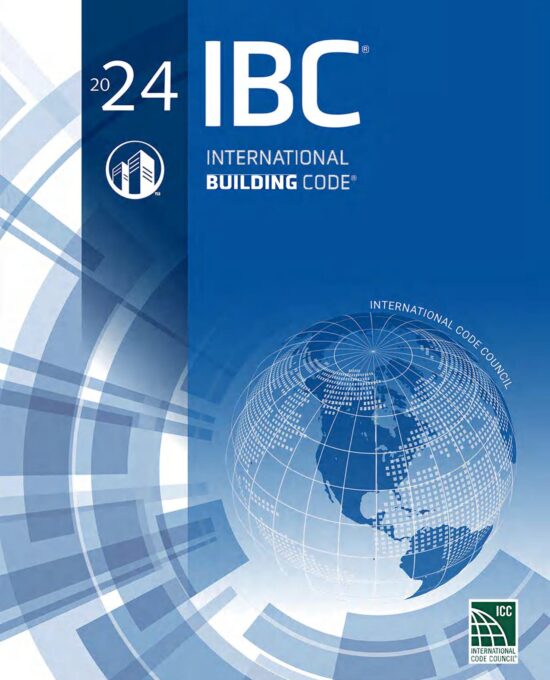
2024 International Building Code – IBC-2024
The 2024 International Building Code® (IBC) provides coordinated regulations for the construction, alteration, addition, repair, and maintenance of commercial and multifamily buildings. Published by the International Code Council (ICC), this model code is used across jurisdictions to ensure safe, accessible, and sustainable construction through enforceable design and inspection standards. The 2024 edition introduces substantial updates reflecting emerging building technologies, revised load criteria, and digital integration tools.
Highlights:
- Structural load criteria updated per ASCE 7-22 for wind, seismic, snow, rain, and flood
- Revised risk categories, construction types, and fire-resistance ratings
- Enhancements to accessibility provisions aligned with ICC A117.1-2017
- Mass timber rules expanded for taller and larger buildings under new Type IV classifications
- New requirements for storm shelters in specific educational and emergency facilities
- Improved fire protection systems and egress strategies for large occupant loads
- QR-coded references for change tracking and digital plan review integration
- Updated mechanical, electrical, plumbing, and energy provisions through I-Code coordination
- Appendices revised for tsunami design, grading, rodentproofing, and replicable buildings
- Expanded support for modular and off-site construction methodologies
Who It’s For:
Architects, engineers, contractors, building officials, and developers needing full compliance with 2024 code updates for plan review, permitting, and construction documentation.
IBC-2024
2024 International Building Code – IBC-2024
The 2024 International Building Code® (IBC) provides coordinated regulations for the construction, alteration, addition, repair, and maintenance of commercial and multifamily buildings. Published by the International Code Council (ICC), this model code is used across jurisdictions to ensure safe, accessible, and sustainable construction through enforceable design and inspection standards. The 2024 edition introduces substantial updates reflecting emerging building technologies, revised load criteria, and digital integration tools.
Highlights:
- Structural load criteria updated per ASCE 7-22 for wind, seismic, snow, rain, and flood
- Revised risk categories, construction types, and fire-resistance ratings
- Enhancements to accessibility provisions aligned with ICC A117.1-2017
- Mass timber rules expanded for taller and larger buildings under new Type IV classifications
- New requirements for storm shelters in specific educational and emergency facilities
- Improved fire protection systems and egress strategies for large occupant loads
- QR-coded references for change tracking and digital plan review integration
- Updated mechanical, electrical, plumbing, and energy provisions through I-Code coordination
- Appendices revised for tsunami design, grading, rodentproofing, and replicable buildings
- Expanded support for modular and off-site construction methodologies
Who It’s For:
Architects, engineers, contractors, building officials, and developers needing full compliance with 2024 code updates for plan review, permitting, and construction documentation.
IBC-2024