
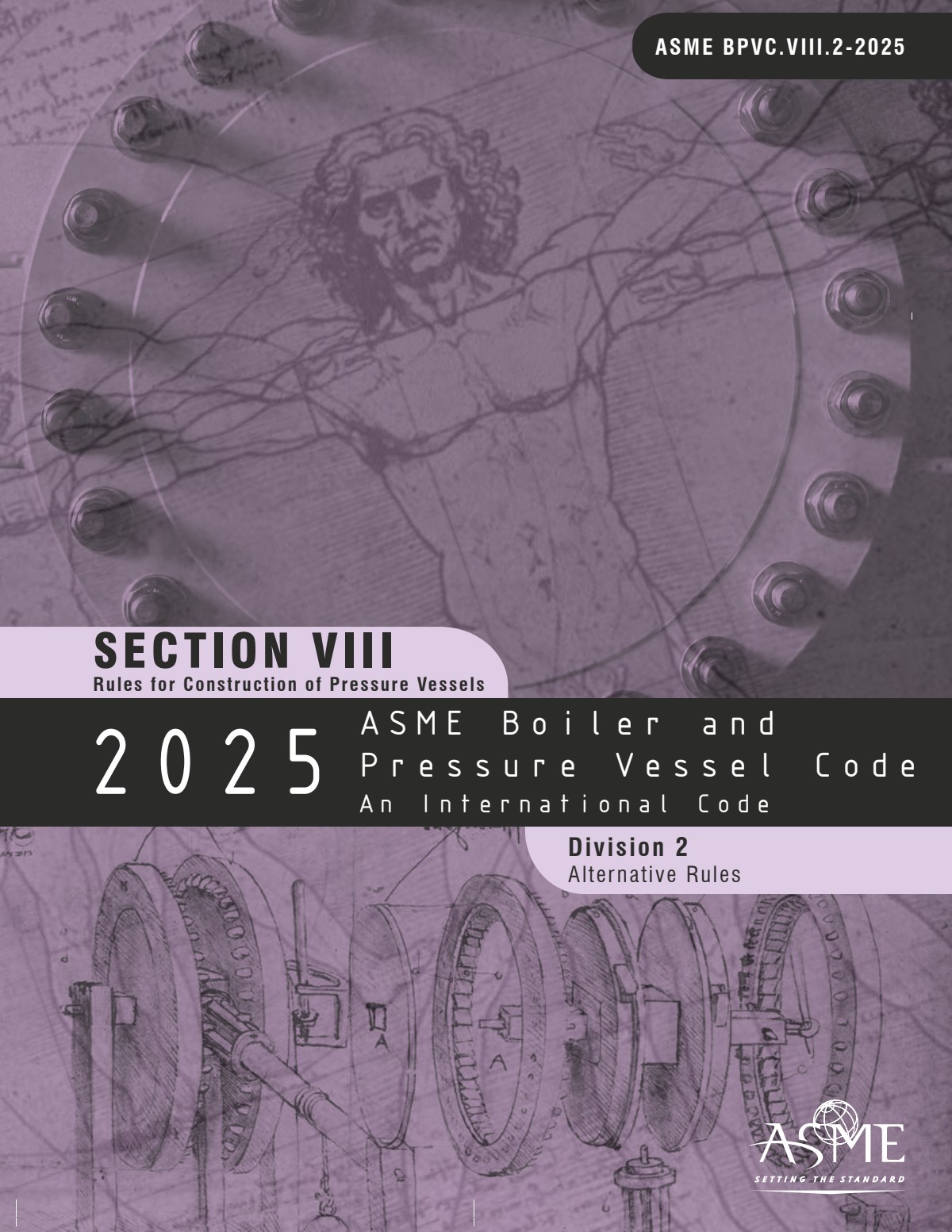
ASME BPVC 2025 Section VIII, Division 2: Alternative Rules for Pressure Vessels
Original price was: $948.00.$316.00Current price is: $316.00.
ASME BPVC 2025 Section VIII, Division 2 provides alternative rules to Division 1 with more detailed analysis, design, and testing requirements for pressure vessels, enabling optimized construction and higher efficiency.
ASME BPVC 2025 Section VIII, Division 2 provides alternative rules to Division 1 with more detailed analysis, design, and testing requirements for pressure vessels, enabling optimized construction and higher efficiency.
Book information
Purchase now to read the book instantly.
Add to cartRelated products
ASME B31.3-2022: Process Piping
ASME B31.3-2022: Process Piping provides comprehensive engineering requirements for the design, materials, fabrication, examination, testing, and safety of process piping systems used in petroleum refineries, chemical plants, pharmaceutical facilities, textile plants, paper mills, and related processing plants and terminals. It is a vital code for ensuring piping integrity in high-pressure, high-temperature, and corrosive service environments.
Highlights:
- Applies to metallic and nonmetallic piping for chemicals, petroleum, natural gas, and related fluids
- Covers piping components: pipe, flanges, valves, gaskets, bolts, expansion joints, and supports
- Design criteria for internal pressure, sustained loads, displacement strains, and occasional loads
- Construction requirements including welding, brazing, bending, assembly, and material specifications
- Mandatory rules for examination, testing, inspection, and leak testing procedures
- Stress range reduction factors, flexibility analysis, and allowable stress values by material and temperature
- Qualification requirements for personnel, procedures, and fabrication documentation
- Integration with ASME Section IX for welding and ASME B31.1 for power piping interfaces
- Updated stress tables and revisions to weld design rules in para. 328.5.2
- Errata incorporated for clarity on strength tables and weld joint tolerances
Who It’s For:
Mechanical engineers, piping designers, fabricators, inspectors, and maintenance teams working on the safe and code-compliant construction and modification of process piping systems across industries.
B31.3-2022
ASME B31.3-2022: Process Piping
ASME B31.3-2022: Process Piping provides comprehensive engineering requirements for the design, materials, fabrication, examination, testing, and safety of process piping systems used in petroleum refineries, chemical plants, pharmaceutical facilities, textile plants, paper mills, and related processing plants and terminals. It is a vital code for ensuring piping integrity in high-pressure, high-temperature, and corrosive service environments.
Highlights:
- Applies to metallic and nonmetallic piping for chemicals, petroleum, natural gas, and related fluids
- Covers piping components: pipe, flanges, valves, gaskets, bolts, expansion joints, and supports
- Design criteria for internal pressure, sustained loads, displacement strains, and occasional loads
- Construction requirements including welding, brazing, bending, assembly, and material specifications
- Mandatory rules for examination, testing, inspection, and leak testing procedures
- Stress range reduction factors, flexibility analysis, and allowable stress values by material and temperature
- Qualification requirements for personnel, procedures, and fabrication documentation
- Integration with ASME Section IX for welding and ASME B31.1 for power piping interfaces
- Updated stress tables and revisions to weld design rules in para. 328.5.2
- Errata incorporated for clarity on strength tables and weld joint tolerances
Who It’s For:
Mechanical engineers, piping designers, fabricators, inspectors, and maintenance teams working on the safe and code-compliant construction and modification of process piping systems across industries.
B31.3-2022
2024 International Building Code – IBC-2024
The 2024 International Building Code® (IBC) provides coordinated regulations for the construction, alteration, addition, repair, and maintenance of commercial and multifamily buildings. Published by the International Code Council (ICC), this model code is used across jurisdictions to ensure safe, accessible, and sustainable construction through enforceable design and inspection standards. The 2024 edition introduces substantial updates reflecting emerging building technologies, revised load criteria, and digital integration tools.
Highlights:
- Structural load criteria updated per ASCE 7-22 for wind, seismic, snow, rain, and flood
- Revised risk categories, construction types, and fire-resistance ratings
- Enhancements to accessibility provisions aligned with ICC A117.1-2017
- Mass timber rules expanded for taller and larger buildings under new Type IV classifications
- New requirements for storm shelters in specific educational and emergency facilities
- Improved fire protection systems and egress strategies for large occupant loads
- QR-coded references for change tracking and digital plan review integration
- Updated mechanical, electrical, plumbing, and energy provisions through I-Code coordination
- Appendices revised for tsunami design, grading, rodentproofing, and replicable buildings
- Expanded support for modular and off-site construction methodologies
Who It’s For:
Architects, engineers, contractors, building officials, and developers needing full compliance with 2024 code updates for plan review, permitting, and construction documentation.
IBC-2024
2024 International Building Code – IBC-2024
The 2024 International Building Code® (IBC) provides coordinated regulations for the construction, alteration, addition, repair, and maintenance of commercial and multifamily buildings. Published by the International Code Council (ICC), this model code is used across jurisdictions to ensure safe, accessible, and sustainable construction through enforceable design and inspection standards. The 2024 edition introduces substantial updates reflecting emerging building technologies, revised load criteria, and digital integration tools.
Highlights:
- Structural load criteria updated per ASCE 7-22 for wind, seismic, snow, rain, and flood
- Revised risk categories, construction types, and fire-resistance ratings
- Enhancements to accessibility provisions aligned with ICC A117.1-2017
- Mass timber rules expanded for taller and larger buildings under new Type IV classifications
- New requirements for storm shelters in specific educational and emergency facilities
- Improved fire protection systems and egress strategies for large occupant loads
- QR-coded references for change tracking and digital plan review integration
- Updated mechanical, electrical, plumbing, and energy provisions through I-Code coordination
- Appendices revised for tsunami design, grading, rodentproofing, and replicable buildings
- Expanded support for modular and off-site construction methodologies
Who It’s For:
Architects, engineers, contractors, building officials, and developers needing full compliance with 2024 code updates for plan review, permitting, and construction documentation.
IBC-2024
2021 International Mechanical Code – IMC-2021
The 2021 International Mechanical Code® (IMC) establishes minimum standards for the design, installation, and maintenance of mechanical systems in residential, commercial, and industrial buildings. Covering everything from HVAC and ventilation to boilers and refrigeration, the IMC ensures safe, efficient, and code-compliant system operation. Fully coordinated with the 2021 I-Codes.
Highlights:
- Updated rules for appliance access, clearances, condensate drainage, and temperature control
- Comprehensive ventilation standards for occupied and unoccupied spaces, including hospitals and hazardous locations
- Detailed exhaust system requirements for kitchens, dryers, labs, garages, and smoke/grease control
- Regulates duct construction, dampers, insulation, filters, and fire/smoke control systems
- Refers to NFPA and IFGC standards for combustion air; includes chimney and flue guidance
- Covers installation standards for fireplaces, cooking appliances, sauna heaters, and fuel cells
- Includes safety and design rules for boilers, pressure vessels, relief valves, and tanks
- Establishes refrigeration system classification, design, piping, and testing procedures
- Provides hydronic system guidance for hot/chilled water piping, antifreeze, and insulation
- Sets safety standards for fuel oil piping, storage, and solar thermal systems
- Appendices include permit fee schedules, chimney diagrams, and appeal procedures
Who It’s For:
Mechanical contractors, engineers, inspectors, and HVAC professionals working on code-compliant building system design, installation, and maintenance.
IMC-2021
2021 International Mechanical Code – IMC-2021
The 2021 International Mechanical Code® (IMC) establishes minimum standards for the design, installation, and maintenance of mechanical systems in residential, commercial, and industrial buildings. Covering everything from HVAC and ventilation to boilers and refrigeration, the IMC ensures safe, efficient, and code-compliant system operation. Fully coordinated with the 2021 I-Codes.
Highlights:
- Updated rules for appliance access, clearances, condensate drainage, and temperature control
- Comprehensive ventilation standards for occupied and unoccupied spaces, including hospitals and hazardous locations
- Detailed exhaust system requirements for kitchens, dryers, labs, garages, and smoke/grease control
- Regulates duct construction, dampers, insulation, filters, and fire/smoke control systems
- Refers to NFPA and IFGC standards for combustion air; includes chimney and flue guidance
- Covers installation standards for fireplaces, cooking appliances, sauna heaters, and fuel cells
- Includes safety and design rules for boilers, pressure vessels, relief valves, and tanks
- Establishes refrigeration system classification, design, piping, and testing procedures
- Provides hydronic system guidance for hot/chilled water piping, antifreeze, and insulation
- Sets safety standards for fuel oil piping, storage, and solar thermal systems
- Appendices include permit fee schedules, chimney diagrams, and appeal procedures
Who It’s For:
Mechanical contractors, engineers, inspectors, and HVAC professionals working on code-compliant building system design, installation, and maintenance.
IMC-2021
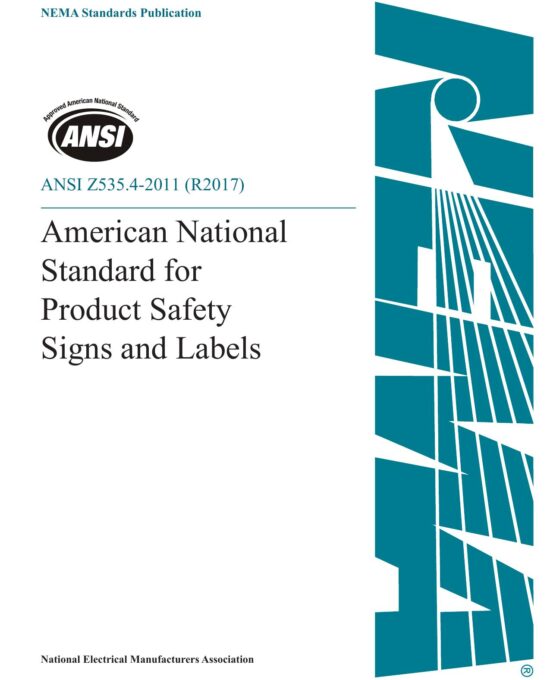
ANSI Z535.4-2011 (R2017): Product Safety Signs and Labels
ANSI Z535.4-2011 (R2017): Product Safety Signs and Labels provides standardized guidance for the design and application of product safety signs and labels. This reaffirmed edition helps manufacturers effectively communicate hazard information to reduce risk and improve safety across a wide range of industrial and consumer products.
Highlights:
- Defines use of standardized signal words: DANGER, WARNING, CAUTION, and NOTICE
- Establishes hazard classification systems and formatting conventions
- Specifies layout, safety colors, symbols, and typography for clear communication
- Offers guidance on incorporating safety symbols for universal understanding
- Sets durability requirements for labels exposed to harsh environments
- Recommends best practices for label placement and visibility
Who It’s For:
A vital reference for engineers, product designers, compliance managers, and safety professionals responsible for labeling products in accordance with ANSI safety communication standards.
ANSI-Z535.4-2011-R2017
ANSI Z535.4-2011 (R2017): Product Safety Signs and Labels
ANSI Z535.4-2011 (R2017): Product Safety Signs and Labels provides standardized guidance for the design and application of product safety signs and labels. This reaffirmed edition helps manufacturers effectively communicate hazard information to reduce risk and improve safety across a wide range of industrial and consumer products.
Highlights:
- Defines use of standardized signal words: DANGER, WARNING, CAUTION, and NOTICE
- Establishes hazard classification systems and formatting conventions
- Specifies layout, safety colors, symbols, and typography for clear communication
- Offers guidance on incorporating safety symbols for universal understanding
- Sets durability requirements for labels exposed to harsh environments
- Recommends best practices for label placement and visibility
Who It’s For:
A vital reference for engineers, product designers, compliance managers, and safety professionals responsible for labeling products in accordance with ANSI safety communication standards.
ANSI-Z535.4-2011-R2017