
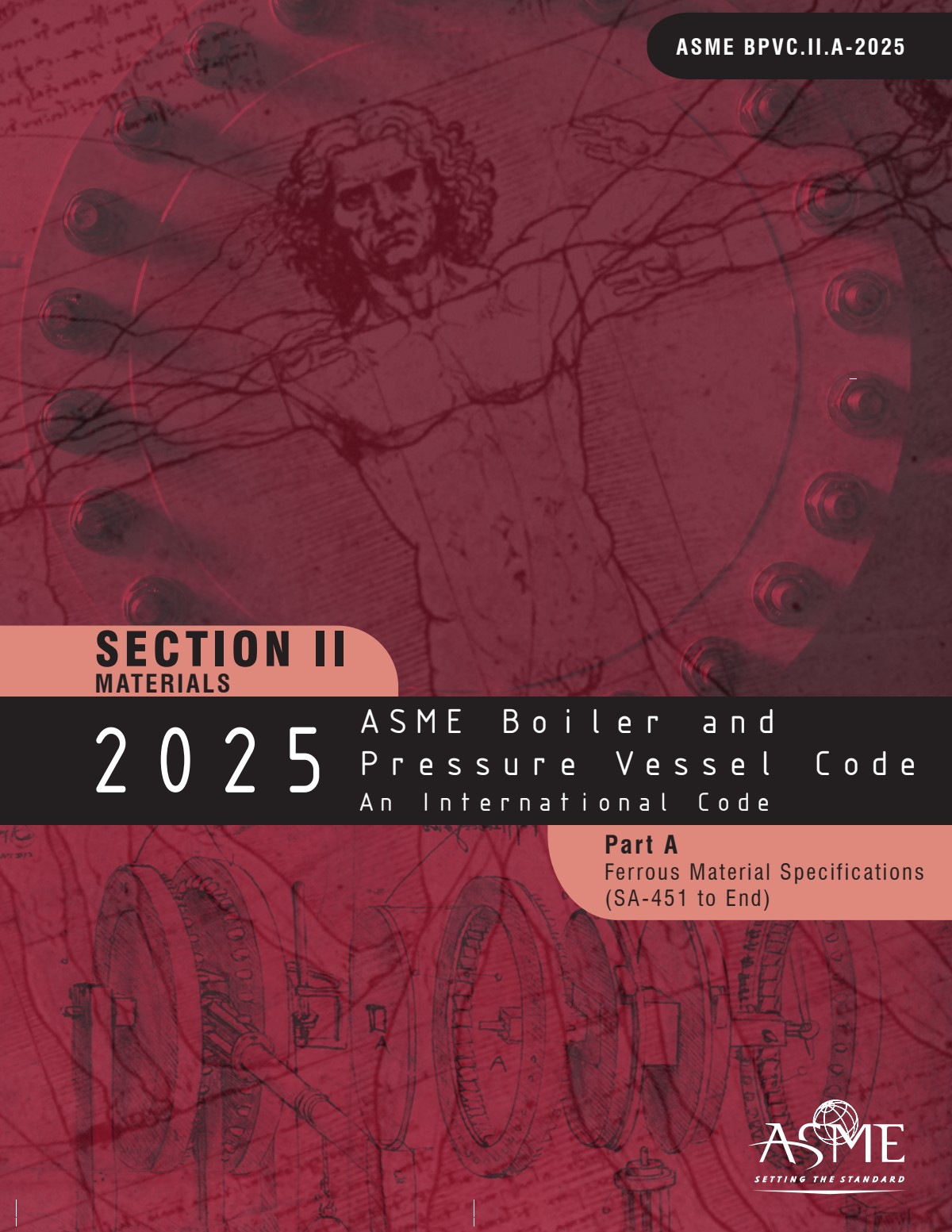
ASME BPVC 2025 Section II, Part A: Ferrous Material Specifications, SA-451 to End
Original price was: $1,020.00.$340.00Current price is: $340.00.
ASME BPVC 2025 Section II, Part A: Ferrous Material Specifications, SA-451 to End provides the official material specifications for ferrous metals used in the construction of boilers and pressure vessels. This volume covers specifications from SA-451 through the end of the ferrous listings, ensuring compliance with ASME standards for safety, performance, and quality.
This section is an essential reference for engineers, manufacturers, inspectors, and other professionals who require accurate and up-to-date standards for ferrous materials in pressure equipment design and fabrication.
ASME BPVC 2025 Section II, Part A: Ferrous Material Specifications, SA-451 to End provides the official material specifications for ferrous metals used in the construction of boilers and pressure vessels. This volume covers specifications from SA-451 through the end of the ferrous listings, ensuring compliance with ASME standards for safety, performance, and quality.
This section is an essential reference for engineers, manufacturers, inspectors, and other professionals who require accurate and up-to-date standards for ferrous materials in pressure equipment design and fabrication.
Book information
Purchase now to read the book instantly.
Add to cartRelated products
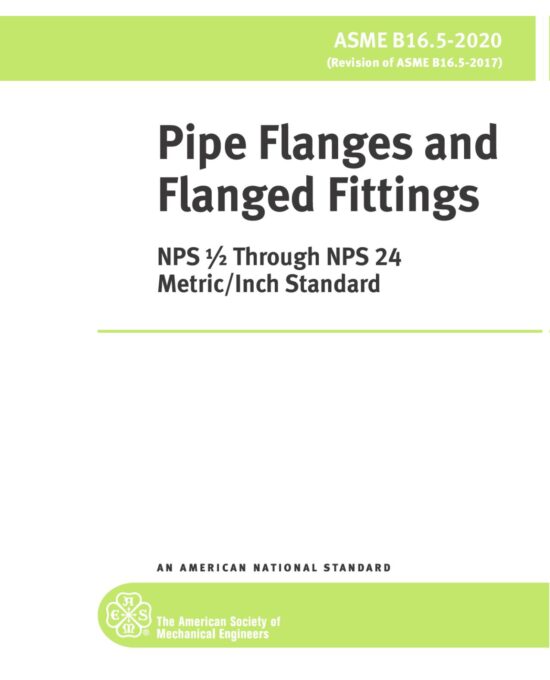
ASME B16.5-2020: Pipe Flanges and Flanged Fittings
Product Summary:
ASME B16.5-2020 defines the requirements for pipe flanges and flanged fittings in sizes NPS ½ through NPS 24, covering pressure–temperature ratings, dimensions, tolerances, materials, and testing. It applies to components used in bolted flange joints made from cast, forged, or plate materials in industrial piping systems.
Key Features:
- Pressure–temperature ratings for Classes 150 through 2500
- Dimensional standards for weld neck, blind, reducing, and other flange types
- Specifications for bolting materials, gaskets, and flange assembly practices
- Manufacturing tolerances and permanent marking requirements
- Material listings with corresponding ASTM designations for forgings, castings, and plates
- Guidance on gasket selection, bolted joint design, and system hydrotesting
- Appendices covering bolt length calculations, pressure rating derivation, and quality system standards
- Metric and U.S. Customary units presented side-by-side for reference
Who It’s For:
Essential for piping designers, mechanical engineers, fabricators, and QA/QC personnel involved in pressure piping systems across oil, gas, chemical, and industrial sectors.
ASME B16.5-2020
ASME B16.5-2020: Pipe Flanges and Flanged Fittings
Product Summary:
ASME B16.5-2020 defines the requirements for pipe flanges and flanged fittings in sizes NPS ½ through NPS 24, covering pressure–temperature ratings, dimensions, tolerances, materials, and testing. It applies to components used in bolted flange joints made from cast, forged, or plate materials in industrial piping systems.
Key Features:
- Pressure–temperature ratings for Classes 150 through 2500
- Dimensional standards for weld neck, blind, reducing, and other flange types
- Specifications for bolting materials, gaskets, and flange assembly practices
- Manufacturing tolerances and permanent marking requirements
- Material listings with corresponding ASTM designations for forgings, castings, and plates
- Guidance on gasket selection, bolted joint design, and system hydrotesting
- Appendices covering bolt length calculations, pressure rating derivation, and quality system standards
- Metric and U.S. Customary units presented side-by-side for reference
Who It’s For:
Essential for piping designers, mechanical engineers, fabricators, and QA/QC personnel involved in pressure piping systems across oil, gas, chemical, and industrial sectors.
ASME B16.5-2020
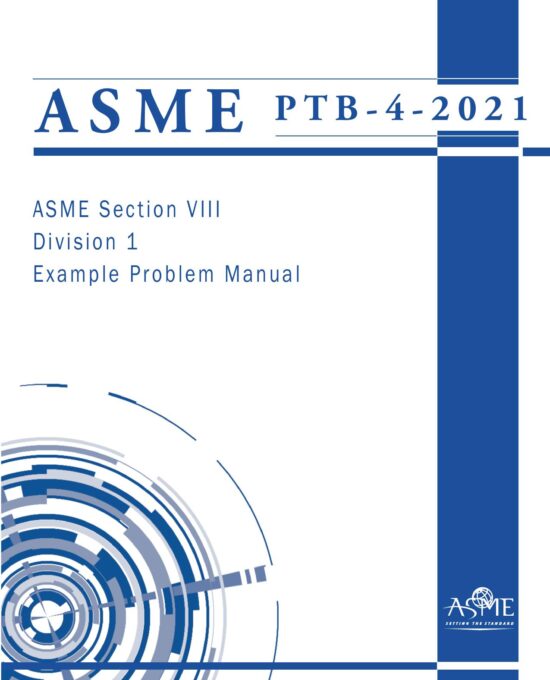
ASME PTB-4-2021: ASME Section VIII – Division 1 Example Problem Manual
ASME PTB-4-2021: ASME Section VIII – Division 1 Example Problem Manual presents a comprehensive set of solved example problems demonstrating the correct application of design-by-rule methods from ASME Boiler and Pressure Vessel Code, Section VIII, Division 1. It serves as a valuable learning and reference tool for engineers, designers, and inspectors working in pressure vessel design and analysis.
Highlights:
- Step-by-step examples covering material selection, MDMT, welded joints, and reinforcement
- Calculations for internal/external pressure, flange design, tubesheets, and expansion joints
- Integration of Mandatory Appendix 46 for using Division 2 methods within Division 1 design
- Comparison of Division 1 and Division 2 approaches to selected design problems
- Commentary offering insight into code interpretation and design rationale
- Dual-unit presentation: U.S. Customary and SI
- Examples include postweld heat treatment, hydrotesting, out-of-roundness, and NDE procedures
- Supports design-by-rule and design-by-analysis education and application
Who It’s For:
Mechanical engineers, vessel designers, educators, and code compliance professionals seeking hands-on understanding and accurate application of ASME Section VIII, Division 1 requirements.
PTB-4-2021
ASME PTB-4-2021: ASME Section VIII – Division 1 Example Problem Manual
ASME PTB-4-2021: ASME Section VIII – Division 1 Example Problem Manual presents a comprehensive set of solved example problems demonstrating the correct application of design-by-rule methods from ASME Boiler and Pressure Vessel Code, Section VIII, Division 1. It serves as a valuable learning and reference tool for engineers, designers, and inspectors working in pressure vessel design and analysis.
Highlights:
- Step-by-step examples covering material selection, MDMT, welded joints, and reinforcement
- Calculations for internal/external pressure, flange design, tubesheets, and expansion joints
- Integration of Mandatory Appendix 46 for using Division 2 methods within Division 1 design
- Comparison of Division 1 and Division 2 approaches to selected design problems
- Commentary offering insight into code interpretation and design rationale
- Dual-unit presentation: U.S. Customary and SI
- Examples include postweld heat treatment, hydrotesting, out-of-roundness, and NDE procedures
- Supports design-by-rule and design-by-analysis education and application
Who It’s For:
Mechanical engineers, vessel designers, educators, and code compliance professionals seeking hands-on understanding and accurate application of ASME Section VIII, Division 1 requirements.
PTB-4-2021
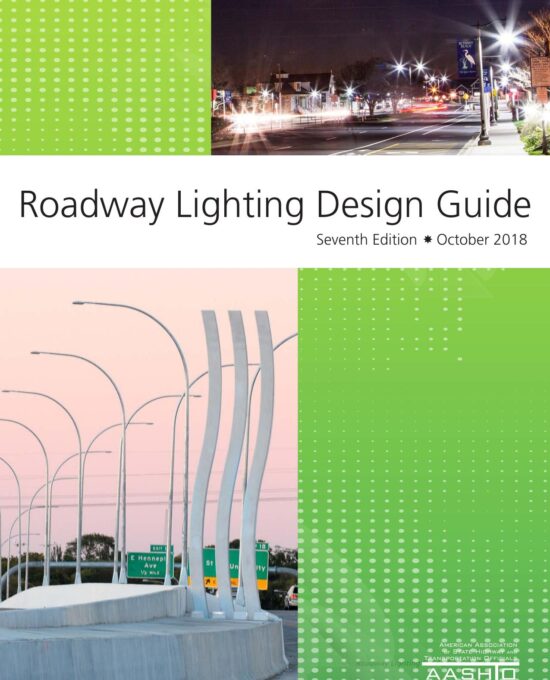
AASHTO GL-7: Roadway Lighting Design Guide, 7th Edition (2018)
AASHTO GL-7: Roadway Lighting Design Guide, Seventh Edition (2018) provides comprehensive guidance on the planning, design, and implementation of roadway lighting systems. This edition reflects current engineering practices, safety standards, and lighting technologies to enhance visibility, energy efficiency, and operational reliability across modern transportation networks.
Highlights:
- Design principles covering illuminance, luminance, uniformity, and glare control
- Guidance on developing master roadway lighting plans and policies
- Recommended lighting levels for highways, streets, intersections, and pedestrian zones
- Design criteria for tunnels, underpasses, and bridges
- Considerations for temporary lighting in work zones and construction areas
- Evaluation of emerging technologies such as adaptive lighting and smart controls
- Discussion on lighting management systems and energy-efficient solutions
- Environmental impact assessments and aesthetic integration strategies
- Standards for pole placement, maintenance access, and safety
- Support for decision-making with traffic data and community planning considerations
Who It’s For:
An essential reference for transportation agencies, civil engineers, and planners responsible for roadway lighting design and policy development.
GL-7-2018
AASHTO GL-7: Roadway Lighting Design Guide, 7th Edition (2018)
AASHTO GL-7: Roadway Lighting Design Guide, Seventh Edition (2018) provides comprehensive guidance on the planning, design, and implementation of roadway lighting systems. This edition reflects current engineering practices, safety standards, and lighting technologies to enhance visibility, energy efficiency, and operational reliability across modern transportation networks.
Highlights:
- Design principles covering illuminance, luminance, uniformity, and glare control
- Guidance on developing master roadway lighting plans and policies
- Recommended lighting levels for highways, streets, intersections, and pedestrian zones
- Design criteria for tunnels, underpasses, and bridges
- Considerations for temporary lighting in work zones and construction areas
- Evaluation of emerging technologies such as adaptive lighting and smart controls
- Discussion on lighting management systems and energy-efficient solutions
- Environmental impact assessments and aesthetic integration strategies
- Standards for pole placement, maintenance access, and safety
- Support for decision-making with traffic data and community planning considerations
Who It’s For:
An essential reference for transportation agencies, civil engineers, and planners responsible for roadway lighting design and policy development.
GL-7-2018
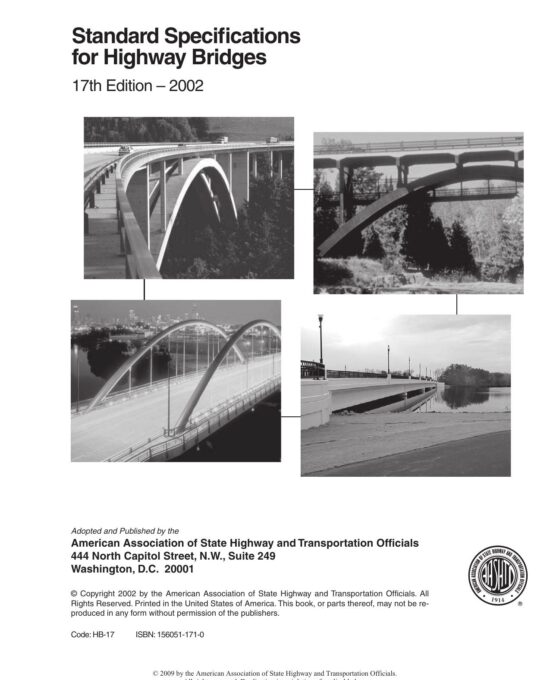
AASHTO HB-17: Standard Specifications for Highway Bridges, 17th Edition (2002)
AASHTO HB-17: Standard Specifications for Highway Bridges, 17th Edition (2002) provides comprehensive criteria for the design, construction, and maintenance of highway bridges throughout the United States. This edition is the final update prior to the nationwide adoption of Load and Resistance Factor Design (LRFD) standards.
Highlights:
- General provisions for bridge design, structural analysis, and performance
- Criteria for superstructures, substructures, abutments, culverts, and piers
- Service load and load factor design methods for concrete, steel, timber, and prestressed components
- Requirements for foundations, retaining structures, and soil-structure interaction
- Specifications addressing load distribution, fatigue, seismic considerations, and strength evaluation
- Commentary and notes incorporating interim revisions through 2003
- References to supporting standards from AASHTO, ASTM, AWS, and others
- Applicable to rehabilitation, legacy design validation, and maintenance planning for non-LRFD bridges
Who It’s For:
A critical reference for bridge engineers, transportation officials, and contractors working with legacy structures or evaluating designs developed before the transition to LRFD.
HB-17-2002
AASHTO HB-17: Standard Specifications for Highway Bridges, 17th Edition (2002)
AASHTO HB-17: Standard Specifications for Highway Bridges, 17th Edition (2002) provides comprehensive criteria for the design, construction, and maintenance of highway bridges throughout the United States. This edition is the final update prior to the nationwide adoption of Load and Resistance Factor Design (LRFD) standards.
Highlights:
- General provisions for bridge design, structural analysis, and performance
- Criteria for superstructures, substructures, abutments, culverts, and piers
- Service load and load factor design methods for concrete, steel, timber, and prestressed components
- Requirements for foundations, retaining structures, and soil-structure interaction
- Specifications addressing load distribution, fatigue, seismic considerations, and strength evaluation
- Commentary and notes incorporating interim revisions through 2003
- References to supporting standards from AASHTO, ASTM, AWS, and others
- Applicable to rehabilitation, legacy design validation, and maintenance planning for non-LRFD bridges
Who It’s For:
A critical reference for bridge engineers, transportation officials, and contractors working with legacy structures or evaluating designs developed before the transition to LRFD.
HB-17-2002