
AWS D1.4/D1.4M:2018 – Structural Welding Code – Steel Reinforcing Bars
AWS D1.4/D1.4M:2018 – Structural Welding Code – Steel Reinforcing Bars provides welding requirements for deformed and plain reinforcing bars used in reinforced concrete construction. Applicable to structural projects such as buildings, bridges, and infrastructure systems, this code ensures weld quality, safety, and compliance in both field and shop conditions.
Highlights:
- Covers Shielded Metal Arc Welding (SMAW) and Gas Tungsten Arc Welding (GTAW) as prequalified processes
- Design rules for welded joints, lap splices, and bar anchorage
- Base metal, filler metal, and electrode specifications
- Preheat/interpass temperature guidance based on carbon equivalent
- Weld profile and workmanship requirements
- Qualification criteria for welders, welding procedures, and inspectors
- Visual and radiographic inspection procedures
- Surface preparation and protection requirements for field/shop welding
- Includes normative and informative annexes for expanded guidance
- Commentary section explains code intent and technical decisions
Who It’s For:
Structural engineers, contractors, inspectors, and welders engaged in the welding of reinforcing steel in seismic, heavy civil, and structural applications.
AWS D1.4/D1.4M:2018
AWS D1.4/D1.4M:2018 – Structural Welding Code – Steel Reinforcing Bars
AWS D1.4/D1.4M:2018 – Structural Welding Code – Steel Reinforcing Bars provides welding requirements for deformed and plain reinforcing bars used in reinforced concrete construction. Applicable to structural projects such as buildings, bridges, and infrastructure systems, this code ensures weld quality, safety, and compliance in both field and shop conditions.
Highlights:
- Covers Shielded Metal Arc Welding (SMAW) and Gas Tungsten Arc Welding (GTAW) as prequalified processes
- Design rules for welded joints, lap splices, and bar anchorage
- Base metal, filler metal, and electrode specifications
- Preheat/interpass temperature guidance based on carbon equivalent
- Weld profile and workmanship requirements
- Qualification criteria for welders, welding procedures, and inspectors
- Visual and radiographic inspection procedures
- Surface preparation and protection requirements for field/shop welding
- Includes normative and informative annexes for expanded guidance
- Commentary section explains code intent and technical decisions
Who It’s For:
Structural engineers, contractors, inspectors, and welders engaged in the welding of reinforcing steel in seismic, heavy civil, and structural applications.
AWS D1.4/D1.4M:2018
AWS D1.6/D1.6M:2017 – Structural Welding Code – Stainless Steel
AWS D1.6/D1.6M:2017 – Structural Welding Code – Stainless Steel defines the welding requirements for austenitic and ferritic stainless steel structural components. Applicable to both shop and field fabrication, it governs the construction of non-pressure stainless steel structures and aligns closely with AWS D1.1 formatting for consistency.
Highlights:
- Design provisions for welded joints and structural connection details
- Specifications for base metals, filler materials, and qualified welding processes
- Prequalification criteria for procedures and joint configurations
- Qualification standards for welding procedures, welders, and operators
- Visual and nondestructive inspection methods
- Stud welding practices and performance qualification requirements
- Fabrication standards for cleaning, joint prep, and weld profile control
- Weld acceptance criteria and repair guidelines
- Normative and informative annexes on weld sizing, filler metal selection, sample forms, and macroetchants
- Commentary section offering interpretation and application guidance
Who It’s For:
Essential for fabricators, engineers, inspectors, and contractors involved in stainless steel construction for structural applications such as architectural systems, industrial frameworks, and corrosion-resistant environments.
AWS D1.6/D1.6M:2017
AWS D1.6/D1.6M:2017 – Structural Welding Code – Stainless Steel
AWS D1.6/D1.6M:2017 – Structural Welding Code – Stainless Steel defines the welding requirements for austenitic and ferritic stainless steel structural components. Applicable to both shop and field fabrication, it governs the construction of non-pressure stainless steel structures and aligns closely with AWS D1.1 formatting for consistency.
Highlights:
- Design provisions for welded joints and structural connection details
- Specifications for base metals, filler materials, and qualified welding processes
- Prequalification criteria for procedures and joint configurations
- Qualification standards for welding procedures, welders, and operators
- Visual and nondestructive inspection methods
- Stud welding practices and performance qualification requirements
- Fabrication standards for cleaning, joint prep, and weld profile control
- Weld acceptance criteria and repair guidelines
- Normative and informative annexes on weld sizing, filler metal selection, sample forms, and macroetchants
- Commentary section offering interpretation and application guidance
Who It’s For:
Essential for fabricators, engineers, inspectors, and contractors involved in stainless steel construction for structural applications such as architectural systems, industrial frameworks, and corrosion-resistant environments.
AWS D1.6/D1.6M:2017
AWS D17.1/D17.1M:2017 – Specification for Fusion Welding for Aerospace Applications
AWS D17.1/D17.1M:2017 establishes the welding requirements for aircraft, aerospace, and space hardware using electric arc and high-energy beam fusion welding processes. It covers aluminum, nickel, iron, cobalt, titanium, and magnesium alloys and supports both flight-critical and support structure applications.
Highlights:
- Design criteria for aerospace weld joints
- Qualification requirements for procedures and personnel
- Fabrication, inspection, and acceptance standards
- Repair guidance for aerospace components
- Preweld/postweld processes including traceability and cleaning
- Visual and nondestructive exam methods with acceptance criteria
- Normative/informative annexes on bend tests, positions, acronyms, and forms
- Commentary with technical interpretation and best practices
New in the 2017 Edition:
- Annexes for UNS material designations
- Expanded welding position coverage and standardized forms
- Editorial updates for clarity and usability
Who’s It For:
Aerospace engineers, welding supervisors, inspectors, and quality professionals involved in the fabrication or evaluation of welded aerospace structures.
AWS D17.1/D17.1M-2017
AWS D17.1/D17.1M:2017 – Specification for Fusion Welding for Aerospace Applications
AWS D17.1/D17.1M:2017 establishes the welding requirements for aircraft, aerospace, and space hardware using electric arc and high-energy beam fusion welding processes. It covers aluminum, nickel, iron, cobalt, titanium, and magnesium alloys and supports both flight-critical and support structure applications.
Highlights:
- Design criteria for aerospace weld joints
- Qualification requirements for procedures and personnel
- Fabrication, inspection, and acceptance standards
- Repair guidance for aerospace components
- Preweld/postweld processes including traceability and cleaning
- Visual and nondestructive exam methods with acceptance criteria
- Normative/informative annexes on bend tests, positions, acronyms, and forms
- Commentary with technical interpretation and best practices
New in the 2017 Edition:
- Annexes for UNS material designations
- Expanded welding position coverage and standardized forms
- Editorial updates for clarity and usability
Who’s It For:
Aerospace engineers, welding supervisors, inspectors, and quality professionals involved in the fabrication or evaluation of welded aerospace structures.
AWS D17.1/D17.1M-2017
AWS D17.3/D17.3M:2016 – Specification for Friction Stir Welding of Aluminum Alloys for Aerospace Applications
AWS D17.3/D17.3M:2016 establishes general requirements for the friction stir welding (FSW) of aluminum alloys in aerospace applications. It provides standardized procedures for the design, fabrication, qualification, and inspection of aerospace components joined using the FSW process.
Highlights:
- Design requirements for FSW joints in aerospace structures
- Qualification procedures for welders, operators, and welding procedures
- Approved base metal specifications and usage limitations
- Tooling, fixture, and FSW equipment setup requirements
- Fabrication guidelines for welding parameters and process control
- Visual and mechanical inspection methods for weld quality verification
- Acceptance criteria for discontinuities, mechanical properties, and visual appearance
- Quality assurance provisions, documentation, and recordkeeping standards
New in the 2016 Edition:
- Updates to reflect advancements in friction stir welding techniques and aerospace material performance
- Enhanced inspection and qualification procedures for improved compliance and reliability
- Supersedes AWS D17.3/D17.3M:2010
Who’s It For:
Aerospace engineers, quality professionals, and fabricators involved in the production or qualification of aluminum structures using friction stir welding.
AWS D17.3/D17.3M-2016
AWS D17.3/D17.3M:2016 – Specification for Friction Stir Welding of Aluminum Alloys for Aerospace Applications
AWS D17.3/D17.3M:2016 establishes general requirements for the friction stir welding (FSW) of aluminum alloys in aerospace applications. It provides standardized procedures for the design, fabrication, qualification, and inspection of aerospace components joined using the FSW process.
Highlights:
- Design requirements for FSW joints in aerospace structures
- Qualification procedures for welders, operators, and welding procedures
- Approved base metal specifications and usage limitations
- Tooling, fixture, and FSW equipment setup requirements
- Fabrication guidelines for welding parameters and process control
- Visual and mechanical inspection methods for weld quality verification
- Acceptance criteria for discontinuities, mechanical properties, and visual appearance
- Quality assurance provisions, documentation, and recordkeeping standards
New in the 2016 Edition:
- Updates to reflect advancements in friction stir welding techniques and aerospace material performance
- Enhanced inspection and qualification procedures for improved compliance and reliability
- Supersedes AWS D17.3/D17.3M:2010
Who’s It For:
Aerospace engineers, quality professionals, and fabricators involved in the production or qualification of aluminum structures using friction stir welding.
AWS D17.3/D17.3M-2016
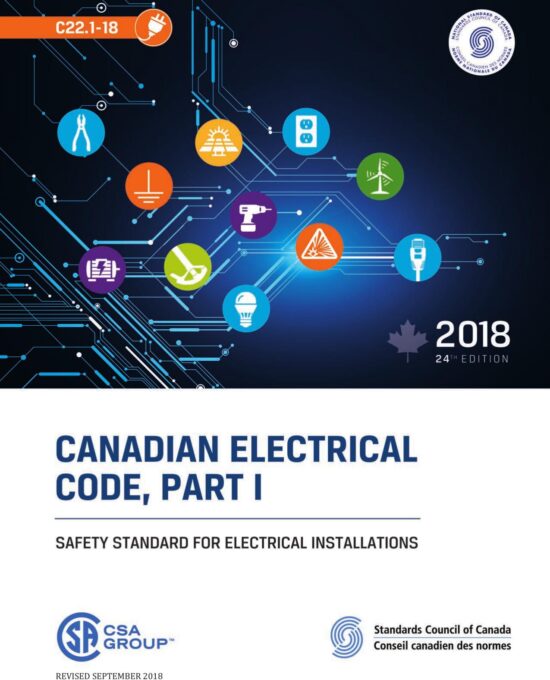
CSA C22.1-18 – Canadian Electrical Code, Part I (24th Edition), 2018
CSA C22.1-18 – Canadian Electrical Code, Part I (24th Edition), 2018 sets the national standard for the safe installation and maintenance of electrical equipment in Canada. This edition introduces significant changes affecting residential, commercial, and industrial systems, including expanded support for EV infrastructure and renewable energy integration.
Highlights:
- Rules for safe wiring and equipment installation across all building types
- Streamlined Section 10 on grounding and bonding
- Expanded energy management requirements supporting EV infrastructure
- Updated tamper-resistant receptacle requirements for dwellings and child-accessible spaces
- GFCI protection for heating controls in wet locations (Section 62)
- Revised ampacity tables, conductor ID, and overcurrent protection criteria
- Covers renewables, patient care, cranes, welding, temporary wiring, and EV charging
- New Appendix M with bilingual markings and updated hazardous area guidance
Who It's For:
Electricians, engineers, inspectors, and contractors in Canadian jurisdictions relying on national or provincial electrical installation regulations.
CSA C22.1-18
CSA C22.1-18 – Canadian Electrical Code, Part I (24th Edition), 2018
CSA C22.1-18 – Canadian Electrical Code, Part I (24th Edition), 2018 sets the national standard for the safe installation and maintenance of electrical equipment in Canada. This edition introduces significant changes affecting residential, commercial, and industrial systems, including expanded support for EV infrastructure and renewable energy integration.
Highlights:
- Rules for safe wiring and equipment installation across all building types
- Streamlined Section 10 on grounding and bonding
- Expanded energy management requirements supporting EV infrastructure
- Updated tamper-resistant receptacle requirements for dwellings and child-accessible spaces
- GFCI protection for heating controls in wet locations (Section 62)
- Revised ampacity tables, conductor ID, and overcurrent protection criteria
- Covers renewables, patient care, cranes, welding, temporary wiring, and EV charging
- New Appendix M with bilingual markings and updated hazardous area guidance
Who It's For:
Electricians, engineers, inspectors, and contractors in Canadian jurisdictions relying on national or provincial electrical installation regulations.
CSA C22.1-18
CSA C22.1:21 – Canadian Electrical Code, Part I (25th Edition), 2021
CSA C22.1:21 – Canadian Electrical Code, Part I (25th Edition), 2021 defines the national standard for the safe installation and maintenance of electrical equipment throughout Canada. This edition incorporates updated safety practices, supports emerging technologies, and aligns with evolving environmental and regulatory needs.
Highlights:
- Applies to all voltages and occupancies: residential, commercial, and industrial
- Expanded coverage of renewable energy, storage systems, EV charging, and hazardous locations
- Revised grounding, bonding, wiring methods, and overcurrent protection rules
- New climate resilience rules and guidance for livestock/agricultural buildings
- Refined equipment classifications, voltage references, and conductor ampacity updates
- Enhanced provisions for raceways, environmental protection, and installation practices
- Includes 80+ specialized sections (hospitals, cranes, marinas, airports, amusement parks)
- Appendices cover engineering interpretations, intrinsically safe circuits, and fire protection
Who It's For:
Electricians, engineers, code officials, and contractors operating under Canadian electrical safety regulations. Supersedes CSA C22.1-18.
CSA C22.1:21
CSA C22.1:21 – Canadian Electrical Code, Part I (25th Edition), 2021
CSA C22.1:21 – Canadian Electrical Code, Part I (25th Edition), 2021 defines the national standard for the safe installation and maintenance of electrical equipment throughout Canada. This edition incorporates updated safety practices, supports emerging technologies, and aligns with evolving environmental and regulatory needs.
Highlights:
- Applies to all voltages and occupancies: residential, commercial, and industrial
- Expanded coverage of renewable energy, storage systems, EV charging, and hazardous locations
- Revised grounding, bonding, wiring methods, and overcurrent protection rules
- New climate resilience rules and guidance for livestock/agricultural buildings
- Refined equipment classifications, voltage references, and conductor ampacity updates
- Enhanced provisions for raceways, environmental protection, and installation practices
- Includes 80+ specialized sections (hospitals, cranes, marinas, airports, amusement parks)
- Appendices cover engineering interpretations, intrinsically safe circuits, and fire protection
Who It's For:
Electricians, engineers, code officials, and contractors operating under Canadian electrical safety regulations. Supersedes CSA C22.1-18.
CSA C22.1:21
IEC 60601-1:2020 – Medical Electrical Equipment – General Requirements for Basic Safety and Essential Performance, 2020
- Applies to the basic safety and essential performance of electrical medical equipment and systems
- Addresses hazards related to electrical shock, mechanical failure, thermal effects, and radiation
- Integrates risk management aligned with ISO 14971 for hazard control and usability
- Specifies labeling, documentation, and marking requirements for product traceability and safe use
- Supports conformity assessment and global regulatory submissions
- Clarified terminology and pass/fail testing criteria
- Updated guidance for software safety, usability engineering, and wireless technologies
- Enhanced alignment with IEC 60601-1 collateral standards (e.g., -1-2 for EMC, -1-6 for usability)
IEC 60601-1:2020
IEC 60601-1:2020 – Medical Electrical Equipment – General Requirements for Basic Safety and Essential Performance, 2020
- Applies to the basic safety and essential performance of electrical medical equipment and systems
- Addresses hazards related to electrical shock, mechanical failure, thermal effects, and radiation
- Integrates risk management aligned with ISO 14971 for hazard control and usability
- Specifies labeling, documentation, and marking requirements for product traceability and safe use
- Supports conformity assessment and global regulatory submissions
- Clarified terminology and pass/fail testing criteria
- Updated guidance for software safety, usability engineering, and wireless technologies
- Enhanced alignment with IEC 60601-1 collateral standards (e.g., -1-2 for EMC, -1-6 for usability)
IEC 60601-1:2020
IEEE C2-2023 – National Electrical Safety Code (NESC), 2023 Edition
IEEE C2-2023 – National Electrical Safety Code (NESC) provides the latest safety requirements for the installation, operation, and maintenance of electric supply and communication systems. Developed through ANSI-accredited consensus, the 2023 edition incorporates updates for new technologies, environmental resilience, and evolving industry practices.
Highlights:
- New rules for photovoltaic (PV) generation and advanced energy storage systems
- Expanded arc hazard clothing tables for medium-voltage systems up to 36 kV
- Updated grounding rules for mountainous terrain, coastal zones, and submerged systems
- Revised clearance criteria for conductors, antennas, and structural obstructions
- Clarified definitions and loading guidelines for extreme wind, ice, and weather events
- Standardized inch–foot–pound units for U.S.-centric engineering and safety compliance
Covered Parts:
- Part 1: Electric Supply Stations
- Part 2: Overhead Lines
- Part 3: Underground Lines
- Part 4: Work Rules for Supply and Communication Employees
Who It’s For:
Engineers, utility operators, telecom providers, safety professionals, and contractors responsible for the safe design, construction, and operation of electrical and communications infrastructure.
IEEE C2-2023
IEEE C2-2023 – National Electrical Safety Code (NESC), 2023 Edition
IEEE C2-2023 – National Electrical Safety Code (NESC) provides the latest safety requirements for the installation, operation, and maintenance of electric supply and communication systems. Developed through ANSI-accredited consensus, the 2023 edition incorporates updates for new technologies, environmental resilience, and evolving industry practices.
Highlights:
- New rules for photovoltaic (PV) generation and advanced energy storage systems
- Expanded arc hazard clothing tables for medium-voltage systems up to 36 kV
- Updated grounding rules for mountainous terrain, coastal zones, and submerged systems
- Revised clearance criteria for conductors, antennas, and structural obstructions
- Clarified definitions and loading guidelines for extreme wind, ice, and weather events
- Standardized inch–foot–pound units for U.S.-centric engineering and safety compliance
Covered Parts:
- Part 1: Electric Supply Stations
- Part 2: Overhead Lines
- Part 3: Underground Lines
- Part 4: Work Rules for Supply and Communication Employees
Who It’s For:
Engineers, utility operators, telecom providers, safety professionals, and contractors responsible for the safe design, construction, and operation of electrical and communications infrastructure.
IEEE C2-2023
ISO 9001:2015 – Quality Management Systems: Requirements (Fifth Edition), 2015
ISO 9001:2015 – Quality Management Systems: Requirements (Fifth Edition) specifies the international criteria for a quality management system (QMS) and is the globally recognized benchmark for organizations seeking to improve performance, meet customer expectations, and demonstrate commitment to quality. This standard applies to any organization, regardless of size or industry, and is built on principles including customer focus, leadership, risk-based thinking, and continuous improvement.
Highlights:
- Defines core QMS requirements for planning, implementation, maintenance, and improvement
- Covers organizational context, leadership roles, documented information, and resource management
- Provides structured framework for process-based quality assurance and performance evaluation
- Integrates risk-based thinking into planning, operations, and decision-making
- Emphasizes customer satisfaction, conformity, and continual improvement
- Aligns with Annex SL for easy integration with other ISO management standards
- Includes terms, definitions, and guidance for practical implementation
- Applicable to manufacturing, service, and public sector organizations
Who It’s For:
Quality managers, compliance officers, and auditors responsible for establishing, maintaining, or certifying a quality management system that aligns with international standards.
ISO 9001:2015
ISO 9001:2015 – Quality Management Systems: Requirements (Fifth Edition), 2015
ISO 9001:2015 – Quality Management Systems: Requirements (Fifth Edition) specifies the international criteria for a quality management system (QMS) and is the globally recognized benchmark for organizations seeking to improve performance, meet customer expectations, and demonstrate commitment to quality. This standard applies to any organization, regardless of size or industry, and is built on principles including customer focus, leadership, risk-based thinking, and continuous improvement.
Highlights:
- Defines core QMS requirements for planning, implementation, maintenance, and improvement
- Covers organizational context, leadership roles, documented information, and resource management
- Provides structured framework for process-based quality assurance and performance evaluation
- Integrates risk-based thinking into planning, operations, and decision-making
- Emphasizes customer satisfaction, conformity, and continual improvement
- Aligns with Annex SL for easy integration with other ISO management standards
- Includes terms, definitions, and guidance for practical implementation
- Applicable to manufacturing, service, and public sector organizations
Who It’s For:
Quality managers, compliance officers, and auditors responsible for establishing, maintaining, or certifying a quality management system that aligns with international standards.
ISO 9001:2015