
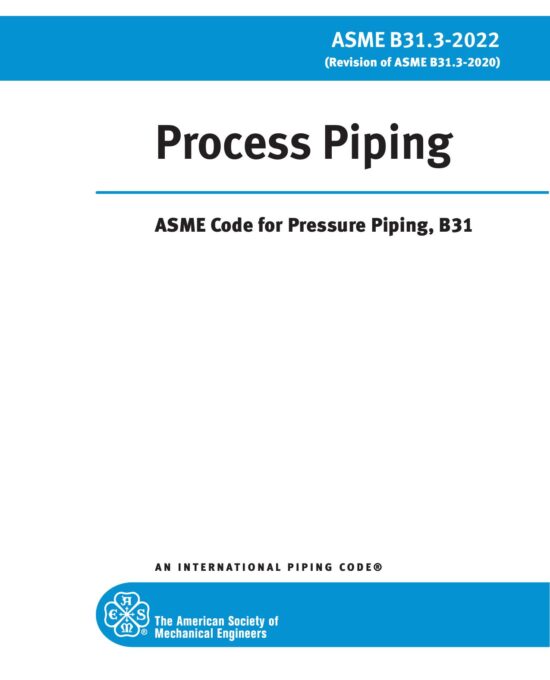
ASME B31.3-2022: Process Piping
ASME B31.3-2022: Process Piping provides comprehensive engineering requirements for the design, materials, fabrication, examination, testing, and safety of process piping systems used in petroleum refineries, chemical plants, pharmaceutical facilities, textile plants, paper mills, and related processing plants and terminals. It is a vital code for ensuring piping integrity in high-pressure, high-temperature, and corrosive service environments.
Highlights:
- Applies to metallic and nonmetallic piping for chemicals, petroleum, natural gas, and related fluids
- Covers piping components: pipe, flanges, valves, gaskets, bolts, expansion joints, and supports
- Design criteria for internal pressure, sustained loads, displacement strains, and occasional loads
- Construction requirements including welding, brazing, bending, assembly, and material specifications
- Mandatory rules for examination, testing, inspection, and leak testing procedures
- Stress range reduction factors, flexibility analysis, and allowable stress values by material and temperature
- Qualification requirements for personnel, procedures, and fabrication documentation
- Integration with ASME Section IX for welding and ASME B31.1 for power piping interfaces
- Updated stress tables and revisions to weld design rules in para. 328.5.2
- Errata incorporated for clarity on strength tables and weld joint tolerances
Who It’s For:
Mechanical engineers, piping designers, fabricators, inspectors, and maintenance teams working on the safe and code-compliant construction and modification of process piping systems across industries.
B31.3-2022
ASME B31.3-2022: Process Piping
ASME B31.3-2022: Process Piping provides comprehensive engineering requirements for the design, materials, fabrication, examination, testing, and safety of process piping systems used in petroleum refineries, chemical plants, pharmaceutical facilities, textile plants, paper mills, and related processing plants and terminals. It is a vital code for ensuring piping integrity in high-pressure, high-temperature, and corrosive service environments.
Highlights:
- Applies to metallic and nonmetallic piping for chemicals, petroleum, natural gas, and related fluids
- Covers piping components: pipe, flanges, valves, gaskets, bolts, expansion joints, and supports
- Design criteria for internal pressure, sustained loads, displacement strains, and occasional loads
- Construction requirements including welding, brazing, bending, assembly, and material specifications
- Mandatory rules for examination, testing, inspection, and leak testing procedures
- Stress range reduction factors, flexibility analysis, and allowable stress values by material and temperature
- Qualification requirements for personnel, procedures, and fabrication documentation
- Integration with ASME Section IX for welding and ASME B31.1 for power piping interfaces
- Updated stress tables and revisions to weld design rules in para. 328.5.2
- Errata incorporated for clarity on strength tables and weld joint tolerances
Who It’s For:
Mechanical engineers, piping designers, fabricators, inspectors, and maintenance teams working on the safe and code-compliant construction and modification of process piping systems across industries.
B31.3-2022
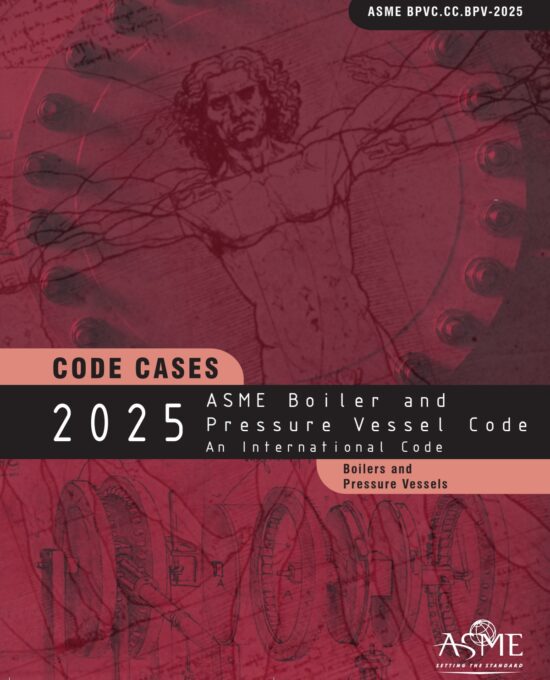
ASME BPVC 2025 Code Cases: Boilers and Pressure Vessels
ASME BPVC 2025 Code Cases: Boilers and Pressure Vessels provides approved alternatives and interpretations to the rules in the ASME Boiler and Pressure Vessel Code. These code cases allow for the safe and practical use of new materials, designs, and construction methods that may not yet be included in the main Code.
The 2025 edition compiles the latest approved cases, offering engineers, manufacturers, and inspectors up-to-date guidance to address evolving industry practices. Code cases serve as official supplements, ensuring that the design, fabrication, inspection, and certification of boilers and pressure vessels remain in compliance with ASME standards while accommodating innovation.
This resource is essential for professionals involved in boiler and pressure vessel construction, design, operation, and compliance. It supports safe engineering practices while providing flexibility for emerging technologies and materials within the framework of the ASME BPVC.
ASME BPVC 2025 Code Cases: Boilers and Pressure Vessels
ASME BPVC 2025 Code Cases: Boilers and Pressure Vessels provides approved alternatives and interpretations to the rules in the ASME Boiler and Pressure Vessel Code. These code cases allow for the safe and practical use of new materials, designs, and construction methods that may not yet be included in the main Code.
The 2025 edition compiles the latest approved cases, offering engineers, manufacturers, and inspectors up-to-date guidance to address evolving industry practices. Code cases serve as official supplements, ensuring that the design, fabrication, inspection, and certification of boilers and pressure vessels remain in compliance with ASME standards while accommodating innovation.
This resource is essential for professionals involved in boiler and pressure vessel construction, design, operation, and compliance. It supports safe engineering practices while providing flexibility for emerging technologies and materials within the framework of the ASME BPVC.