
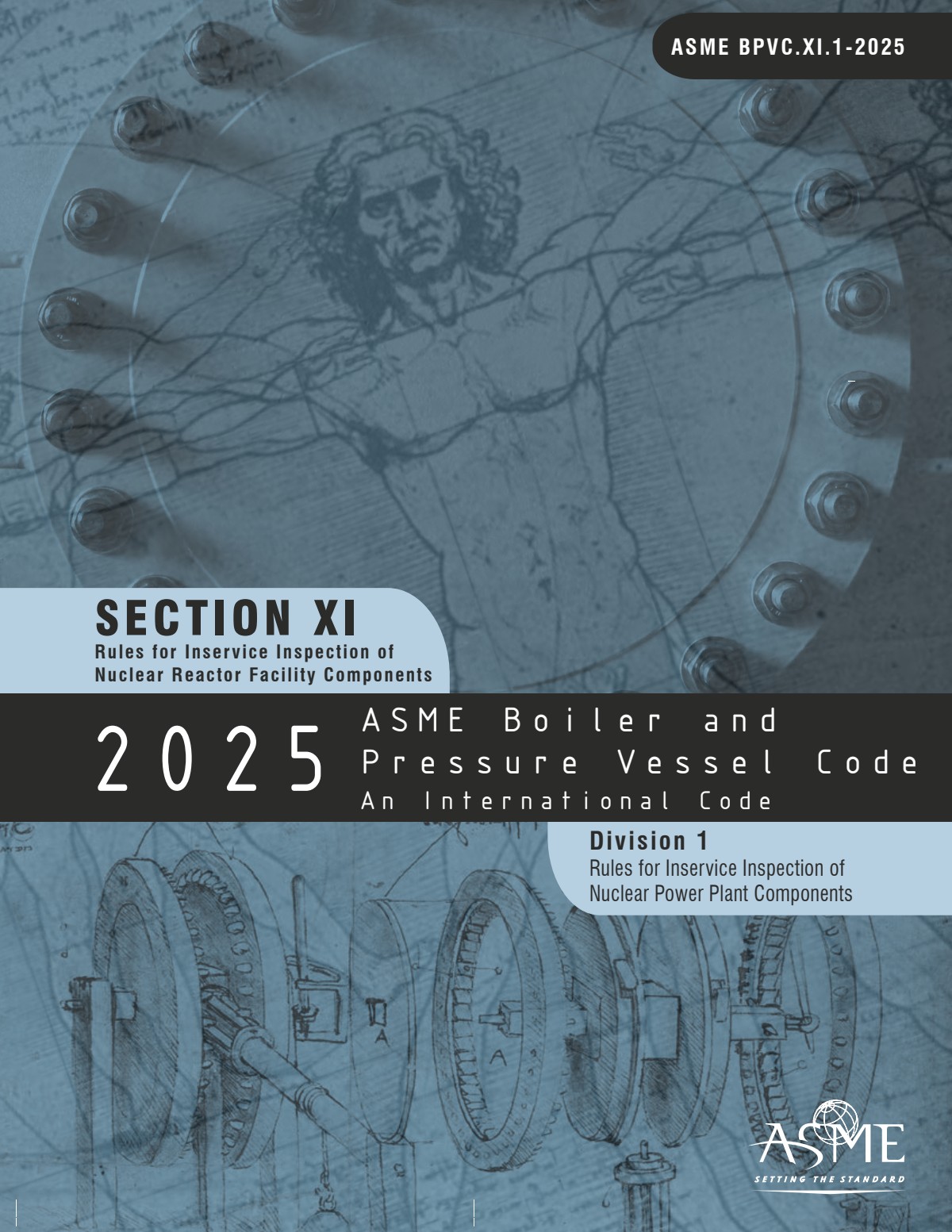
ASME BPVC 2025 Section XI, Division 1: Rules for Inservice Inspection of Nuclear Reactor Facility Components
Original price was: $945.00.$315.00Current price is: $315.00.
ASME BPVC 2025 Section XI, Division 1 defines requirements for inservice inspection, testing, repairs, and replacements of Class 1, 2, and 3 components in light-water-cooled nuclear plants to ensure continued structural integrity and safety.
ASME BPVC 2025 Section XI, Division 1 defines requirements for inservice inspection, testing, repairs, and replacements of Class 1, 2, and 3 components in light-water-cooled nuclear plants to ensure continued structural integrity and safety.
Book information
Purchase now to read the book instantly.
Add to cartRelated products
2021 International Existing Building Code – IEBC-2021
The 2021 International Existing Building Code® (IEBC) offers a consistent, performance-based framework for repairing, altering, adding to, or changing the occupancy of existing buildings. It facilitates the reuse of older and historic structures while maintaining safety, accessibility, and code compliance without requiring full adherence to new construction standards.
Highlights:
- Limits storm shelter capacity to specific occupancies; removes travel distance requirement
- Requires IBC Chapter 14/26 compliance for major exterior wall replacements
- Mandates snow load evaluation when structural repairs involve substantial damage
- Applies enhanced classroom acoustics to educational buildings undergoing major alterations
- Permits rooftop equipment additions without full structural review under specific weight/load limits
- Requires seismic evaluation when changing occupancy from S or U to other types
- Exempts furniture like cubicles and shelving from permits and Level 2 classification
- Revises sprinkler installation thresholds for Level 2 and Level 3 alterations in high-risk areas
Who It’s For:
Contractors, architects, and code officials working on renovations, adaptive reuse, and code compliance for existing buildings—especially where full new-construction standards are impractical.
IEBC-2021
2021 International Existing Building Code – IEBC-2021
The 2021 International Existing Building Code® (IEBC) offers a consistent, performance-based framework for repairing, altering, adding to, or changing the occupancy of existing buildings. It facilitates the reuse of older and historic structures while maintaining safety, accessibility, and code compliance without requiring full adherence to new construction standards.
Highlights:
- Limits storm shelter capacity to specific occupancies; removes travel distance requirement
- Requires IBC Chapter 14/26 compliance for major exterior wall replacements
- Mandates snow load evaluation when structural repairs involve substantial damage
- Applies enhanced classroom acoustics to educational buildings undergoing major alterations
- Permits rooftop equipment additions without full structural review under specific weight/load limits
- Requires seismic evaluation when changing occupancy from S or U to other types
- Exempts furniture like cubicles and shelving from permits and Level 2 classification
- Revises sprinkler installation thresholds for Level 2 and Level 3 alterations in high-risk areas
Who It’s For:
Contractors, architects, and code officials working on renovations, adaptive reuse, and code compliance for existing buildings—especially where full new-construction standards are impractical.
IEBC-2021
ASME B31.3-2022: Process Piping
ASME B31.3-2022: Process Piping provides comprehensive engineering requirements for the design, materials, fabrication, examination, testing, and safety of process piping systems used in petroleum refineries, chemical plants, pharmaceutical facilities, textile plants, paper mills, and related processing plants and terminals. It is a vital code for ensuring piping integrity in high-pressure, high-temperature, and corrosive service environments.
Highlights:
- Applies to metallic and nonmetallic piping for chemicals, petroleum, natural gas, and related fluids
- Covers piping components: pipe, flanges, valves, gaskets, bolts, expansion joints, and supports
- Design criteria for internal pressure, sustained loads, displacement strains, and occasional loads
- Construction requirements including welding, brazing, bending, assembly, and material specifications
- Mandatory rules for examination, testing, inspection, and leak testing procedures
- Stress range reduction factors, flexibility analysis, and allowable stress values by material and temperature
- Qualification requirements for personnel, procedures, and fabrication documentation
- Integration with ASME Section IX for welding and ASME B31.1 for power piping interfaces
- Updated stress tables and revisions to weld design rules in para. 328.5.2
- Errata incorporated for clarity on strength tables and weld joint tolerances
Who It’s For:
Mechanical engineers, piping designers, fabricators, inspectors, and maintenance teams working on the safe and code-compliant construction and modification of process piping systems across industries.
B31.3-2022
ASME B31.3-2022: Process Piping
ASME B31.3-2022: Process Piping provides comprehensive engineering requirements for the design, materials, fabrication, examination, testing, and safety of process piping systems used in petroleum refineries, chemical plants, pharmaceutical facilities, textile plants, paper mills, and related processing plants and terminals. It is a vital code for ensuring piping integrity in high-pressure, high-temperature, and corrosive service environments.
Highlights:
- Applies to metallic and nonmetallic piping for chemicals, petroleum, natural gas, and related fluids
- Covers piping components: pipe, flanges, valves, gaskets, bolts, expansion joints, and supports
- Design criteria for internal pressure, sustained loads, displacement strains, and occasional loads
- Construction requirements including welding, brazing, bending, assembly, and material specifications
- Mandatory rules for examination, testing, inspection, and leak testing procedures
- Stress range reduction factors, flexibility analysis, and allowable stress values by material and temperature
- Qualification requirements for personnel, procedures, and fabrication documentation
- Integration with ASME Section IX for welding and ASME B31.1 for power piping interfaces
- Updated stress tables and revisions to weld design rules in para. 328.5.2
- Errata incorporated for clarity on strength tables and weld joint tolerances
Who It’s For:
Mechanical engineers, piping designers, fabricators, inspectors, and maintenance teams working on the safe and code-compliant construction and modification of process piping systems across industries.
B31.3-2022
2021 International Private Sewage Disposal Code – IPSDC-2021
The 2021 International Private Sewage Disposal Code® (IPSDC) establishes standards for the design, installation, and maintenance of on-site sewage systems for properties not connected to public sewer systems. It covers new systems and alterations to existing wastewater treatment infrastructure, ensuring health and environmental safety in decentralized applications.
Highlights:
- Offers a prescriptive design approach based on soil conditions, system size, and site evaluation
- Covers soil absorption systems, holding tanks, cesspools, and residential/light commercial treatment units
- Requires structured site evaluations based on percolation rates and environmental conditions
- Specifies construction and material standards for piping, tanks, system layout, and backfill
- Includes enforcement and administrative guidance for permitting, inspections, and jurisdictional customization
- Fully coordinated with the 2021 I-Codes, including IPC, IRC, and IEBC
Who It’s For:
Environmental health professionals, contractors, designers, and code officials regulating private sewage systems in non-sewered areas.
IPSDC-2021
2021 International Private Sewage Disposal Code – IPSDC-2021
The 2021 International Private Sewage Disposal Code® (IPSDC) establishes standards for the design, installation, and maintenance of on-site sewage systems for properties not connected to public sewer systems. It covers new systems and alterations to existing wastewater treatment infrastructure, ensuring health and environmental safety in decentralized applications.
Highlights:
- Offers a prescriptive design approach based on soil conditions, system size, and site evaluation
- Covers soil absorption systems, holding tanks, cesspools, and residential/light commercial treatment units
- Requires structured site evaluations based on percolation rates and environmental conditions
- Specifies construction and material standards for piping, tanks, system layout, and backfill
- Includes enforcement and administrative guidance for permitting, inspections, and jurisdictional customization
- Fully coordinated with the 2021 I-Codes, including IPC, IRC, and IEBC
Who It’s For:
Environmental health professionals, contractors, designers, and code officials regulating private sewage systems in non-sewered areas.
IPSDC-2021
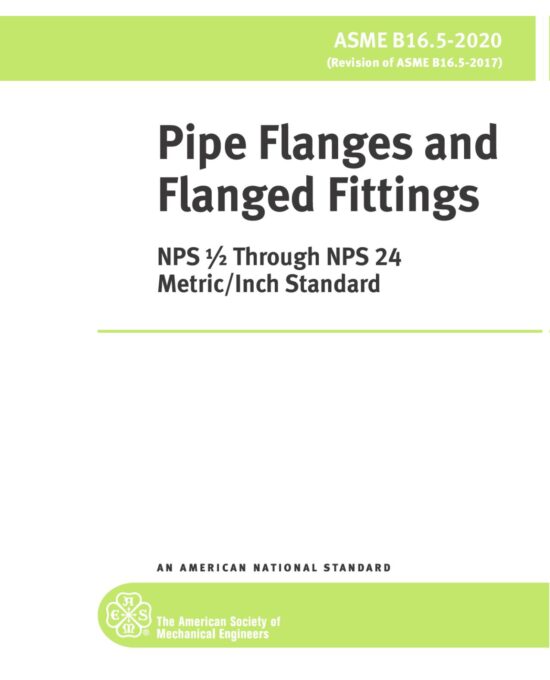
ASME B16.5-2020: Pipe Flanges and Flanged Fittings
Product Summary:
ASME B16.5-2020 defines the requirements for pipe flanges and flanged fittings in sizes NPS ½ through NPS 24, covering pressure–temperature ratings, dimensions, tolerances, materials, and testing. It applies to components used in bolted flange joints made from cast, forged, or plate materials in industrial piping systems.
Key Features:
- Pressure–temperature ratings for Classes 150 through 2500
- Dimensional standards for weld neck, blind, reducing, and other flange types
- Specifications for bolting materials, gaskets, and flange assembly practices
- Manufacturing tolerances and permanent marking requirements
- Material listings with corresponding ASTM designations for forgings, castings, and plates
- Guidance on gasket selection, bolted joint design, and system hydrotesting
- Appendices covering bolt length calculations, pressure rating derivation, and quality system standards
- Metric and U.S. Customary units presented side-by-side for reference
Who It’s For:
Essential for piping designers, mechanical engineers, fabricators, and QA/QC personnel involved in pressure piping systems across oil, gas, chemical, and industrial sectors.
ASME B16.5-2020
ASME B16.5-2020: Pipe Flanges and Flanged Fittings
Product Summary:
ASME B16.5-2020 defines the requirements for pipe flanges and flanged fittings in sizes NPS ½ through NPS 24, covering pressure–temperature ratings, dimensions, tolerances, materials, and testing. It applies to components used in bolted flange joints made from cast, forged, or plate materials in industrial piping systems.
Key Features:
- Pressure–temperature ratings for Classes 150 through 2500
- Dimensional standards for weld neck, blind, reducing, and other flange types
- Specifications for bolting materials, gaskets, and flange assembly practices
- Manufacturing tolerances and permanent marking requirements
- Material listings with corresponding ASTM designations for forgings, castings, and plates
- Guidance on gasket selection, bolted joint design, and system hydrotesting
- Appendices covering bolt length calculations, pressure rating derivation, and quality system standards
- Metric and U.S. Customary units presented side-by-side for reference
Who It’s For:
Essential for piping designers, mechanical engineers, fabricators, and QA/QC personnel involved in pressure piping systems across oil, gas, chemical, and industrial sectors.
ASME B16.5-2020