
ASME BPVC 2025 Section VIII, Division 3: Alternative Rules for Construction of High Pressure Vessels
Original price was: $927.00.$309.00Current price is: $309.00.
ASME BPVC 2025 Section VIII, Division 3 specifies requirements for the design, fabrication, and testing of pressure vessels operating at pressures generally above 10,000 psi, ensuring structural integrity and safety.
ASME BPVC 2025 Section VIII, Division 3 specifies requirements for the design, fabrication, and testing of pressure vessels operating at pressures generally above 10,000 psi, ensuring structural integrity and safety.
Book information
Purchase now to read the book instantly.
Add to cartRelated products
AASHTO GL-7: Roadway Lighting Design Guide, 7th Edition (2018)
AASHTO GL-7: Roadway Lighting Design Guide, Seventh Edition (2018) provides comprehensive guidance on the planning, design, and implementation of roadway lighting systems. This edition reflects current engineering practices, safety standards, and lighting technologies to enhance visibility, energy efficiency, and operational reliability across modern transportation networks.
Highlights:
- Design principles covering illuminance, luminance, uniformity, and glare control
- Guidance on developing master roadway lighting plans and policies
- Recommended lighting levels for highways, streets, intersections, and pedestrian zones
- Design criteria for tunnels, underpasses, and bridges
- Considerations for temporary lighting in work zones and construction areas
- Evaluation of emerging technologies such as adaptive lighting and smart controls
- Discussion on lighting management systems and energy-efficient solutions
- Environmental impact assessments and aesthetic integration strategies
- Standards for pole placement, maintenance access, and safety
- Support for decision-making with traffic data and community planning considerations
Who It’s For:
An essential reference for transportation agencies, civil engineers, and planners responsible for roadway lighting design and policy development.
GL-7-2018
AASHTO GL-7: Roadway Lighting Design Guide, 7th Edition (2018)
AASHTO GL-7: Roadway Lighting Design Guide, Seventh Edition (2018) provides comprehensive guidance on the planning, design, and implementation of roadway lighting systems. This edition reflects current engineering practices, safety standards, and lighting technologies to enhance visibility, energy efficiency, and operational reliability across modern transportation networks.
Highlights:
- Design principles covering illuminance, luminance, uniformity, and glare control
- Guidance on developing master roadway lighting plans and policies
- Recommended lighting levels for highways, streets, intersections, and pedestrian zones
- Design criteria for tunnels, underpasses, and bridges
- Considerations for temporary lighting in work zones and construction areas
- Evaluation of emerging technologies such as adaptive lighting and smart controls
- Discussion on lighting management systems and energy-efficient solutions
- Environmental impact assessments and aesthetic integration strategies
- Standards for pole placement, maintenance access, and safety
- Support for decision-making with traffic data and community planning considerations
Who It’s For:
An essential reference for transportation agencies, civil engineers, and planners responsible for roadway lighting design and policy development.
GL-7-2018
CSA C22.1:21 – Canadian Electrical Code, Part I (25th Edition), 2021
CSA C22.1:21 – Canadian Electrical Code, Part I (25th Edition), 2021 defines the national standard for the safe installation and maintenance of electrical equipment throughout Canada. This edition incorporates updated safety practices, supports emerging technologies, and aligns with evolving environmental and regulatory needs.
Highlights:
- Applies to all voltages and occupancies: residential, commercial, and industrial
- Expanded coverage of renewable energy, storage systems, EV charging, and hazardous locations
- Revised grounding, bonding, wiring methods, and overcurrent protection rules
- New climate resilience rules and guidance for livestock/agricultural buildings
- Refined equipment classifications, voltage references, and conductor ampacity updates
- Enhanced provisions for raceways, environmental protection, and installation practices
- Includes 80+ specialized sections (hospitals, cranes, marinas, airports, amusement parks)
- Appendices cover engineering interpretations, intrinsically safe circuits, and fire protection
Who It's For:
Electricians, engineers, code officials, and contractors operating under Canadian electrical safety regulations. Supersedes CSA C22.1-18.
CSA C22.1:21
CSA C22.1:21 – Canadian Electrical Code, Part I (25th Edition), 2021
CSA C22.1:21 – Canadian Electrical Code, Part I (25th Edition), 2021 defines the national standard for the safe installation and maintenance of electrical equipment throughout Canada. This edition incorporates updated safety practices, supports emerging technologies, and aligns with evolving environmental and regulatory needs.
Highlights:
- Applies to all voltages and occupancies: residential, commercial, and industrial
- Expanded coverage of renewable energy, storage systems, EV charging, and hazardous locations
- Revised grounding, bonding, wiring methods, and overcurrent protection rules
- New climate resilience rules and guidance for livestock/agricultural buildings
- Refined equipment classifications, voltage references, and conductor ampacity updates
- Enhanced provisions for raceways, environmental protection, and installation practices
- Includes 80+ specialized sections (hospitals, cranes, marinas, airports, amusement parks)
- Appendices cover engineering interpretations, intrinsically safe circuits, and fire protection
Who It's For:
Electricians, engineers, code officials, and contractors operating under Canadian electrical safety regulations. Supersedes CSA C22.1-18.
CSA C22.1:21
AWS D1.4/D1.4M:2018 – Structural Welding Code – Steel Reinforcing Bars
AWS D1.4/D1.4M:2018 – Structural Welding Code – Steel Reinforcing Bars provides welding requirements for deformed and plain reinforcing bars used in reinforced concrete construction. Applicable to structural projects such as buildings, bridges, and infrastructure systems, this code ensures weld quality, safety, and compliance in both field and shop conditions.
Highlights:
- Covers Shielded Metal Arc Welding (SMAW) and Gas Tungsten Arc Welding (GTAW) as prequalified processes
- Design rules for welded joints, lap splices, and bar anchorage
- Base metal, filler metal, and electrode specifications
- Preheat/interpass temperature guidance based on carbon equivalent
- Weld profile and workmanship requirements
- Qualification criteria for welders, welding procedures, and inspectors
- Visual and radiographic inspection procedures
- Surface preparation and protection requirements for field/shop welding
- Includes normative and informative annexes for expanded guidance
- Commentary section explains code intent and technical decisions
Who It’s For:
Structural engineers, contractors, inspectors, and welders engaged in the welding of reinforcing steel in seismic, heavy civil, and structural applications.
AWS D1.4/D1.4M:2018
AWS D1.4/D1.4M:2018 – Structural Welding Code – Steel Reinforcing Bars
AWS D1.4/D1.4M:2018 – Structural Welding Code – Steel Reinforcing Bars provides welding requirements for deformed and plain reinforcing bars used in reinforced concrete construction. Applicable to structural projects such as buildings, bridges, and infrastructure systems, this code ensures weld quality, safety, and compliance in both field and shop conditions.
Highlights:
- Covers Shielded Metal Arc Welding (SMAW) and Gas Tungsten Arc Welding (GTAW) as prequalified processes
- Design rules for welded joints, lap splices, and bar anchorage
- Base metal, filler metal, and electrode specifications
- Preheat/interpass temperature guidance based on carbon equivalent
- Weld profile and workmanship requirements
- Qualification criteria for welders, welding procedures, and inspectors
- Visual and radiographic inspection procedures
- Surface preparation and protection requirements for field/shop welding
- Includes normative and informative annexes for expanded guidance
- Commentary section explains code intent and technical decisions
Who It’s For:
Structural engineers, contractors, inspectors, and welders engaged in the welding of reinforcing steel in seismic, heavy civil, and structural applications.
AWS D1.4/D1.4M:2018
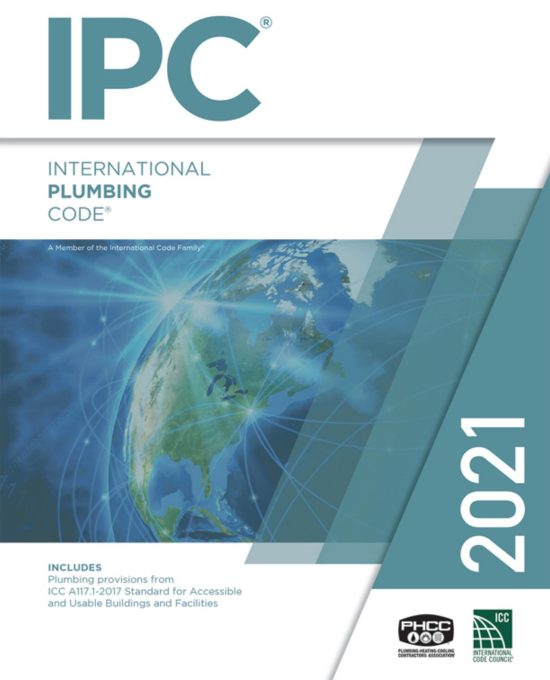
2021 International Plumbing Code – IPC-2021
The 2021 International Plumbing Code® (IPC) establishes minimum standards for the design, installation, and inspection of plumbing systems in all building types—except one- and two-family dwellings and townhouses up to three stories, which are covered under the IRC. This code supports both prescriptive and performance-based approaches and promotes innovation in materials and design.
Highlights:
- Permits multiple-user all-gender toilet facilities
- Adds two approved methods for sewer relining and rehabilitation
- Allows rooftop solar panels to be installed over vent terminals
- Recognizes CSA B805/ICC 805 for rainwater harvesting system design
- Integrates accessibility provisions from ICC A117.1-2017
- Covers potable and nonpotable water, sanitary and storm drainage, venting, water heaters, and graywater systems
- Structured into prescriptive chapters with appendices and accessibility references
- Fully aligned with the 2021 I-Codes for unified plumbing regulation and enforcement
Who It’s For:
Plumbing engineers, contractors, inspectors, and code officials working on compliant, modern plumbing systems in commercial and multifamily buildings.
IPC-2021
2021 International Plumbing Code – IPC-2021
The 2021 International Plumbing Code® (IPC) establishes minimum standards for the design, installation, and inspection of plumbing systems in all building types—except one- and two-family dwellings and townhouses up to three stories, which are covered under the IRC. This code supports both prescriptive and performance-based approaches and promotes innovation in materials and design.
Highlights:
- Permits multiple-user all-gender toilet facilities
- Adds two approved methods for sewer relining and rehabilitation
- Allows rooftop solar panels to be installed over vent terminals
- Recognizes CSA B805/ICC 805 for rainwater harvesting system design
- Integrates accessibility provisions from ICC A117.1-2017
- Covers potable and nonpotable water, sanitary and storm drainage, venting, water heaters, and graywater systems
- Structured into prescriptive chapters with appendices and accessibility references
- Fully aligned with the 2021 I-Codes for unified plumbing regulation and enforcement
Who It’s For:
Plumbing engineers, contractors, inspectors, and code officials working on compliant, modern plumbing systems in commercial and multifamily buildings.
IPC-2021