
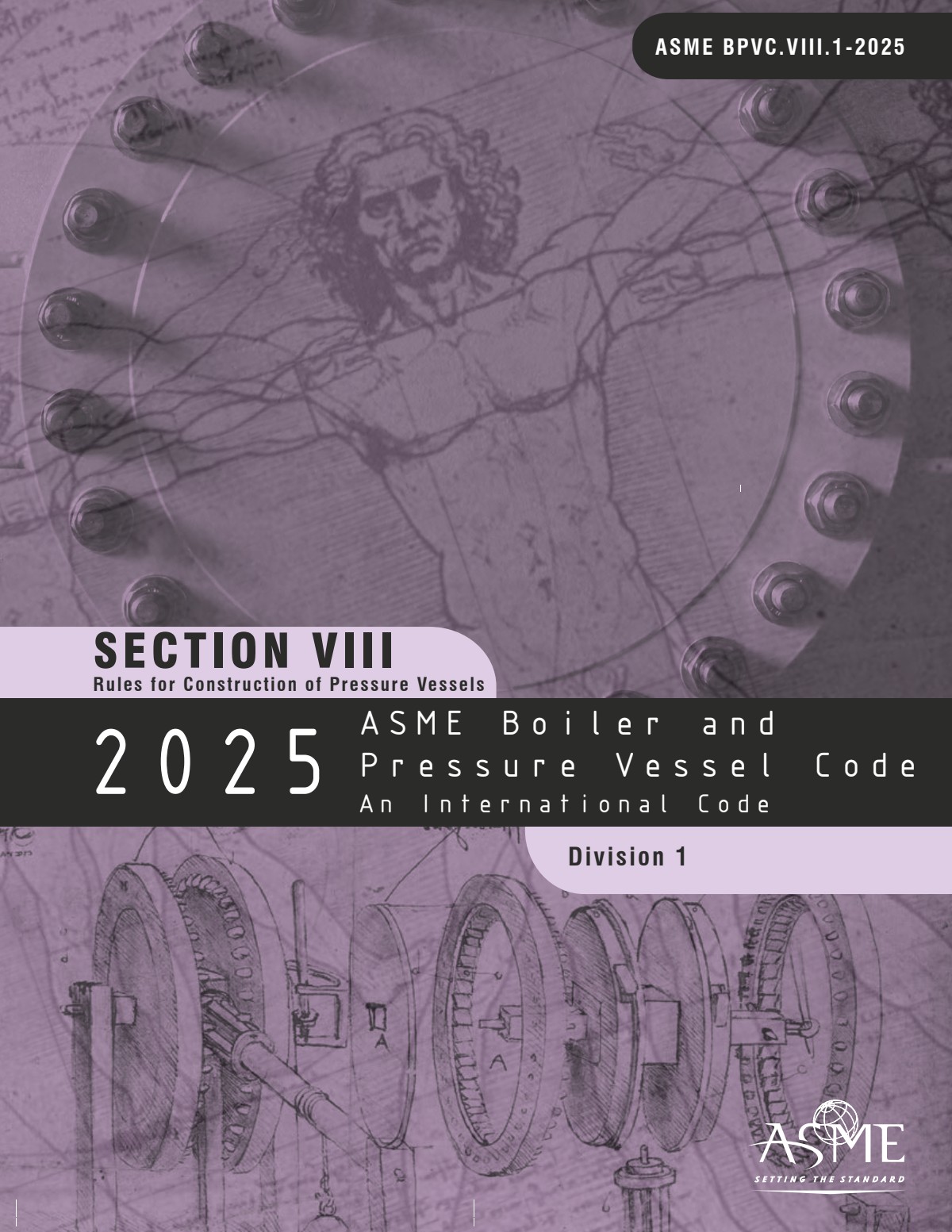
ASME BPVC 2025 Section VIII, Division 1: Rules for Construction of Pressure Vessels
Original price was: $948.00.$316.00Current price is: $316.00.
ASME BPVC 2025 Section VIII, Division 1 covers requirements for the design, fabrication, inspection, testing, and certification of pressure vessels, widely used in industries including chemical, petroleum, and power generation.
ASME BPVC 2025 Section VIII, Division 1 covers requirements for the design, fabrication, inspection, testing, and certification of pressure vessels, widely used in industries including chemical, petroleum, and power generation.
Book information
Purchase now to read the book instantly.
Add to cartRelated products
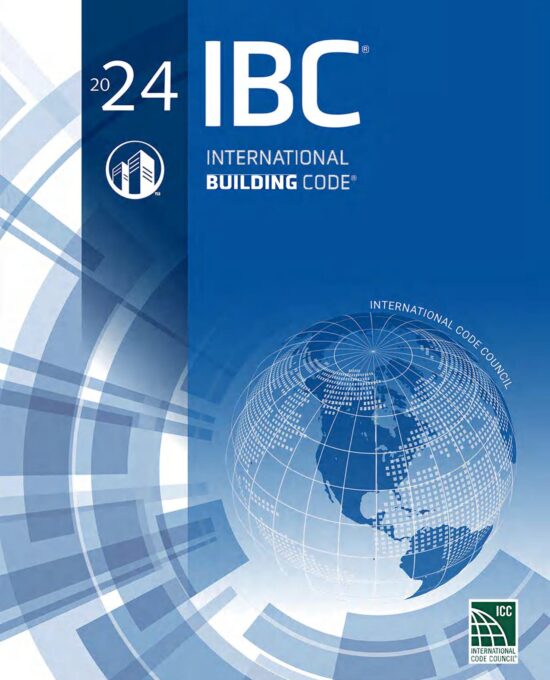
2024 International Building Code – IBC-2024
The 2024 International Building Code® (IBC) provides coordinated regulations for the construction, alteration, addition, repair, and maintenance of commercial and multifamily buildings. Published by the International Code Council (ICC), this model code is used across jurisdictions to ensure safe, accessible, and sustainable construction through enforceable design and inspection standards. The 2024 edition introduces substantial updates reflecting emerging building technologies, revised load criteria, and digital integration tools.
Highlights:
- Structural load criteria updated per ASCE 7-22 for wind, seismic, snow, rain, and flood
- Revised risk categories, construction types, and fire-resistance ratings
- Enhancements to accessibility provisions aligned with ICC A117.1-2017
- Mass timber rules expanded for taller and larger buildings under new Type IV classifications
- New requirements for storm shelters in specific educational and emergency facilities
- Improved fire protection systems and egress strategies for large occupant loads
- QR-coded references for change tracking and digital plan review integration
- Updated mechanical, electrical, plumbing, and energy provisions through I-Code coordination
- Appendices revised for tsunami design, grading, rodentproofing, and replicable buildings
- Expanded support for modular and off-site construction methodologies
Who It’s For:
Architects, engineers, contractors, building officials, and developers needing full compliance with 2024 code updates for plan review, permitting, and construction documentation.
IBC-2024
2024 International Building Code – IBC-2024
The 2024 International Building Code® (IBC) provides coordinated regulations for the construction, alteration, addition, repair, and maintenance of commercial and multifamily buildings. Published by the International Code Council (ICC), this model code is used across jurisdictions to ensure safe, accessible, and sustainable construction through enforceable design and inspection standards. The 2024 edition introduces substantial updates reflecting emerging building technologies, revised load criteria, and digital integration tools.
Highlights:
- Structural load criteria updated per ASCE 7-22 for wind, seismic, snow, rain, and flood
- Revised risk categories, construction types, and fire-resistance ratings
- Enhancements to accessibility provisions aligned with ICC A117.1-2017
- Mass timber rules expanded for taller and larger buildings under new Type IV classifications
- New requirements for storm shelters in specific educational and emergency facilities
- Improved fire protection systems and egress strategies for large occupant loads
- QR-coded references for change tracking and digital plan review integration
- Updated mechanical, electrical, plumbing, and energy provisions through I-Code coordination
- Appendices revised for tsunami design, grading, rodentproofing, and replicable buildings
- Expanded support for modular and off-site construction methodologies
Who It’s For:
Architects, engineers, contractors, building officials, and developers needing full compliance with 2024 code updates for plan review, permitting, and construction documentation.
IBC-2024
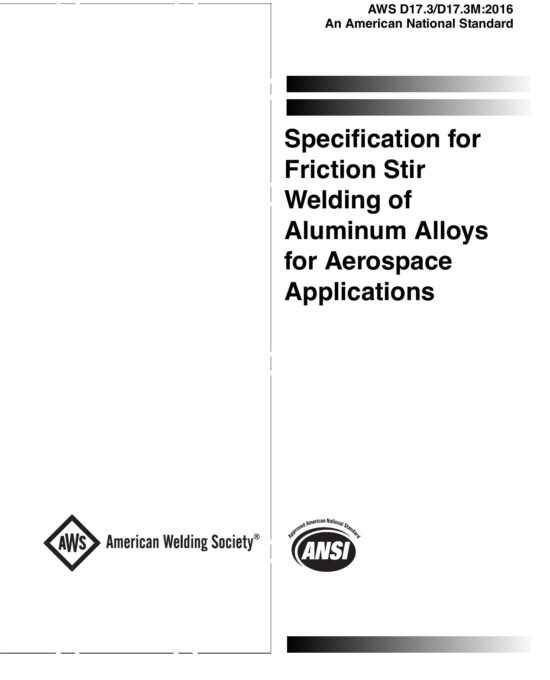
AWS D17.3/D17.3M:2016 – Specification for Friction Stir Welding of Aluminum Alloys for Aerospace Applications
AWS D17.3/D17.3M:2016 establishes general requirements for the friction stir welding (FSW) of aluminum alloys in aerospace applications. It provides standardized procedures for the design, fabrication, qualification, and inspection of aerospace components joined using the FSW process.
Highlights:
- Design requirements for FSW joints in aerospace structures
- Qualification procedures for welders, operators, and welding procedures
- Approved base metal specifications and usage limitations
- Tooling, fixture, and FSW equipment setup requirements
- Fabrication guidelines for welding parameters and process control
- Visual and mechanical inspection methods for weld quality verification
- Acceptance criteria for discontinuities, mechanical properties, and visual appearance
- Quality assurance provisions, documentation, and recordkeeping standards
New in the 2016 Edition:
- Updates to reflect advancements in friction stir welding techniques and aerospace material performance
- Enhanced inspection and qualification procedures for improved compliance and reliability
- Supersedes AWS D17.3/D17.3M:2010
Who’s It For:
Aerospace engineers, quality professionals, and fabricators involved in the production or qualification of aluminum structures using friction stir welding.
AWS D17.3/D17.3M-2016
AWS D17.3/D17.3M:2016 – Specification for Friction Stir Welding of Aluminum Alloys for Aerospace Applications
AWS D17.3/D17.3M:2016 establishes general requirements for the friction stir welding (FSW) of aluminum alloys in aerospace applications. It provides standardized procedures for the design, fabrication, qualification, and inspection of aerospace components joined using the FSW process.
Highlights:
- Design requirements for FSW joints in aerospace structures
- Qualification procedures for welders, operators, and welding procedures
- Approved base metal specifications and usage limitations
- Tooling, fixture, and FSW equipment setup requirements
- Fabrication guidelines for welding parameters and process control
- Visual and mechanical inspection methods for weld quality verification
- Acceptance criteria for discontinuities, mechanical properties, and visual appearance
- Quality assurance provisions, documentation, and recordkeeping standards
New in the 2016 Edition:
- Updates to reflect advancements in friction stir welding techniques and aerospace material performance
- Enhanced inspection and qualification procedures for improved compliance and reliability
- Supersedes AWS D17.3/D17.3M:2010
Who’s It For:
Aerospace engineers, quality professionals, and fabricators involved in the production or qualification of aluminum structures using friction stir welding.
AWS D17.3/D17.3M-2016
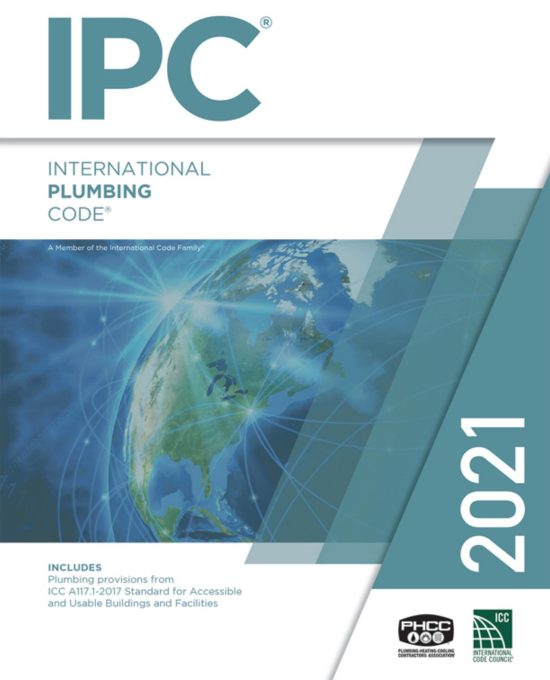
2021 International Plumbing Code – IPC-2021
The 2021 International Plumbing Code® (IPC) establishes minimum standards for the design, installation, and inspection of plumbing systems in all building types—except one- and two-family dwellings and townhouses up to three stories, which are covered under the IRC. This code supports both prescriptive and performance-based approaches and promotes innovation in materials and design.
Highlights:
- Permits multiple-user all-gender toilet facilities
- Adds two approved methods for sewer relining and rehabilitation
- Allows rooftop solar panels to be installed over vent terminals
- Recognizes CSA B805/ICC 805 for rainwater harvesting system design
- Integrates accessibility provisions from ICC A117.1-2017
- Covers potable and nonpotable water, sanitary and storm drainage, venting, water heaters, and graywater systems
- Structured into prescriptive chapters with appendices and accessibility references
- Fully aligned with the 2021 I-Codes for unified plumbing regulation and enforcement
Who It’s For:
Plumbing engineers, contractors, inspectors, and code officials working on compliant, modern plumbing systems in commercial and multifamily buildings.
IPC-2021
2021 International Plumbing Code – IPC-2021
The 2021 International Plumbing Code® (IPC) establishes minimum standards for the design, installation, and inspection of plumbing systems in all building types—except one- and two-family dwellings and townhouses up to three stories, which are covered under the IRC. This code supports both prescriptive and performance-based approaches and promotes innovation in materials and design.
Highlights:
- Permits multiple-user all-gender toilet facilities
- Adds two approved methods for sewer relining and rehabilitation
- Allows rooftop solar panels to be installed over vent terminals
- Recognizes CSA B805/ICC 805 for rainwater harvesting system design
- Integrates accessibility provisions from ICC A117.1-2017
- Covers potable and nonpotable water, sanitary and storm drainage, venting, water heaters, and graywater systems
- Structured into prescriptive chapters with appendices and accessibility references
- Fully aligned with the 2021 I-Codes for unified plumbing regulation and enforcement
Who It’s For:
Plumbing engineers, contractors, inspectors, and code officials working on compliant, modern plumbing systems in commercial and multifamily buildings.
IPC-2021
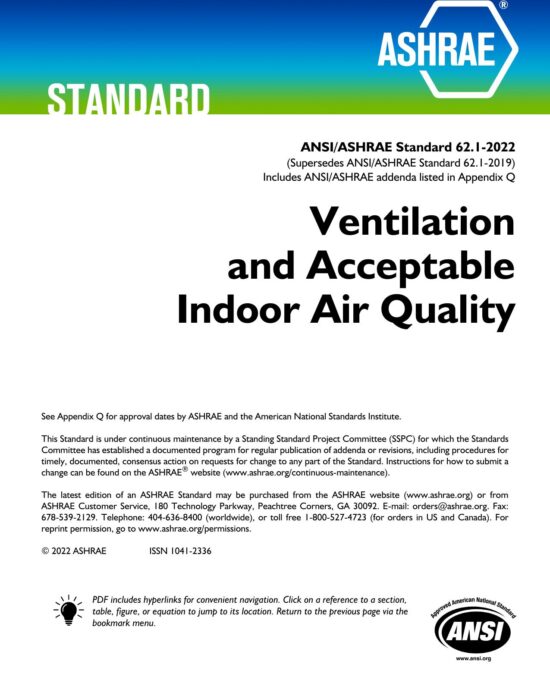
ANSI/ASHRAE 62.1-2022: Ventilation for Acceptable Indoor Air Quality
ANSI/ASHRAE Standard 62.1-2022: Ventilation for Acceptable Indoor Air Quality defines minimum requirements for mechanical and natural ventilation systems in commercial, institutional, and industrial buildings. Widely referenced by model codes such as the International Building Code, this standard is critical for achieving acceptable indoor air quality (IAQ) in non-residential environments.
Highlights:
- Defines procedures for assessing outdoor air quality and ventilation by occupancy type
- Revised Section 5 reorganizes systems/equipment content by airflow path
- Updates IAQ Procedure with design compound guidance and mass-balance modeling
- Establishes separation distances for exhaust air and dew point limits for cooled spaces
- Classifies ventilation zones and defines airflow effectiveness and breathing zone metrics
- Covers design, installation, commissioning, and maintenance of ventilation systems
- Includes appendices for healthcare settings, air quality evaluation, compliance paths, and simplified rate calculations
- Incorporates addenda through Appendix Q as part of its continuous maintenance model
Who It’s For:
Designed for mechanical engineers, HVAC professionals, code officials, and facility managers responsible for designing and maintaining compliant ventilation systems that promote occupant health and comfort.
ASHRAE 62.1-2022
ANSI/ASHRAE 62.1-2022: Ventilation for Acceptable Indoor Air Quality
ANSI/ASHRAE Standard 62.1-2022: Ventilation for Acceptable Indoor Air Quality defines minimum requirements for mechanical and natural ventilation systems in commercial, institutional, and industrial buildings. Widely referenced by model codes such as the International Building Code, this standard is critical for achieving acceptable indoor air quality (IAQ) in non-residential environments.
Highlights:
- Defines procedures for assessing outdoor air quality and ventilation by occupancy type
- Revised Section 5 reorganizes systems/equipment content by airflow path
- Updates IAQ Procedure with design compound guidance and mass-balance modeling
- Establishes separation distances for exhaust air and dew point limits for cooled spaces
- Classifies ventilation zones and defines airflow effectiveness and breathing zone metrics
- Covers design, installation, commissioning, and maintenance of ventilation systems
- Includes appendices for healthcare settings, air quality evaluation, compliance paths, and simplified rate calculations
- Incorporates addenda through Appendix Q as part of its continuous maintenance model
Who It’s For:
Designed for mechanical engineers, HVAC professionals, code officials, and facility managers responsible for designing and maintaining compliant ventilation systems that promote occupant health and comfort.
ASHRAE 62.1-2022