
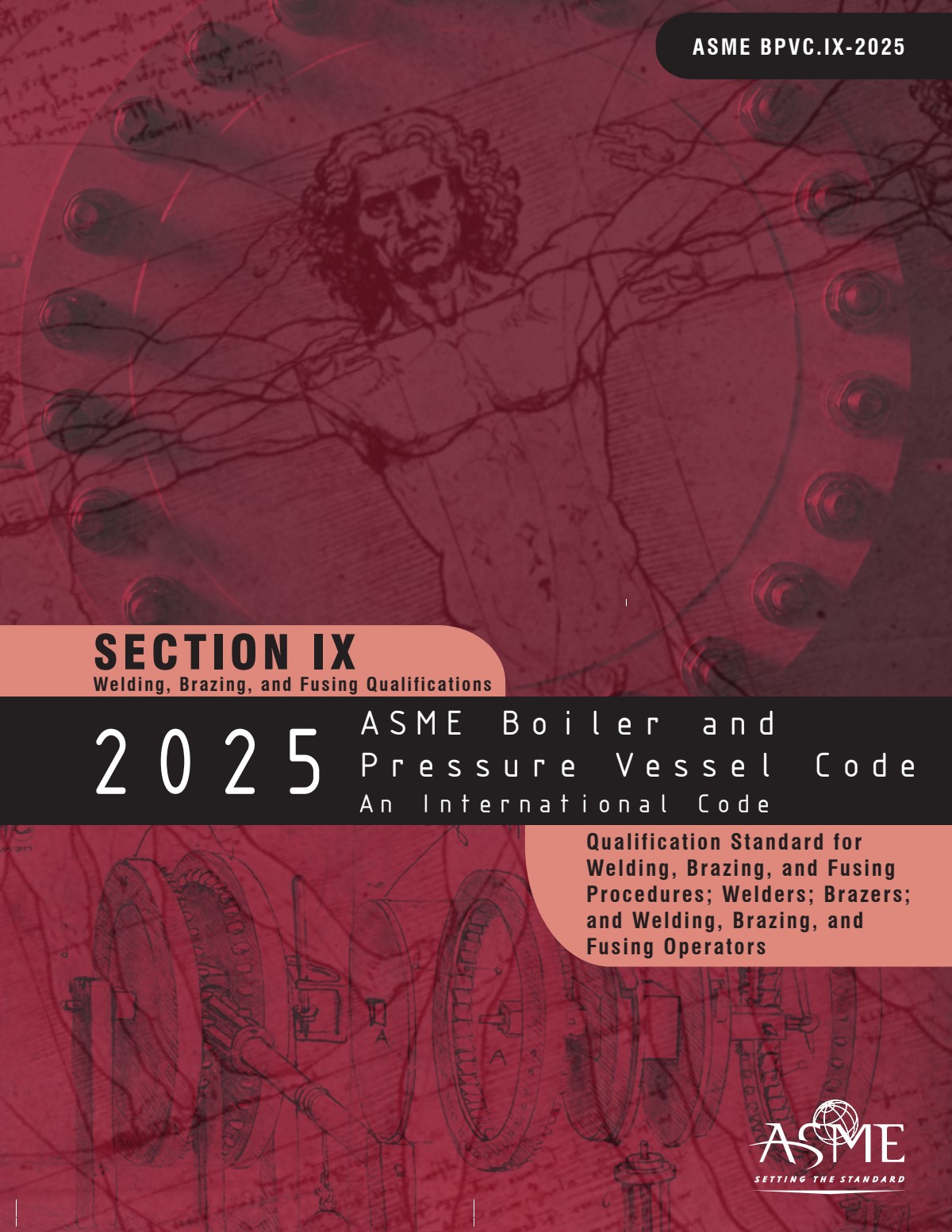
ASME BPVC 2025 Section IX: Welding, Brazing, and Fusing Qualifications
Original price was: $795.00.$265.00Current price is: $265.00.
ASME BPVC 2025 Section IX: Welding, Brazing, and Fusing Qualifications provides the qualification standards for welding and brazing procedures, welders, brazers, and welding and brazing operators. It establishes the essential requirements for procedure and performance qualifications, ensuring safety, consistency, and quality in welded and brazed components used in boilers, pressure vessels, and related applications.
ASME BPVC 2025 Section IX: Welding, Brazing, and Fusing Qualifications provides the qualification standards for welding and brazing procedures, welders, brazers, and welding and brazing operators. It establishes the essential requirements for procedure and performance qualifications, ensuring safety, consistency, and quality in welded and brazed components used in boilers, pressure vessels, and related applications.
Book information
Purchase now to read the book instantly.
Add to cartRelated products
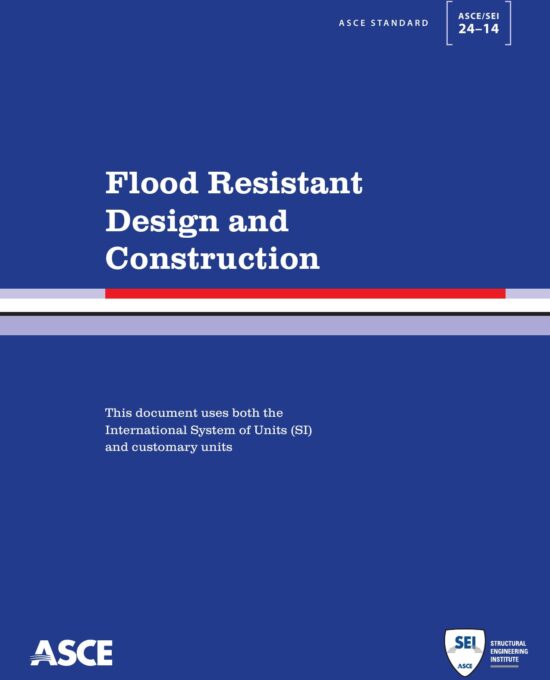
ASCE 24-14: Flood Resistant Design and Construction, 2014
ASCE 24-14: Flood Resistant Design and Construction provides minimum requirements for the planning, design, and construction of buildings in flood-prone areas. Referenced by the International Building Code (IBC) and the National Flood Insurance Program (NFIP), this standard supports floodplain management regulations and promotes resilience through engineering best practices.
Highlights:
- Defines Flood Design Class (1–4) to guide risk-based design criteria
- Specifies elevation requirements based on flood hazard zones, building type, and occupancy
- Includes wet and dry floodproofing methods for commercial and residential applications
- Updates flood opening requirements including engineered vent systems and louvers
- Provides structural design standards for Coastal A Zones and coastal high hazard areas
- Identifies acceptable flood damage-resistant materials and construction techniques
- Covers tanks, utilities, egress, garages, and parking structures in flood-prone zones
- Offers guidance for substantial improvements and retrofitting of existing buildings
- Coordinates with ASCE 7 and NFIP regulations to ensure code consistency and compliance
Who It’s For:
Essential for civil engineers, architects, code officials, and builders involved in flood zone development, permitting, and compliance with FEMA, IBC, and local floodplain standards.
ASCE 24-2014
ASCE 24-14: Flood Resistant Design and Construction, 2014
ASCE 24-14: Flood Resistant Design and Construction provides minimum requirements for the planning, design, and construction of buildings in flood-prone areas. Referenced by the International Building Code (IBC) and the National Flood Insurance Program (NFIP), this standard supports floodplain management regulations and promotes resilience through engineering best practices.
Highlights:
- Defines Flood Design Class (1–4) to guide risk-based design criteria
- Specifies elevation requirements based on flood hazard zones, building type, and occupancy
- Includes wet and dry floodproofing methods for commercial and residential applications
- Updates flood opening requirements including engineered vent systems and louvers
- Provides structural design standards for Coastal A Zones and coastal high hazard areas
- Identifies acceptable flood damage-resistant materials and construction techniques
- Covers tanks, utilities, egress, garages, and parking structures in flood-prone zones
- Offers guidance for substantial improvements and retrofitting of existing buildings
- Coordinates with ASCE 7 and NFIP regulations to ensure code consistency and compliance
Who It’s For:
Essential for civil engineers, architects, code officials, and builders involved in flood zone development, permitting, and compliance with FEMA, IBC, and local floodplain standards.
ASCE 24-2014
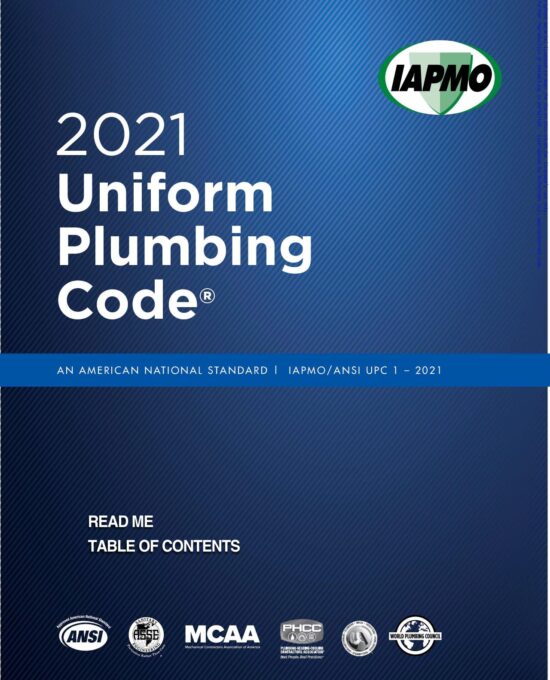
2021 Uniform Plumbing Code – UPC 1-2021 (IAPMO)
The 2021 Uniform Plumbing Code® (UPC), developed by IAPMO and approved through the ANSI consensus process, establishes minimum requirements for plumbing system design, installation, and inspection. It incorporates the latest safety, efficiency, and performance provisions used across residential, commercial, and industrial projects.
Highlights:
- Adds Appendix N for defining scald risk and Legionella prevention through temperature control
- Updates backflow prevention device standards and installation methods
- Expands temperature-limiting protections for hot water outlets
- Establishes safety requirements for rooftop appliances and raised platforms
- Revises T&P valve discharge piping provisions for clarity and safety
- Introduces requirements for leak detection and monitoring technologies
- Enhances potable water pump installation and performance standards
- Adds DWV system updates for materials, cleanout access, and venting configurations
- Reorganizes medical and fuel gas system chapters for improved usability
Who It’s For:
Plumbing engineers, contractors, inspectors, and code officials enforcing compliant plumbing installations under the 2021 UPC framework.
UPC 1-2021 (IAPMO)
2021 Uniform Plumbing Code – UPC 1-2021 (IAPMO)
The 2021 Uniform Plumbing Code® (UPC), developed by IAPMO and approved through the ANSI consensus process, establishes minimum requirements for plumbing system design, installation, and inspection. It incorporates the latest safety, efficiency, and performance provisions used across residential, commercial, and industrial projects.
Highlights:
- Adds Appendix N for defining scald risk and Legionella prevention through temperature control
- Updates backflow prevention device standards and installation methods
- Expands temperature-limiting protections for hot water outlets
- Establishes safety requirements for rooftop appliances and raised platforms
- Revises T&P valve discharge piping provisions for clarity and safety
- Introduces requirements for leak detection and monitoring technologies
- Enhances potable water pump installation and performance standards
- Adds DWV system updates for materials, cleanout access, and venting configurations
- Reorganizes medical and fuel gas system chapters for improved usability
Who It’s For:
Plumbing engineers, contractors, inspectors, and code officials enforcing compliant plumbing installations under the 2021 UPC framework.
UPC 1-2021 (IAPMO)
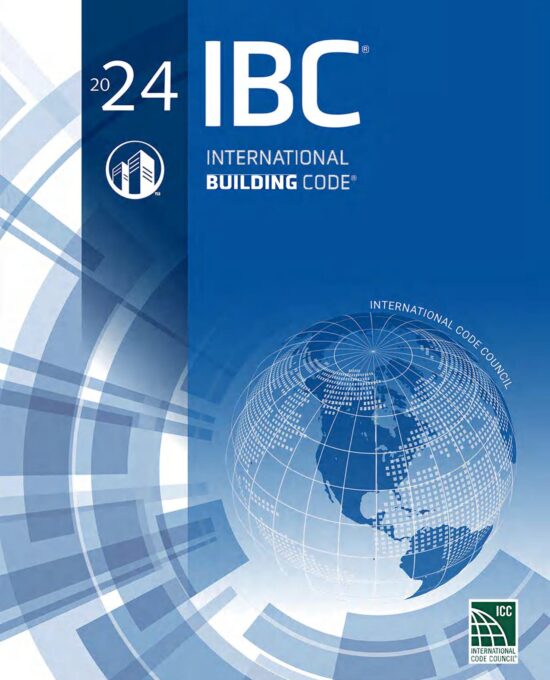
2024 International Building Code – IBC-2024
The 2024 International Building Code® (IBC) provides coordinated regulations for the construction, alteration, addition, repair, and maintenance of commercial and multifamily buildings. Published by the International Code Council (ICC), this model code is used across jurisdictions to ensure safe, accessible, and sustainable construction through enforceable design and inspection standards. The 2024 edition introduces substantial updates reflecting emerging building technologies, revised load criteria, and digital integration tools.
Highlights:
- Structural load criteria updated per ASCE 7-22 for wind, seismic, snow, rain, and flood
- Revised risk categories, construction types, and fire-resistance ratings
- Enhancements to accessibility provisions aligned with ICC A117.1-2017
- Mass timber rules expanded for taller and larger buildings under new Type IV classifications
- New requirements for storm shelters in specific educational and emergency facilities
- Improved fire protection systems and egress strategies for large occupant loads
- QR-coded references for change tracking and digital plan review integration
- Updated mechanical, electrical, plumbing, and energy provisions through I-Code coordination
- Appendices revised for tsunami design, grading, rodentproofing, and replicable buildings
- Expanded support for modular and off-site construction methodologies
Who It’s For:
Architects, engineers, contractors, building officials, and developers needing full compliance with 2024 code updates for plan review, permitting, and construction documentation.
IBC-2024
2024 International Building Code – IBC-2024
The 2024 International Building Code® (IBC) provides coordinated regulations for the construction, alteration, addition, repair, and maintenance of commercial and multifamily buildings. Published by the International Code Council (ICC), this model code is used across jurisdictions to ensure safe, accessible, and sustainable construction through enforceable design and inspection standards. The 2024 edition introduces substantial updates reflecting emerging building technologies, revised load criteria, and digital integration tools.
Highlights:
- Structural load criteria updated per ASCE 7-22 for wind, seismic, snow, rain, and flood
- Revised risk categories, construction types, and fire-resistance ratings
- Enhancements to accessibility provisions aligned with ICC A117.1-2017
- Mass timber rules expanded for taller and larger buildings under new Type IV classifications
- New requirements for storm shelters in specific educational and emergency facilities
- Improved fire protection systems and egress strategies for large occupant loads
- QR-coded references for change tracking and digital plan review integration
- Updated mechanical, electrical, plumbing, and energy provisions through I-Code coordination
- Appendices revised for tsunami design, grading, rodentproofing, and replicable buildings
- Expanded support for modular and off-site construction methodologies
Who It’s For:
Architects, engineers, contractors, building officials, and developers needing full compliance with 2024 code updates for plan review, permitting, and construction documentation.
IBC-2024
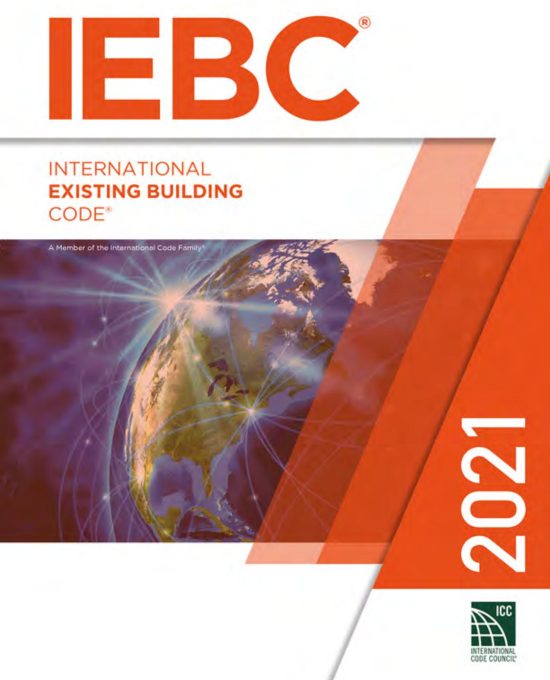
2021 International Existing Building Code – IEBC-2021
The 2021 International Existing Building Code® (IEBC) offers a consistent, performance-based framework for repairing, altering, adding to, or changing the occupancy of existing buildings. It facilitates the reuse of older and historic structures while maintaining safety, accessibility, and code compliance without requiring full adherence to new construction standards.
Highlights:
- Limits storm shelter capacity to specific occupancies; removes travel distance requirement
- Requires IBC Chapter 14/26 compliance for major exterior wall replacements
- Mandates snow load evaluation when structural repairs involve substantial damage
- Applies enhanced classroom acoustics to educational buildings undergoing major alterations
- Permits rooftop equipment additions without full structural review under specific weight/load limits
- Requires seismic evaluation when changing occupancy from S or U to other types
- Exempts furniture like cubicles and shelving from permits and Level 2 classification
- Revises sprinkler installation thresholds for Level 2 and Level 3 alterations in high-risk areas
Who It’s For:
Contractors, architects, and code officials working on renovations, adaptive reuse, and code compliance for existing buildings—especially where full new-construction standards are impractical.
IEBC-2021
2021 International Existing Building Code – IEBC-2021
The 2021 International Existing Building Code® (IEBC) offers a consistent, performance-based framework for repairing, altering, adding to, or changing the occupancy of existing buildings. It facilitates the reuse of older and historic structures while maintaining safety, accessibility, and code compliance without requiring full adherence to new construction standards.
Highlights:
- Limits storm shelter capacity to specific occupancies; removes travel distance requirement
- Requires IBC Chapter 14/26 compliance for major exterior wall replacements
- Mandates snow load evaluation when structural repairs involve substantial damage
- Applies enhanced classroom acoustics to educational buildings undergoing major alterations
- Permits rooftop equipment additions without full structural review under specific weight/load limits
- Requires seismic evaluation when changing occupancy from S or U to other types
- Exempts furniture like cubicles and shelving from permits and Level 2 classification
- Revises sprinkler installation thresholds for Level 2 and Level 3 alterations in high-risk areas
Who It’s For:
Contractors, architects, and code officials working on renovations, adaptive reuse, and code compliance for existing buildings—especially where full new-construction standards are impractical.
IEBC-2021