
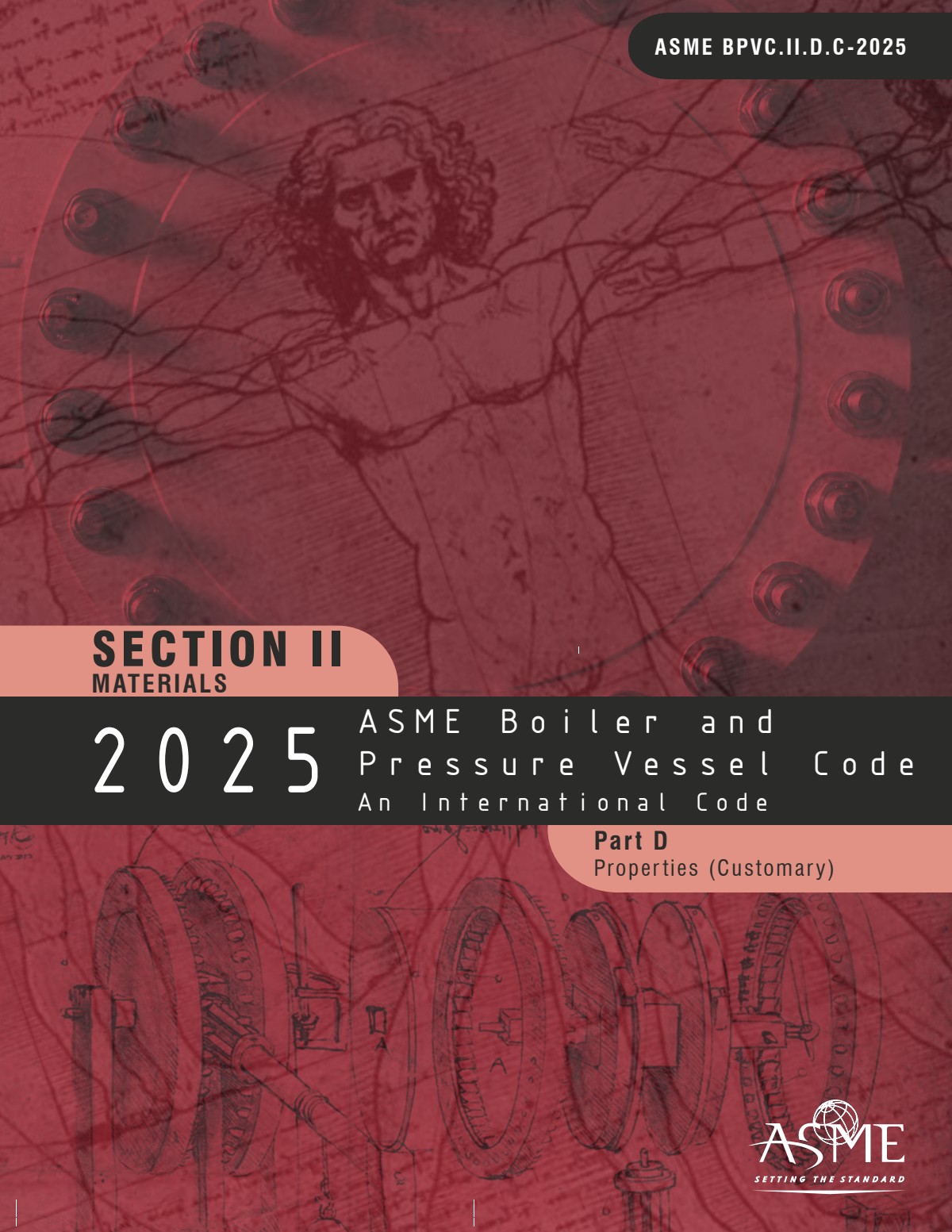
ASME BPVC 2025 Section II, Part D (Customary): Properties of Materials
Original price was: $930.00.$310.00Current price is: $310.00.
The ASME BPVC 2025 Section II, Part D (Customary) provides mechanical and physical property data for materials listed in Parts A, B, and C. It includes values such as tensile strength, yield strength, modulus of elasticity, and thermal conductivity, presented in customary (U.S.) units. This section is an essential reference for engineers and designers who work with U.S. customary standards.
The ASME BPVC 2025 Section II, Part D (Customary) provides mechanical and physical property data for materials listed in Parts A, B, and C. It includes values such as tensile strength, yield strength, modulus of elasticity, and thermal conductivity, presented in customary (U.S.) units. This section is an essential reference for engineers and designers who work with U.S. customary standards.
Book information
Purchase now to read the book instantly.
Add to cartRelated products
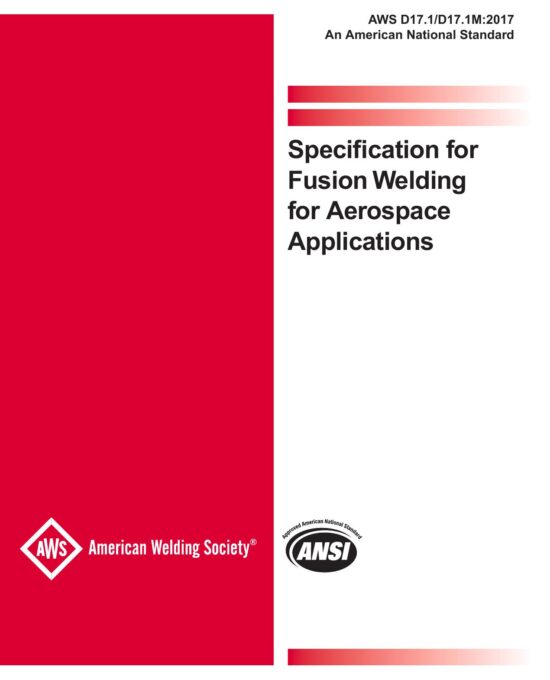
AWS D17.1/D17.1M:2017 – Specification for Fusion Welding for Aerospace Applications
AWS D17.1/D17.1M:2017 establishes the welding requirements for aircraft, aerospace, and space hardware using electric arc and high-energy beam fusion welding processes. It covers aluminum, nickel, iron, cobalt, titanium, and magnesium alloys and supports both flight-critical and support structure applications.
Highlights:
- Design criteria for aerospace weld joints
- Qualification requirements for procedures and personnel
- Fabrication, inspection, and acceptance standards
- Repair guidance for aerospace components
- Preweld/postweld processes including traceability and cleaning
- Visual and nondestructive exam methods with acceptance criteria
- Normative/informative annexes on bend tests, positions, acronyms, and forms
- Commentary with technical interpretation and best practices
New in the 2017 Edition:
- Annexes for UNS material designations
- Expanded welding position coverage and standardized forms
- Editorial updates for clarity and usability
Who’s It For:
Aerospace engineers, welding supervisors, inspectors, and quality professionals involved in the fabrication or evaluation of welded aerospace structures.
AWS D17.1/D17.1M-2017
AWS D17.1/D17.1M:2017 – Specification for Fusion Welding for Aerospace Applications
AWS D17.1/D17.1M:2017 establishes the welding requirements for aircraft, aerospace, and space hardware using electric arc and high-energy beam fusion welding processes. It covers aluminum, nickel, iron, cobalt, titanium, and magnesium alloys and supports both flight-critical and support structure applications.
Highlights:
- Design criteria for aerospace weld joints
- Qualification requirements for procedures and personnel
- Fabrication, inspection, and acceptance standards
- Repair guidance for aerospace components
- Preweld/postweld processes including traceability and cleaning
- Visual and nondestructive exam methods with acceptance criteria
- Normative/informative annexes on bend tests, positions, acronyms, and forms
- Commentary with technical interpretation and best practices
New in the 2017 Edition:
- Annexes for UNS material designations
- Expanded welding position coverage and standardized forms
- Editorial updates for clarity and usability
Who’s It For:
Aerospace engineers, welding supervisors, inspectors, and quality professionals involved in the fabrication or evaluation of welded aerospace structures.
AWS D17.1/D17.1M-2017
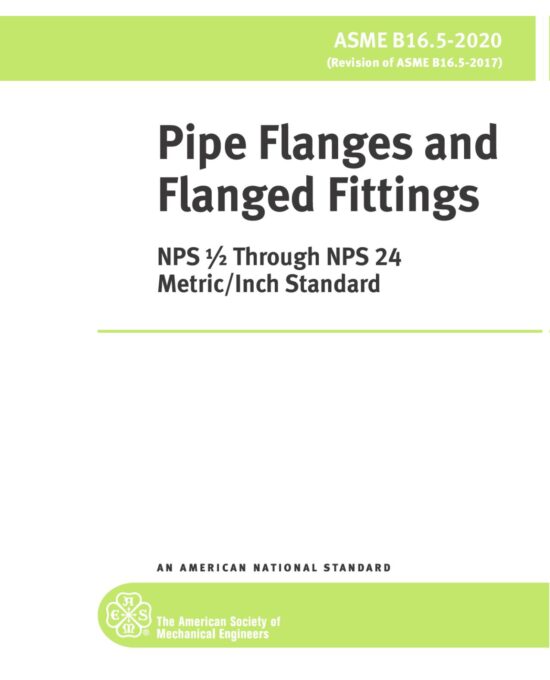
ASME B16.5-2020: Pipe Flanges and Flanged Fittings
Product Summary:
ASME B16.5-2020 defines the requirements for pipe flanges and flanged fittings in sizes NPS ½ through NPS 24, covering pressure–temperature ratings, dimensions, tolerances, materials, and testing. It applies to components used in bolted flange joints made from cast, forged, or plate materials in industrial piping systems.
Key Features:
- Pressure–temperature ratings for Classes 150 through 2500
- Dimensional standards for weld neck, blind, reducing, and other flange types
- Specifications for bolting materials, gaskets, and flange assembly practices
- Manufacturing tolerances and permanent marking requirements
- Material listings with corresponding ASTM designations for forgings, castings, and plates
- Guidance on gasket selection, bolted joint design, and system hydrotesting
- Appendices covering bolt length calculations, pressure rating derivation, and quality system standards
- Metric and U.S. Customary units presented side-by-side for reference
Who It’s For:
Essential for piping designers, mechanical engineers, fabricators, and QA/QC personnel involved in pressure piping systems across oil, gas, chemical, and industrial sectors.
ASME B16.5-2020
ASME B16.5-2020: Pipe Flanges and Flanged Fittings
Product Summary:
ASME B16.5-2020 defines the requirements for pipe flanges and flanged fittings in sizes NPS ½ through NPS 24, covering pressure–temperature ratings, dimensions, tolerances, materials, and testing. It applies to components used in bolted flange joints made from cast, forged, or plate materials in industrial piping systems.
Key Features:
- Pressure–temperature ratings for Classes 150 through 2500
- Dimensional standards for weld neck, blind, reducing, and other flange types
- Specifications for bolting materials, gaskets, and flange assembly practices
- Manufacturing tolerances and permanent marking requirements
- Material listings with corresponding ASTM designations for forgings, castings, and plates
- Guidance on gasket selection, bolted joint design, and system hydrotesting
- Appendices covering bolt length calculations, pressure rating derivation, and quality system standards
- Metric and U.S. Customary units presented side-by-side for reference
Who It’s For:
Essential for piping designers, mechanical engineers, fabricators, and QA/QC personnel involved in pressure piping systems across oil, gas, chemical, and industrial sectors.
ASME B16.5-2020
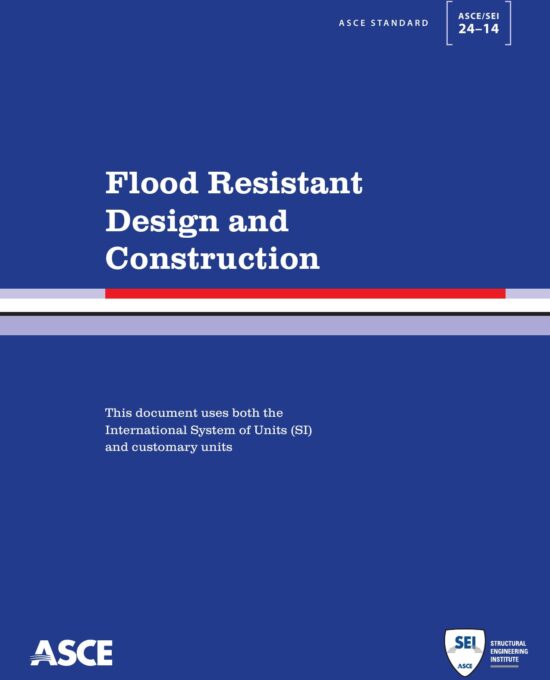
ASCE 24-14: Flood Resistant Design and Construction, 2014
ASCE 24-14: Flood Resistant Design and Construction provides minimum requirements for the planning, design, and construction of buildings in flood-prone areas. Referenced by the International Building Code (IBC) and the National Flood Insurance Program (NFIP), this standard supports floodplain management regulations and promotes resilience through engineering best practices.
Highlights:
- Defines Flood Design Class (1–4) to guide risk-based design criteria
- Specifies elevation requirements based on flood hazard zones, building type, and occupancy
- Includes wet and dry floodproofing methods for commercial and residential applications
- Updates flood opening requirements including engineered vent systems and louvers
- Provides structural design standards for Coastal A Zones and coastal high hazard areas
- Identifies acceptable flood damage-resistant materials and construction techniques
- Covers tanks, utilities, egress, garages, and parking structures in flood-prone zones
- Offers guidance for substantial improvements and retrofitting of existing buildings
- Coordinates with ASCE 7 and NFIP regulations to ensure code consistency and compliance
Who It’s For:
Essential for civil engineers, architects, code officials, and builders involved in flood zone development, permitting, and compliance with FEMA, IBC, and local floodplain standards.
ASCE 24-2014
ASCE 24-14: Flood Resistant Design and Construction, 2014
ASCE 24-14: Flood Resistant Design and Construction provides minimum requirements for the planning, design, and construction of buildings in flood-prone areas. Referenced by the International Building Code (IBC) and the National Flood Insurance Program (NFIP), this standard supports floodplain management regulations and promotes resilience through engineering best practices.
Highlights:
- Defines Flood Design Class (1–4) to guide risk-based design criteria
- Specifies elevation requirements based on flood hazard zones, building type, and occupancy
- Includes wet and dry floodproofing methods for commercial and residential applications
- Updates flood opening requirements including engineered vent systems and louvers
- Provides structural design standards for Coastal A Zones and coastal high hazard areas
- Identifies acceptable flood damage-resistant materials and construction techniques
- Covers tanks, utilities, egress, garages, and parking structures in flood-prone zones
- Offers guidance for substantial improvements and retrofitting of existing buildings
- Coordinates with ASCE 7 and NFIP regulations to ensure code consistency and compliance
Who It’s For:
Essential for civil engineers, architects, code officials, and builders involved in flood zone development, permitting, and compliance with FEMA, IBC, and local floodplain standards.
ASCE 24-2014

2021 International Energy Conservation Code – IECC-2021
The 2021 International Energy Conservation Code® (IECC) sets the baseline for energy-efficient design and construction of new buildings, as well as additions and alterations to existing residential and commercial structures. It features separate residential and commercial provisions and is fully integrated with the 2021 I-Codes for coordinated compliance.
Highlights:
- Divides content into Residential (≤3 stories) and Commercial sections for targeted regulation
- Includes multiple compliance paths: prescriptive, performance-based, and Energy Rating Index (ERI)
- Updated climate zone data affects insulation and system efficiency by region
- New requirements for air barriers, insulation materials, and fenestration U-factor/SHGC
- Enhanced HVAC efficiency standards and ventilation control requirements
- Revised lighting power limits, daylighting controls, and sensor use for commercial spaces
- Strengthened water heating system insulation and controls for energy savings
- Specific provisions for renovations, historic buildings, and changes in use
- Expanded commissioning requirements and documentation protocols
- Optional appendices for solar-ready design and zero energy building frameworks
Who It’s For:
Architects, energy consultants, engineers, and code officials seeking to meet energy efficiency standards for code-compliant, sustainable buildings.
IECC-2021
2021 International Energy Conservation Code – IECC-2021
The 2021 International Energy Conservation Code® (IECC) sets the baseline for energy-efficient design and construction of new buildings, as well as additions and alterations to existing residential and commercial structures. It features separate residential and commercial provisions and is fully integrated with the 2021 I-Codes for coordinated compliance.
Highlights:
- Divides content into Residential (≤3 stories) and Commercial sections for targeted regulation
- Includes multiple compliance paths: prescriptive, performance-based, and Energy Rating Index (ERI)
- Updated climate zone data affects insulation and system efficiency by region
- New requirements for air barriers, insulation materials, and fenestration U-factor/SHGC
- Enhanced HVAC efficiency standards and ventilation control requirements
- Revised lighting power limits, daylighting controls, and sensor use for commercial spaces
- Strengthened water heating system insulation and controls for energy savings
- Specific provisions for renovations, historic buildings, and changes in use
- Expanded commissioning requirements and documentation protocols
- Optional appendices for solar-ready design and zero energy building frameworks
Who It’s For:
Architects, energy consultants, engineers, and code officials seeking to meet energy efficiency standards for code-compliant, sustainable buildings.
IECC-2021