
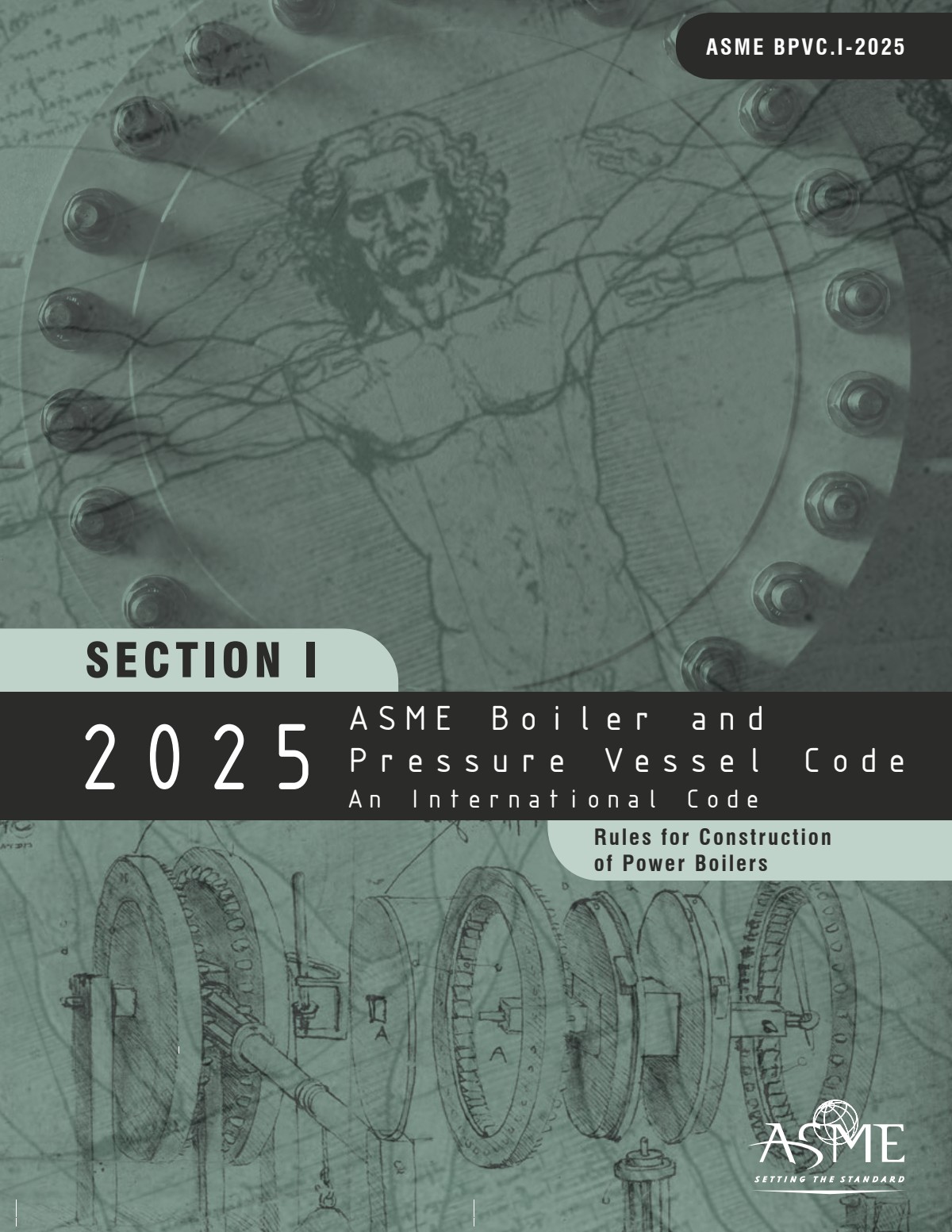
ASME BPVC 2025 Section I: Rules for Construction of Power Boilers
Original price was: $675.00.$225.00Current price is: $225.00.
ASME BPVC 2025 Section I: Rules for Construction of Power Boilers provides the official design, fabrication, and inspection requirements for power, electric, and miniature boilers, as well as high-temperature water boilers and heat recovery steam generators.
This edition incorporates updated rules on certification mark usage, designator requirements (V, A, M, PP, S, and E), superheaters, economizers, and fired pressure vessel attachments. It ensures compliance across stationary, locomotive, portable, and traction boiler services.
Designed for engineers, manufacturers, inspectors, and regulatory agencies, this ANSI/ASME standard is essential for safe and code-compliant construction of boiler systems.
ASME BPVC 2025 Section I: Rules for Construction of Power Boilers provides the official design, fabrication, and inspection requirements for power, electric, and miniature boilers, as well as high-temperature water boilers and heat recovery steam generators.
This edition incorporates updated rules on certification mark usage, designator requirements (V, A, M, PP, S, and E), superheaters, economizers, and fired pressure vessel attachments. It ensures compliance across stationary, locomotive, portable, and traction boiler services.
Designed for engineers, manufacturers, inspectors, and regulatory agencies, this ANSI/ASME standard is essential for safe and code-compliant construction of boiler systems.
Book information
Purchase now to read the book instantly.
Add to cartRelated products
ASME B31.3-2022: Process Piping
ASME B31.3-2022: Process Piping provides comprehensive engineering requirements for the design, materials, fabrication, examination, testing, and safety of process piping systems used in petroleum refineries, chemical plants, pharmaceutical facilities, textile plants, paper mills, and related processing plants and terminals. It is a vital code for ensuring piping integrity in high-pressure, high-temperature, and corrosive service environments.
Highlights:
- Applies to metallic and nonmetallic piping for chemicals, petroleum, natural gas, and related fluids
- Covers piping components: pipe, flanges, valves, gaskets, bolts, expansion joints, and supports
- Design criteria for internal pressure, sustained loads, displacement strains, and occasional loads
- Construction requirements including welding, brazing, bending, assembly, and material specifications
- Mandatory rules for examination, testing, inspection, and leak testing procedures
- Stress range reduction factors, flexibility analysis, and allowable stress values by material and temperature
- Qualification requirements for personnel, procedures, and fabrication documentation
- Integration with ASME Section IX for welding and ASME B31.1 for power piping interfaces
- Updated stress tables and revisions to weld design rules in para. 328.5.2
- Errata incorporated for clarity on strength tables and weld joint tolerances
Who It’s For:
Mechanical engineers, piping designers, fabricators, inspectors, and maintenance teams working on the safe and code-compliant construction and modification of process piping systems across industries.
B31.3-2022
ASME B31.3-2022: Process Piping
ASME B31.3-2022: Process Piping provides comprehensive engineering requirements for the design, materials, fabrication, examination, testing, and safety of process piping systems used in petroleum refineries, chemical plants, pharmaceutical facilities, textile plants, paper mills, and related processing plants and terminals. It is a vital code for ensuring piping integrity in high-pressure, high-temperature, and corrosive service environments.
Highlights:
- Applies to metallic and nonmetallic piping for chemicals, petroleum, natural gas, and related fluids
- Covers piping components: pipe, flanges, valves, gaskets, bolts, expansion joints, and supports
- Design criteria for internal pressure, sustained loads, displacement strains, and occasional loads
- Construction requirements including welding, brazing, bending, assembly, and material specifications
- Mandatory rules for examination, testing, inspection, and leak testing procedures
- Stress range reduction factors, flexibility analysis, and allowable stress values by material and temperature
- Qualification requirements for personnel, procedures, and fabrication documentation
- Integration with ASME Section IX for welding and ASME B31.1 for power piping interfaces
- Updated stress tables and revisions to weld design rules in para. 328.5.2
- Errata incorporated for clarity on strength tables and weld joint tolerances
Who It’s For:
Mechanical engineers, piping designers, fabricators, inspectors, and maintenance teams working on the safe and code-compliant construction and modification of process piping systems across industries.
B31.3-2022
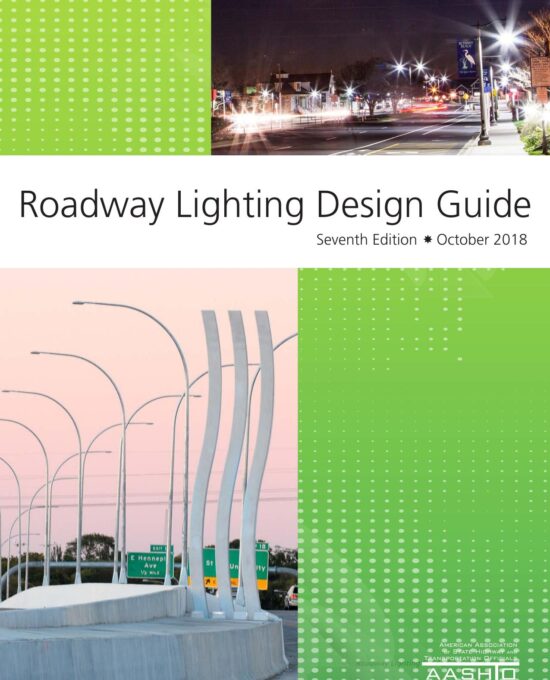
AASHTO GL-7: Roadway Lighting Design Guide, 7th Edition (2018)
AASHTO GL-7: Roadway Lighting Design Guide, Seventh Edition (2018) provides comprehensive guidance on the planning, design, and implementation of roadway lighting systems. This edition reflects current engineering practices, safety standards, and lighting technologies to enhance visibility, energy efficiency, and operational reliability across modern transportation networks.
Highlights:
- Design principles covering illuminance, luminance, uniformity, and glare control
- Guidance on developing master roadway lighting plans and policies
- Recommended lighting levels for highways, streets, intersections, and pedestrian zones
- Design criteria for tunnels, underpasses, and bridges
- Considerations for temporary lighting in work zones and construction areas
- Evaluation of emerging technologies such as adaptive lighting and smart controls
- Discussion on lighting management systems and energy-efficient solutions
- Environmental impact assessments and aesthetic integration strategies
- Standards for pole placement, maintenance access, and safety
- Support for decision-making with traffic data and community planning considerations
Who It’s For:
An essential reference for transportation agencies, civil engineers, and planners responsible for roadway lighting design and policy development.
GL-7-2018
AASHTO GL-7: Roadway Lighting Design Guide, 7th Edition (2018)
AASHTO GL-7: Roadway Lighting Design Guide, Seventh Edition (2018) provides comprehensive guidance on the planning, design, and implementation of roadway lighting systems. This edition reflects current engineering practices, safety standards, and lighting technologies to enhance visibility, energy efficiency, and operational reliability across modern transportation networks.
Highlights:
- Design principles covering illuminance, luminance, uniformity, and glare control
- Guidance on developing master roadway lighting plans and policies
- Recommended lighting levels for highways, streets, intersections, and pedestrian zones
- Design criteria for tunnels, underpasses, and bridges
- Considerations for temporary lighting in work zones and construction areas
- Evaluation of emerging technologies such as adaptive lighting and smart controls
- Discussion on lighting management systems and energy-efficient solutions
- Environmental impact assessments and aesthetic integration strategies
- Standards for pole placement, maintenance access, and safety
- Support for decision-making with traffic data and community planning considerations
Who It’s For:
An essential reference for transportation agencies, civil engineers, and planners responsible for roadway lighting design and policy development.
GL-7-2018
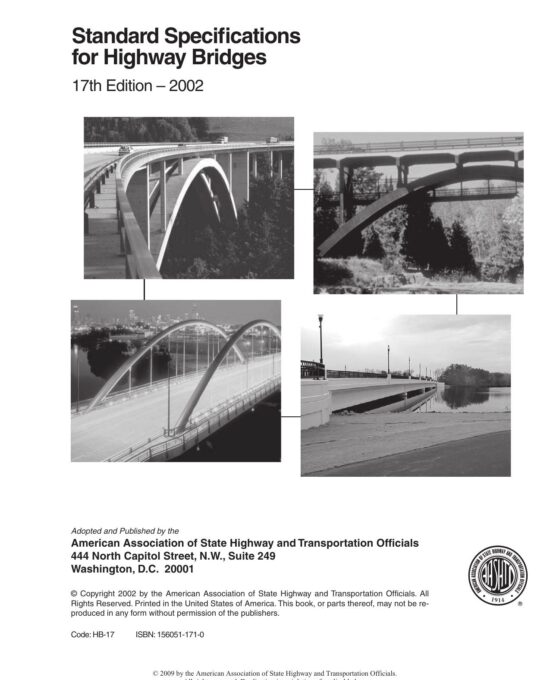
AASHTO HB-17: Standard Specifications for Highway Bridges, 17th Edition (2002)
AASHTO HB-17: Standard Specifications for Highway Bridges, 17th Edition (2002) provides comprehensive criteria for the design, construction, and maintenance of highway bridges throughout the United States. This edition is the final update prior to the nationwide adoption of Load and Resistance Factor Design (LRFD) standards.
Highlights:
- General provisions for bridge design, structural analysis, and performance
- Criteria for superstructures, substructures, abutments, culverts, and piers
- Service load and load factor design methods for concrete, steel, timber, and prestressed components
- Requirements for foundations, retaining structures, and soil-structure interaction
- Specifications addressing load distribution, fatigue, seismic considerations, and strength evaluation
- Commentary and notes incorporating interim revisions through 2003
- References to supporting standards from AASHTO, ASTM, AWS, and others
- Applicable to rehabilitation, legacy design validation, and maintenance planning for non-LRFD bridges
Who It’s For:
A critical reference for bridge engineers, transportation officials, and contractors working with legacy structures or evaluating designs developed before the transition to LRFD.
HB-17-2002
AASHTO HB-17: Standard Specifications for Highway Bridges, 17th Edition (2002)
AASHTO HB-17: Standard Specifications for Highway Bridges, 17th Edition (2002) provides comprehensive criteria for the design, construction, and maintenance of highway bridges throughout the United States. This edition is the final update prior to the nationwide adoption of Load and Resistance Factor Design (LRFD) standards.
Highlights:
- General provisions for bridge design, structural analysis, and performance
- Criteria for superstructures, substructures, abutments, culverts, and piers
- Service load and load factor design methods for concrete, steel, timber, and prestressed components
- Requirements for foundations, retaining structures, and soil-structure interaction
- Specifications addressing load distribution, fatigue, seismic considerations, and strength evaluation
- Commentary and notes incorporating interim revisions through 2003
- References to supporting standards from AASHTO, ASTM, AWS, and others
- Applicable to rehabilitation, legacy design validation, and maintenance planning for non-LRFD bridges
Who It’s For:
A critical reference for bridge engineers, transportation officials, and contractors working with legacy structures or evaluating designs developed before the transition to LRFD.
HB-17-2002
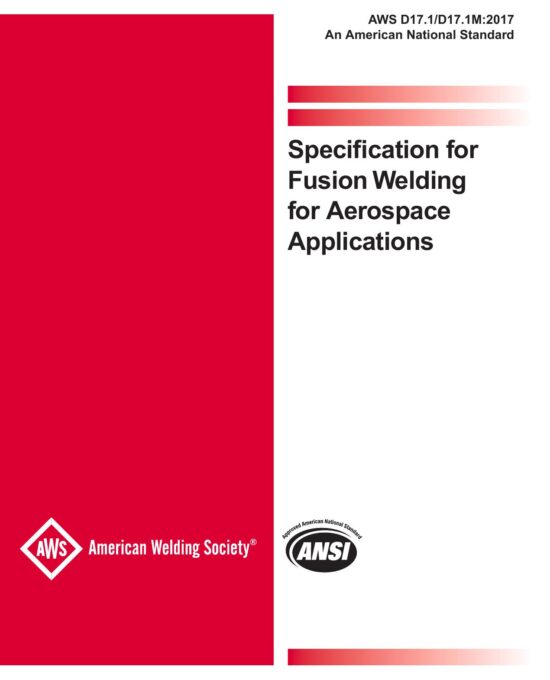
AWS D17.1/D17.1M:2017 – Specification for Fusion Welding for Aerospace Applications
AWS D17.1/D17.1M:2017 establishes the welding requirements for aircraft, aerospace, and space hardware using electric arc and high-energy beam fusion welding processes. It covers aluminum, nickel, iron, cobalt, titanium, and magnesium alloys and supports both flight-critical and support structure applications.
Highlights:
- Design criteria for aerospace weld joints
- Qualification requirements for procedures and personnel
- Fabrication, inspection, and acceptance standards
- Repair guidance for aerospace components
- Preweld/postweld processes including traceability and cleaning
- Visual and nondestructive exam methods with acceptance criteria
- Normative/informative annexes on bend tests, positions, acronyms, and forms
- Commentary with technical interpretation and best practices
New in the 2017 Edition:
- Annexes for UNS material designations
- Expanded welding position coverage and standardized forms
- Editorial updates for clarity and usability
Who’s It For:
Aerospace engineers, welding supervisors, inspectors, and quality professionals involved in the fabrication or evaluation of welded aerospace structures.
AWS D17.1/D17.1M-2017
AWS D17.1/D17.1M:2017 – Specification for Fusion Welding for Aerospace Applications
AWS D17.1/D17.1M:2017 establishes the welding requirements for aircraft, aerospace, and space hardware using electric arc and high-energy beam fusion welding processes. It covers aluminum, nickel, iron, cobalt, titanium, and magnesium alloys and supports both flight-critical and support structure applications.
Highlights:
- Design criteria for aerospace weld joints
- Qualification requirements for procedures and personnel
- Fabrication, inspection, and acceptance standards
- Repair guidance for aerospace components
- Preweld/postweld processes including traceability and cleaning
- Visual and nondestructive exam methods with acceptance criteria
- Normative/informative annexes on bend tests, positions, acronyms, and forms
- Commentary with technical interpretation and best practices
New in the 2017 Edition:
- Annexes for UNS material designations
- Expanded welding position coverage and standardized forms
- Editorial updates for clarity and usability
Who’s It For:
Aerospace engineers, welding supervisors, inspectors, and quality professionals involved in the fabrication or evaluation of welded aerospace structures.
AWS D17.1/D17.1M-2017